
Beat Public Speaking Anxiety in 10 steps!
Overcome fear of public speaking, glossophobia, and performance anxiety with our expert public speaking tips.
Introduction

IYou’re not alone. Up to 77% of people feel nerves before a presentation. That number helps normalise your start. This short guide gives clear, practical ways you can apply today.
We focus on research-backed methods. CBT mindsets. Exposure practice. Breathwork that slows a racing heart. These steps turn stress into usable energy.
Expect simple actions. Plan smart. Don’t over-memorise. Practise aloud and on video in rooms from Mumbai to Bengaluru. Use storytelling and eye contact to engage people. Small wins build visible confidence fast.
Action: Pick one upcoming talk. Commit to practising two steps this week. For extra reading on how repetition calms nerves see this practical guide.
Key Takeaways
- Most people experience nervousness before a speech — that is normal.
- Short, focused practice beats cramming.
- Breathwork and exposure reduce physical stress.
- Storytelling and eye contact increase audience connection.
- Plan, test tech, and start with a small win.
Why this matters now?
Around three quarters of people report nerves when they must present to a group. That 75–77% figure makes clear this is normal. Glossophobia ranks high on national polls. Many students and young professionals see it daily.
The cost is real. Skipping presentations or group updates lowers marks. It limits visibility in teams. Silent contributors miss leadership roles and promotions.
These patterns start small. You avoid one meeting. Next time your level of fear rises. The result is fewer chances to practise and grow.
The good news: this is manageable. With simple setup, repeated practice and mindset shifts you can reduce your anxiety. Universities and employers notice poise. That signals readiness and influence.
Also Read : Technical Communication as a Soft Skill
Quick realities
- Most people feel it — up to 77% report public speaking anxiety.
- This shows up in small group meetings and daily stand-ups.
- Avoidance costs grades, job chances and leadership roles.
Action: List three situations this semester where you will speak. Pick the lowest-stakes one and commit to a short practice this week.
Glossophobia explained: definition, causes and how it affects
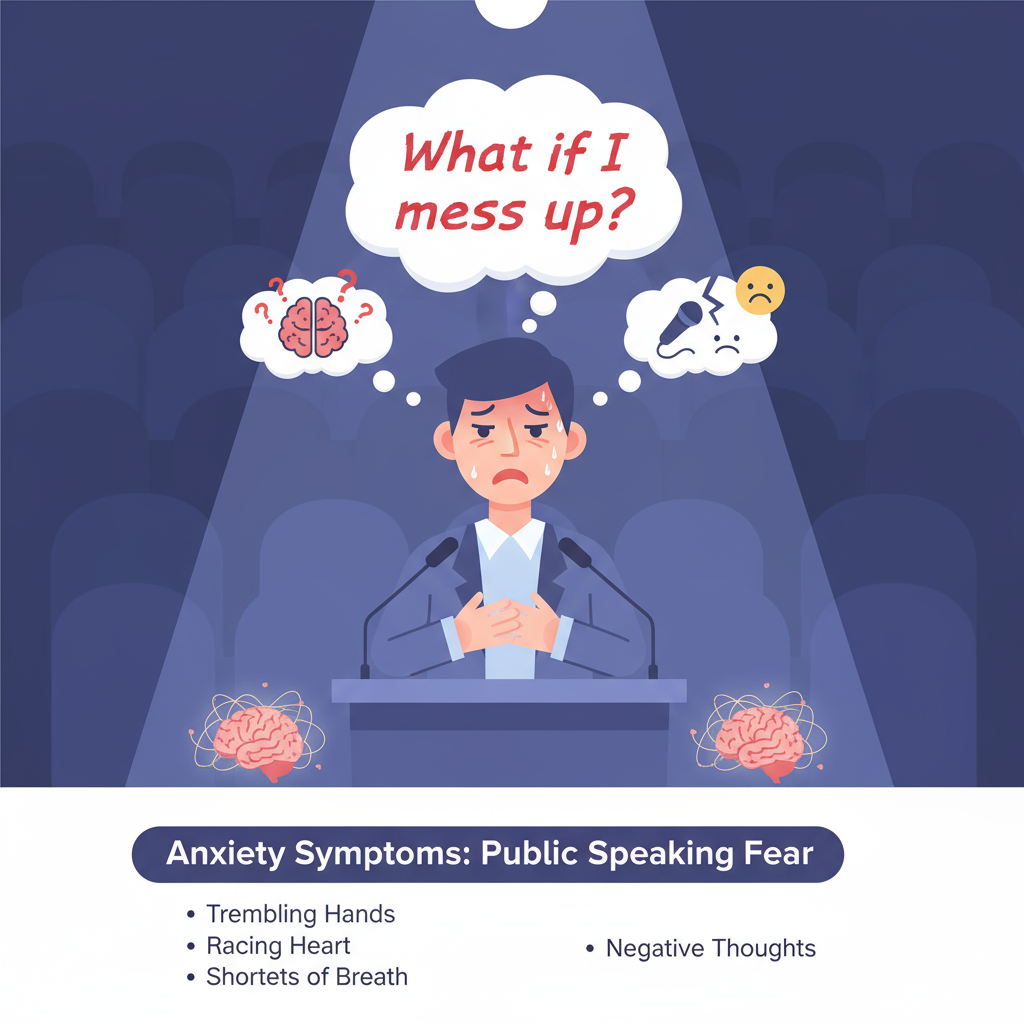
Glossophobia is more than butterflies. It is an intense, often immobilising worry about speaking in front of others.
Normal nerves tend to ease after you start. Glossophobia can freeze you before the first line. You may tremble, sweat or feel your heart race. These body reactions are real. They make simple tasks feel huge.
Also Read : Use 4 Communication Techniques to Practice Assertive Communication At Workplace
Why it starts
Your brain can treat social judgement as a threat. Studies show heightened negative-feedback response in social conditions. Past setbacks — a harsh class critique or a teasing incident — can lock in that pattern.
Families also pass down cautions. Temperament and learned habits both matter. Therapy and practice can rewire how the brain reacts. That makes big changes possible.
Where you notice it
- Classroom answers and viva sessions.
- Team meetings and weekly reviews.
- Wedding toasts, campus events and larger stages.
- Small moments — avoiding a question in a group or skipping your turn.
Know the difference: if you still do the task, it is likely nerves. If you avoid or freeze, it is likely glossophobia. Try one small step today — write one sentence that names your trigger. Then write one sentence that challenges it.
For more practical help on dealing with speech unease see this short guide.
When stage moments trigger you, a quick chain reaction starts in the brain and body. This is the brain’s survival wiring. It raises alertness so you notice threat cues first. That is useful in danger. It is awkward in a presentation.
Inside the head: amygdala, adrenaline and attention shifts
Your amygdala fires. It releases adrenaline. Your attention narrows to what looks risky. That reaction helps explain why names or lines may vanish from memory for a moment.
Also read : 7 Steps to Improve Communication Skills in Customer Service
Physical signs to expect
- Your heart rate rises. Palms sweat. Muscles tense.
- Breath gets shallow. Voice range narrows. You may feel a stomach drop or light dizziness.
- These symptoms are normal. They pass once you start moving.
Verbal and mental signs
Beat Public Speaking Anxiety in 10 steps: a clear, actionable roadmap
Start with short, manageable practice that builds real confidence. This roadmap gives practical, research-backed steps you can use in Mumbai, Bengaluru or at your college.
Beat Public Speaking Anxiety in 10 steps: a clear, actionable roadmap
Start with short, manageable practice that builds real confidence. This roadmap gives practical, research-backed steps you can use in Mumbai, Bengaluru or at your college.
1) Exposure and rehearsal
Begin with micro-exposures. Try a 30‑second lab update. Then move to a three‑minute stand‑up.
2) Mindset and self-talk
Reframe stress as useful energy. Use realistic self-talk: replace “must be perfect” with “clear and helpful is enough.”
3) Prepare, practise and steady the body
Bullet your key points. Learn only the opening and close. Practise aloud and record two short takes to tighten timing and gestures.
Use breathwork. Box breathing or 7‑11 calms the stomach and steadies your voice.
4) Engage and backup
Craft a strong opening. Use a short story, stat or bold question. Make eye contact, pause for a check‑in, and plan five likely questions.
- Start tiny and scale up.
- Reframe stress into energy.
- Record, review and repeat.
Action: Schedule two 5‑minute practice reps on your calendar today. Small, steady steps beat avoidance and build lasting confidence.
CBT and structured therapy
CBT helps you spot thinking traps. You test negative beliefs against facts. Over time this reduces avoidance and improves confidence.
5) Graduated exposure and VR practice
Start tiny. Move from short rehearsals to larger rooms. Virtual reality tools simulate audiences and reduce the fear response before high‑stakes events.
Also Read : Why Indian Students Hesitate to Ask, Speak, or Take Risks
6) Medication in context
Medications can help at higher levels. Beta‑blockers blunt shaking and rapid heartbeats. Antidepressants may help social cases over weeks. Use drugs only under a doctor’s care.
7) Relaxation, visualisation and muscle release
Progressive muscle release lowers baseline tension.
Visualise a calm, clear speech. See the result you want.
Short meditation and breathing steady the brain and voice.
Action: If symptoms feel unmanageable, book a consultation with a qualified therapist this week. For overview research see evidence on speech anxiety.
8) Story arcs, examples and signposting to hold attention
Use a clear story arc. Problem. Insight. Action. Say each label aloud as you move through the piece.
Example: In Hyderabad, start with a short client problem. Share one insight. End with a concrete action the team can take.
9) Voice, pacing and silence: how to sound composed
Work your voice. Vary pace. Pause after key lines.
One beat of silence makes statements land. Keep sentences short. Aim for one idea per breath.
Eye contact and open body language that signal confidence
Stand with feet planted. Uncross your arms. Turn gently so each side of the audience feels included.
10) Low-pressure formats: sit-down presentations to reduce stress
Try a McKinsey-style seated review. Small groups, a printed deck and a roundtable feel less intense than standing in front.
Action: Rewrite your next update as a three-part story with one local example. For extra strategies and ways to manage speaking anxiety see ways to manage speaking anxiety.
Also Read : Mastering Public Speaking with NLP: Practical Techniques for Real Impact
Conclusion
Small, steady actions change how your body and brain respond under pressure. Start with one short rehearsal. Use exposure and CBT habits to reshape your reactions. Breath work, like 7-11 breathing, calms the heart and steadies your voice.
Remember: glossophobia and public speaking anxiety are common. Physical reactions — a faster heart rate or a rush of adrenaline — pass once you begin. Choose lower‑stakes formats. Sit‑down reviews and brief talks build durable skills.
Action: Pick a date for your next presentation now. Block two short practice sessions this week. Ask one trusted person for one strength and one improvement. Small reps shift your baseline and make lasting change.
Frequently Asked Questions

Makarand S is a content writer who focuses on importance of soft skills and job readiness. Through his articles, He identifies potential gap areas and demonstrates easy and practical ways to overome them. With a keen interest in Skill Development, Makarand explores the shift in job landscapes and strategies for continuous learning. His articles help readers in preparing for the rapidly evolving nature of work more
Submit the form we will reply within Next 24 hours


Develop Must-Have Skills To Navigate Workplace Challenges And Build Executive Presence
Explore Topics
- AI-Driven Skill Development (7)
- Communication Skills in Indian English (12)
- Confidence Building for Students (5)
- Entrance Test Updates (2)
- Government Job Mindset Training (4)
- Lifelong Learning for Indian Women (3)
- Personality Development for IT/BPO (7)
- Public Speaking in Hindi/Marathi (1)
- Soft Skills for Indian Careers (11)
- Strategic Thinking for Entrepreneurs (29)
- Uncategorized (2)