
Design Thinking as a Skill and How It Helps in Marketing
Lorem ipsum dolor sit amet, consectetur adipiscing elit. Ut elit tellus, luctus nec ullamcorper mattis, pulvinar dapibus leo.
Lorem ipsum dolor sit amet, consectetur adipiscing elit. Ut elit tellus, luctus nec ullamcorper mattis, pulvinar dapibus leo.

Key Takeaways
- Understand the principles of Design Thinking and its application in marketing.
- Learn how to adopt a human-centered approach to marketing strategy.
- Discover the benefits of iterative testing and refinement in marketing campaigns.
- Explore how Design Thinking can drive business success through innovative solutions.
- Develop the skills needed to effectively integrate Design Thinking into your marketing practice.
Introduction
Have you thought about human-centered marketing? Using Design Thinking can change how marketers work. It helps them understand what customers really want.
This method is all about trying things out and improving them. Marketers can test their ideas and make them better. This way, they can avoid big mistakes and make sure their messages hit the mark.
For marketers, using creative problem solving with Design Thinking is a big win. It lets you come up with new ways to solve problems. This helps meet your customers’ changing needs and boosts your business.
What Design Thinking Really Is
In today’s world, Design Thinking shines as a light of innovation. It helps businesses focus on what customers want. Knowing Design Thinking can change how you market.
Design Thinking is a process that goes back and forth. It has five main steps: Empathize, Define, Ideate, Prototype, and Test. It’s all about solving big problems in a creative way.
Core Principles of the Design Thinking Skill
Design Thinking works because of its key principles. It’s all about feeling, being creative, and trying new things. This way, you really get to know what your customers like.
The Empathize step is very important. It’s about understanding what your customers need and how they act. This helps you make marketing that really speaks to them.
After Empathize, you define the problem you want to solve. Then, Ideate is where you think up lots of ideas. You make these ideas real in the Prototype step. And, you test them to see if they work.
Using Design Thinking in marketing makes your business more innovative and focused on customers. It helps you understand and meet customer needs better. And it grows your business by solving problems in new ways.
Why Design Thinking Is an Essential Skill for Marketers
As a marketer, you’re always looking for ways to connect with your customers better. That’s where Design Thinking comes in. It helps you understand what your audience needs and wants. This way, you can make marketing strategies that really speak to them.
Empathy Enables Better Customer Insight
Design Thinking is all about empathy. It’s about seeing things from your customer’s point of view. By being empathetic, you get to know your audience better. You find insights you might have missed before.
This helps you make marketing campaigns that hit the mark. They’re more focused, effective, and interesting to your audience.
For example, Creative Marketo uses Design Thinking to boost their marketing. They’ve seen better results and a stronger bond with their audience.
Using Design Thinking in your marketing can lower the risk of new ideas. It leads to groundbreaking solutions that meet your customers’ changing needs. This approach makes your marketing better and helps your business grow over time.
How Design Thinking Changes Marketing Strategy
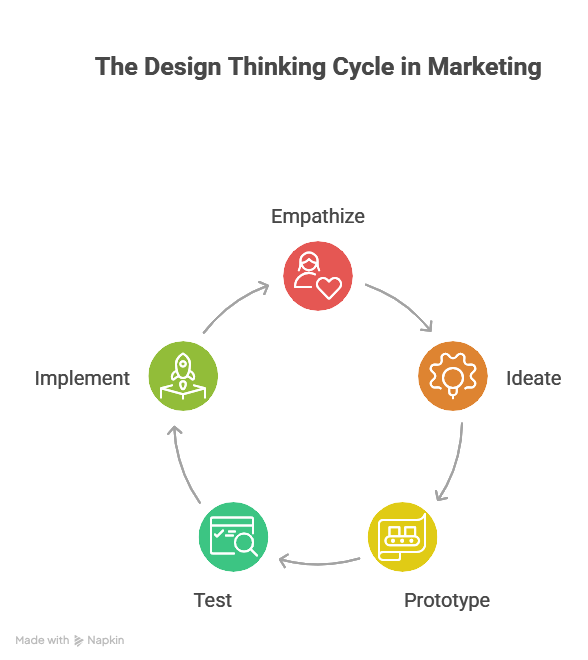
Design Thinking can change marketing strategies by making them more creative. Marketers use Design Thinking to create campaigns that really speak to their audience. This method means trying new things, improving, and doing it all over again. This leads to better marketing plans.
Also Read: 7 Powerful Strategic Thinking Exercises To Use in 2026
Ideation and Creativity at the Strategy Level
Ideation is at the core of Design Thinking. It’s about coming up with lots of ideas without judging them too soon. Tools like brainstorming and SCAMPER help in making marketing plans that are fresh and exciting. For example, SCAMPER can help change old campaigns in new ways or mix different marketing methods.
Let’s say a team wants to promote a new product. They use Design Thinking to come up with many ideas, like social media or events. They then try out these ideas and make them better based on what people say. This keeps going until they have a plan that works well.
To learn more about Design Thinking in marketing, check out FasterCapital’s article on Design Thinking. It shows how Design Thinking works in business and marketing.
Using Design Thinking in marketing brings many benefits. It boosts creativity, gives better insights into customers, and makes campaigns work better. Marketers who use this approach can stay ahead and help their business grow with new marketing ideas.
Prototyping and Testing: Less Risk, More Learning
Marketers can lower risks by using prototyping and testing. This method is key to the Design Thinking process. It helps businesses check their ideas and improve their marketing plans with real feedback.
Real-World Example: Iterative Campaign Development
Prototyping and testing are seen in marketing campaign development. First, a campaign idea is made based on insights and creativity. Then, a prototype – a smaller version or a mock-up – is created.
This prototype is tested with a small group to see how they react and give feedback. For example, a company might test different ad creatives for a new product. They find out which ads work best and improve their campaign before launching it fully.
This iterative testing process lowers the chance of campaign failure. It also makes the campaign more likely to succeed.
To learn more about Design Thinking in marketing, read our article on why marketers should think more like designers. It offers more insights on using Design Thinking in marketing.
Prototyping and testing have many benefits. They help marketers:
- Check if their ideas work with their audience.
- Find and fix problems before they cost a lot.
- Make their campaigns more creative and relevant through feedback.
By using prototyping and testing, marketers make sure their campaigns are new and meet their audience’s needs. This way, they create a culture of trying new things and learning always. It leads to better marketing results.
Also Read: Strategic Thinking in Business: Harvard Teaches VS Real Life
Marketing + Product + Insights: A Unified Approach
Design Thinking brings together marketing, product, and customer insights. This leads to better business results. It makes sure all teams work together to understand and meet customer needs.
When marketing, product, and insights teams work together, they get a full picture of the customer. This helps businesses create strategies that really meet what customers want. Marketing teams share what they know about customer behavior. Product teams talk about what the product can do. Insights teams use data to make the strategy even better.
This teamwork helps find problems and chances to do better. It leads to strategies that focus on the customer. As the article on Design Thinking shows, this teamwork is key for success today.
This way of working has many good points. It makes the customer experience better and encourages new ideas. By using Design Thinking and teamwork, businesses can keep up and reach their goals.
Long-Term Business Impact for Marketing Professionals
In today’s fast world, marketers who use Design Thinking do better. They can innovate, lead, and grow their business over time.
Skill Development: What Marketers Should Master
Marketers need to learn certain skills for Design Thinking’s long-term benefits. Empathy is key to understanding what customers want. Skills in ideation and prototyping help create and test new ideas.
It’s also important to keep learning. Marketers should always be updating their knowledge. This keeps them and their company ahead.
By improving in Design Thinking, you can make a big difference in marketing. This means trying new things, learning from mistakes, and always thinking about the customer.
Also Read: Critical Thinking Techniques for Workplace Success.
Common Misconceptions and Pitfalls in Applying Design Thinking
Many marketers don’t get Design Thinking right. They see it as just a workshop, not a key business skill. This view limits its power in marketing. Design Thinking is about solving problems with empathy, creativity, and trying new things.
How to Avoid These Mistakes in Marketing Context
To steer clear of mistakes, make Design Thinking a big part of your marketing plan. This means really getting to know what your customers need. Use that knowledge to spark new ideas.
It’s also key to create a space where trying new things is okay. Learning from mistakes is part of the journey.
Don’t just do Design Thinking once and then forget about it. Make it a regular part of how your team works. Another error is getting too caught up in the tools and methods. Best practices include using Design Thinking to focus on what customers want. Always keep improving based on what people say.
By knowing the common mistakes and avoiding them, you can really make Design Thinking work for your marketing. It’s about putting your customers first. This means caring about their feelings, being creative, and always getting better.
Conclusion
Design Thinking is a powerful tool for marketing. It can change how you market and improve customer experiences. It helps create a culture of empathy, creativity, and experimentation.
Design Thinking is key for marketers. It makes marketing more customer-focused, encourages teamwork, and reduces risks. By using Design Thinking, you can make campaigns that really connect with your audience.
Looking ahead, Design Thinking will keep being important in marketing. It will help you stay ahead in a changing market. By using Design Thinking, you can achieve lasting business success.

Makarand S is a content writer who focuses on importance of soft skills and job readiness. Through his articles, He identifies potential gap areas and demonstrates easy and practical ways to overome them. With a keen interest in Skill Development, Makarand explores the shift in job landscapes and strategies for continuous learning. His articles help readers in preparing for the rapidly evolving nature of work more
Submit the form we will reply within Next 24 hours


Develop Must-Have Skills To Navigate Workplace Challenges And Build Executive Presence
Explore Topics
- AI-Driven Skill Development (7)
- Communication Skills in Indian English (12)
- Confidence Building for Students (5)
- Entrance Test Updates (2)
- Government Job Mindset Training (4)
- Lifelong Learning for Indian Women (3)
- Personality Development for IT/BPO (7)
- Public Speaking in Hindi/Marathi (1)
- Rural Empowerment via Soft Skills (0)
- Soft Skills for Indian Careers (11)
- Strategic Thinking for Entrepreneurs (29)
- text (0)
- Uncategorized (2)