
Strategic Thinking in Business: Harvard Teaches VS Real Life
Lorem ipsum dolor sit amet, consectetur adipiscing elit. Ut elit tellus, luctus nec ullamcorper mattis, pulvinar dapibus leo.
Lorem ipsum dolor sit amet, consectetur adipiscing elit. Ut elit tellus, luctus nec ullamcorper mattis, pulvinar dapibus leo.

Key Takeaways
- Strategic thinking involves balancing analytical rigour with human insight.
- Real-world experience is key for developing strategic thinking skills.
- The gap between learning and doing is big.
- Understanding this gap is vital for making good strategic choices.
- Strategic thinking is a skill you can learn over time.
Introduction
Most strategic failures don’t come from a lack of smarts or data. They happen because strategy is seen as a plan, not a choice made in the dark.
Harvard shows you how businesses work. But real life teaches you how people act. Strategic thinking is about finding the middle ground between these two. It’s what makes plans work in real life.
To get better at strategic thinking, you need to mix brain power with people skills. You need to use your gut and real-life smarts, along with Harvard’s structured learning.
Why Strategic Thinking Is Misunderstood
Many organisations confuse strategic thinking with just planning. They spend a lot of time analysing but often don’t see the results they want. This leaves them wondering if they’re doing the right thing.
Ben Little teaches at Harvard Division of Continuing Education. He says leaders need both analytical and creative thinking. Analytical thinking helps with data and structure. Creative thinking brings innovation and flexibility.
Strategies often fail because of too much focus on data and not enough on people. Human behaviour, informal power, and the mix of analytical and intuitive thinking are key to success or failure.
For example, a business might spend a lot on research but miss the cultural needs of its customers. Even with lots of data, it can fail. But, companies that mix data with understanding their customers do better.
The debate between using data and intuition in business is ongoing. Data is solid, but intuition can reveal things data can’t. Good strategic thinking combines both, using each to its best.
Apple is a great example. It uses both analytical and intuitive thinking well. This mix helps it innovate and meet customer needs, making it successful.
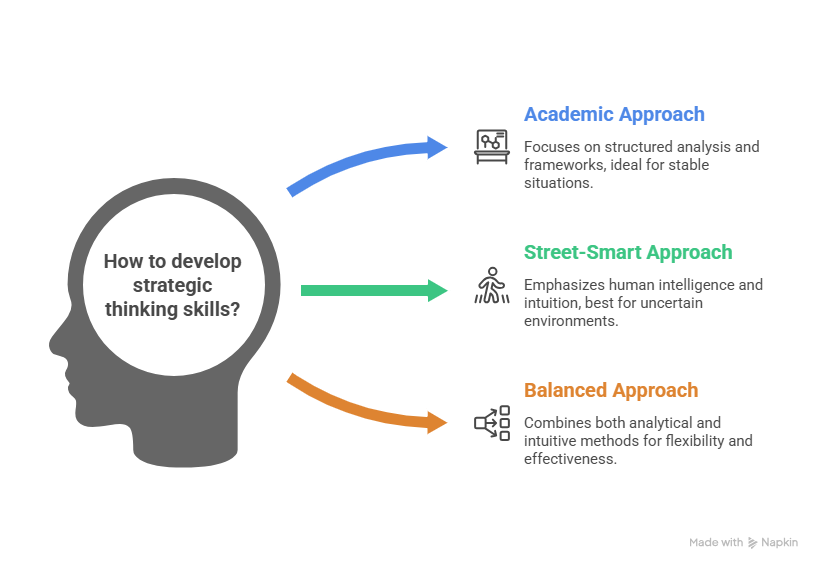
The Classroom Version of Strategic Thinking
At Harvard, learning strategic thinking means a lot of structured analysis. This method uses tools and frameworks to look at business scenarios. It helps in making strategic plans.
Harvard Business School’s “Negotiation & Competitive Decision-Making” and “Creating Brand Value” courses show this. They teach students to use detailed analysis on real business cases. The case method is key here, letting students practice strategic thinking safely.
Strategy as Structured Analysis
In class, strategic thinking is taught as a detailed look at business situations. Tools like decision-making frameworks are used. These tools help students split down big problems, analyze them, and suggest strategies.
This detailed analysis is key to what Harvard teaches about strategy. It shows the need for a careful, analytical way to think strategically. This prepares students for big business challenges.
Also Read: Why Mastering Strategic Thinking Can Increase Your Exam Scores?
Strengths of the Academic Approach
The academic way has many good points. It focuses on detailed analysis and uses known frameworks. This helps students really get strategic ideas and use them in different business situations.
Also, the formal vs informal strategy debate is a big part of this learning. Students learn to tell the difference between set strategies and flexible ones. They understand when to use each.
Where the Classroom Model Breaks Down
But, the classroom model has its limits. Real business worlds are more changing and unsure than case studies. They need a flexible way of thinking strategically.
Also, the focus on structured analysis might miss the value of instinct and experience in making decisions. This difference between learning in class and real life makes us look at the street-smart side of strategic thinking.
The Street-Smart Version of Strategic Thinking
Strategic thinking in the real world is more than just book knowledge. It’s about knowing the hidden rules and power structures. This skill can make all the difference, as seen in Amazon’s success and Kodak’s failure.
Strategy as Human Intelligence
Real-world strategy is all about human smarts. It’s about grasping human behavior, team dynamics, and the hidden networks that shape decisions. Leaders need to mix business intuition with rational analysis based on experience.
Amazon’s success comes from balancing creativity with strategy. Its leaders understand the informal power structures to drive innovation. Kodak, on the other hand, failed to adapt due to not making the right strategic trade-offs.
Unwritten Rules That Decide Outcomes
Every organization has hidden rules that affect results. These aren’t in any chart or policy but are learned through experience. Good strategists know these rules and use them to their advantage. An executive said, “Knowing the unwritten rules is essential for making lasting strategic decisions.”
“The biggest risk is not taking any risk… In a world that’s changing really quickly, the only strategy that is guaranteed to fail is not taking risks.”
Mark Zuckerberg
Also Read: Critical Thinking Techniques for Workplace Success.
Strengths and Risks of Intuition led Strategy
Using business intuition can be both a plus and a minus. It helps leaders make fast decisions based on experience. But, it can also lead to biases and errors if not balanced with rational analysis. The goal is to find a balance that suits the organization.
In summary, the real-world strategic thinking is about using human smarts, understanding hidden rules, and balancing intuition with analysis. This way, leaders can make informed decisions that lead to success.
Strategic Thinking in the Real World Is Not Either–Or
The best strategists mix structured analysis with intuitive insight. In real life, you can’t just pick one way to think. You need to blend different methods.
Strategy Requires Two Operating Systems
Good strategists use two main systems: analytical and intuitive. The analytical system is all about structured analysis and data. It helps you plan and understand complex situations.
The intuitive system is about experience and instinct. It’s key when you’re facing unknown situations. It lets you make quick decisions and adapt fast.
When to Use Which Mode
Knowing when to switch between these modes is key. In stable situations, the analytical way is best. But in fast-changing or uncertain times, intuition is more useful.
Ben Little says it’s important to balance analytical and creative thinking. By improving both skills, you make your strategic thinking better and more flexible.
The secret to great strategic thinking is knowing when to use each method. By mastering both and learning when to switch, you become a better and more adaptable strategist.
Strategic Thinking as a Skill (Not a Degree)
Strategic thinking is not just for the gifted. It can be learned and improved. This skill is vital in today’s fast-changing business world. People need to make smart choices even when they’re not sure.
Developing Strategic Thinking in Professionals
Professionals can get better at strategic thinking by learning and gaining experience. For example, Harvard Business School’s “Creating Brand Value” course helps improve leadership and strategic thinking.
To get better at strategic thinking, you must be brave and ready for new challenges. Be open to new things, learn from mistakes, and always ask for feedback. Practical experience and a desire to learn are essential for strategic thinking.
The Role of Formal Education and Beyond
While school teaches the basics of strategy, it’s not enough. Harvard Business School gives a good start, but real-world use is where skills grow.
Being able to make good decisions when you don’t have all the facts is key. It needs analytical skills, intuition, and experience.
In short, strategic thinking can be improved with practice, experience, and the right help. By using executive education and real-world learning, professionals can become better leaders and decision-makers.
Also Read : Only 5% of Students Think Strategically : Global Guide for Study-Abroad Success
Conclusion
Strategic thinking in business is more than just analysis. It also involves intuition and understanding people. To do well, you must mix these skills together.
Getting better at strategic thinking takes effort and practice. Learning from both wins and losses helps you make better choices. This is key for leaders and businesses.
At Harvard Business School, I’ve seen the power of learning never stops. This mindset helps you keep up in today’s fast world. As you improve your strategic thinking, you’ll handle tough problems better and spot chances.
Strategic thinking is a skill you can improve with time and effort. By using a balanced approach and always learning, you’ll be ready to lead your team to success.

Makarand S is a content writer who focuses on importance of soft skills and job readiness. Through his articles, He identifies potential gap areas and demonstrates easy and practical ways to overome them. With a keen interest in Skill Development, Makarand explores the shift in job landscapes and strategies for continuous learning. His articles help readers in preparing for the rapidly evolving nature of work more
Submit the form we will reply within Next 24 hours


Develop Must-Have Skills To Navigate Workplace Challenges And Build Executive Presence
Explore Topics
- AI-Driven Skill Development (7)
- Communication Skills in Indian English (12)
- Confidence Building for Students (5)
- Entrance Test Updates (2)
- Government Job Mindset Training (4)
- Lifelong Learning for Indian Women (3)
- Personality Development for IT/BPO (7)
- Public Speaking in Hindi/Marathi (1)
- Rural Empowerment via Soft Skills (0)
- Soft Skills for Indian Careers (11)
- Strategic Thinking for Entrepreneurs (29)
- text (0)
- Uncategorized (2)