
7 Steps to Improve Communication Skills in Customer Service
Lorem ipsum dolor sit amet, consectetur adipiscing elit. Ut elit tellus, luctus nec ullamcorper mattis, pulvinar dapibus leo.
Lorem ipsum dolor sit amet, consectetur adipiscing elit. Ut elit tellus, luctus nec ullamcorper mattis, pulvinar dapibus leo.

Key Takeaways
- Effective communication is key for top-notch customer service.
- Being clear and direct helps solve problems quickly.
- Feeling and tone are important for trust and loyalty.
- Improving customer support skills takes practice and training.
- Call center communication gets better with active listening and clear talk.
Introduction
Good customer service needs great communication. When people are good at talking, they fix problems fast. They also build trust and keep customers coming back.
We will show you how to talk well with customers. You’ll learn tips to get better at helping people.
Knowing how to speak clearly and with feeling is key. It makes customers happy and keeps them loyal.
Also Read: 5 Ways To Develop Employees’ Communication Skills.
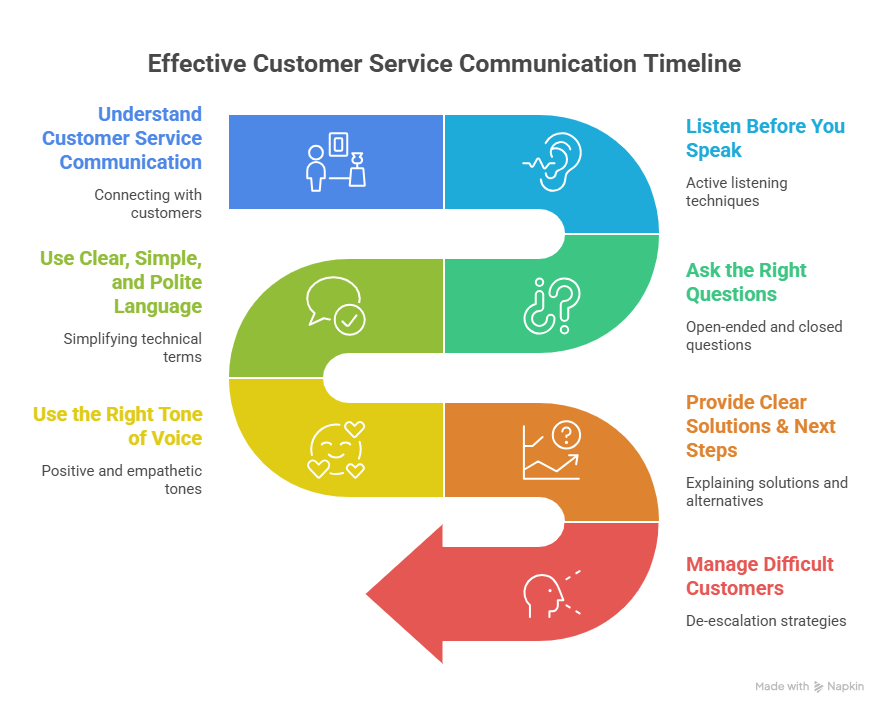
Step 1: Understand What Customer Service Communication Really Means
Customer service communication is more than just talking and writing. It’s about really connecting with people. It’s key for solving problems, building trust, and making customers happy.
To get what customer service communication means, let’s look at its parts. It’s not just the words you say. It’s also your tone, how clear you are, and listening well. Understanding these helps you meet customer needs, solve their problems, and offer solutions.
What “communication” actually includes
Customer service communication has both spoken and unspoken parts. Spoken words are what you say. Unspoken cues are your tone, how fast you talk, and the silences. Listening well is also key, so you get what the customer wants.
Good customer communication is clear, simple, and respectful. Use easy words, avoid complicated terms, and think about cultural differences.
Why customers judge service by communication quality
Customers judge service by how they’re talked to. Clear, caring, and quick communication can make a bad experience good. But bad communication can make things worse. By improving communication skills customer service, you can make customers happier.
Also, good communication sets the right expectations and stops misunderstandings. It’s about being ready, open, and quick to answer questions. By getting better at customer support skills, you make sure customers feel important and heard.
Also Read: Top 10 Communication Skills Books That Will Change Your Life in 2026
Step 2: Learn to Listen Before You Speak
Listening is key to good customer service. It helps you understand and solve customer problems. This way, you can make customers happy.
Active Listening Explained
Active listening is more than just hearing words. It’s about noticing the customer’s tone and feelings. Active listening techniques for customer support are important to make customers feel heard.
To listen well, focus on the customer. Don’t get distracted. Stay open-minded. This builds trust and makes customers feel valued.
Common Mistakes to Avoid
When talking to customers, avoid some common mistakes. Don’t interrupt or assume you know their problem. Rushing to solve it can upset them.
Interrupting seems dismissive. Making assumptions can lead to wrong solutions. Empathy skills for customer service agents help avoid these mistakes. They ensure you see things from the customer’s point of view.
Simple Listening Techniques
There are simple ways to get better at listening. Keep anod to show you’re listening. Summarize what the customer says to make sure you understand.
Also, use phrases like “I understand” to show you’re listening. For more tips on improving customer service, check out our guide on customer care conversation skills.
Using these techniques can make you a better listener. This leads to happier customers and better service.
Also Read: Clear Communication: Why ‘Let Me Check’ Hurts Your Image.
Step 3: Ask the Right Questions to Understand the Problem
Asking the right questions is key in customer service. It helps reps find the problem’s root. This way, they can get the right info, meet customer needs, and solve problems well.
Difference between Open and Closed Questions
It’s important to know the difference between open and closed questions. Closed questions get a simple yes or no. They’re good for checking facts but don’t let you know much more. Open-ended questions let customers share more, giving a deeper look at their problems.
For example, instead of “Is your product not working?” (a closed question), ask “Can you tell me more about the issues you’re experiencing with your product?” (an open-ended question). This helps understand the problem better.
How Good Questions Prevent Wrong Solutions
Good questions stop wrong guesses about the problem. They help avoid bad solutions. By using the following effective questioning techniques, reps can understand what customers need and offer the right fix. This makes customers happy and builds trust.
Let’s say a customer has a tech problem with a product. Asking open-ended questions like “What were you doing when the issue occurred?” or “Have you experienced this issue before?” helps the rep find the right solution.
Step 4: Use Clear, Simple, and Polite Language
Clear communication is key for good customer talks. When reps speak clearly, it stops mix-ups. It makes sure customers get what’s said.
Explaining Technical Issues in Simple Terms
Technical words can confuse people, making them upset. It’s smart to make hard stuff easy to understand. For example, say “We’re having tech problems” instead of “server timeout.”
Tips for simplifying technical explanations:
- Don’t use special terms unless you must.
- Use simple examples or stories to explain things.
- Give clear steps or guides when explaining a process.
Polite Phrasing to Keep Customers Calm
The way you talk affects how customers feel. Being polite can calm them down. Saying “I get how upset you are” shows you care and are listening.
For more tips on being nice in customer service, check out SQM Group’s blog on tone of voice in call. It has great advice on being customer-focused.
Examples of polite phrasing:
- “I’m here to help. Can you tell me more?”
- “Sorry for the trouble. Let’s solve this together.”
- “Thanks for waiting while we fix this.”
Using clear, simple, and polite words in customer service helps a lot. It makes customers happy, understand better, and feel valued. This makes your brand look good and builds trust.
Also Read : Use 4 Communication Techniques to Practice Assertive Communication At Workplace
Step 5: Use the Right Tone of Voice
Choosing the right tone is key in customer service. It can make things better or worse. The tone shows you care, are professional, and want to help. This is important for strong customer relationships.
Avoiding Negative Tones
Some tones can upset customers and make things worse. These include:
- Defensive tone: Being defensive makes customers feel like they’re being argued with.
- Robotic tone: A monotone or scripted tone seems fake or uncaring.
- Irritated tone: Showing irritation makes customers feel unwelcome.
To avoid these, you need to be aware and aim for great service. Paying attention to your tone helps avoid problems and makes interactions better.
Adopting Positive Tones
Using a calm, patient, and helpful tone makes things better. These tones help a lot:
- Build trust: A calm tone shows you’re serious about their issues.
- Show empathy: A helpful tone means you’re there to solve their problems.
- De-escalate tensions: Staying calm helps avoid conflicts getting worse.
To do this, be truly supportive and understanding. This boosts satisfaction and loyalty. It also gets people talking positively about you.
Mastering the right tone can change negative interactions into good ones. This boosts customer happiness and loyalty.
Also Read : Struggling to Crack the UPSC Interview? Fix these 6 Communication Barriers
Step 6: Provide Clear Solutions and Next Steps
To make customers happy, it’s key to tell them clearly what you’ll do next. When they know what’s happening, they feel more confident in your service.
Confirming Customer Understanding
After you say what you’ll do, make sure they get it. Ask simple questions like, “Does that make sense?” or “Is there anything you’d like me to clarify?” This makes sure you both are on the same page.
Tips for Confirming Understanding:
- Use simple words to explain solutions.
- Give examples or analogies for tricky issues.
- Let them take their time to understand.
Offering Alternatives
Not every solution fits every customer. Giving them choices can make the fix better for them. For example, you might offer a refund, replacement, or repair, based on their needs.
Best Practices for Giving Alternatives:
- Clearly list the good and bad of each choice.
- Explain how each option solves their problem.
- Tell them about any extra costs or steps needed.
By being clear and giving choices, you make customers happier. This way, you fix problems well and build trust. It leads to stronger relationships with your customers.
Step 7: Manage Difficult Customers with Controlled Communication
Dealing with tough customers is part of the job. But, with the right approach, you can make things better. As a customer service rep, you meet all sorts of people. It’s key to know how to handle tricky situations well.
Remaining Calm Under Pressure
Keeping your cool is very important when dealing with upset customers. Being calm helps to calm things down and makes solving problems easier. Take a deep breath, count to ten, or pause before you speak. This little break can change how you talk to the customer.
For example, if a customer is mad about a late order, don’t get defensive. Say, “I get why you’re upset, and I’m here to help. Let’s sort this out.” Showing you care can start to calm things down.
Effective De-escalation Phrases
Choosing the right words can make a big difference. De-escalation phrases help calm the customer and steer the talk towards fixing the problem. Here are some examples:
- “I apologize for the trouble, and I’m here to help.”
- “I get your worry, and I’ll try my best to fix it.”
- “Let me see what I can do to help you more.”
These phrases show you care and want to solve the problem. This can help ease the customer’s anger. For more tips on calming down customers, check out our article on mastering de-escalation techniques for customer service.
Using these tips can help you deal with tough customers better. This way, you can make the experience better for everyone.
Also Read : Hybrid Workplace Communication 2026: 5 Proven Strategies to Fix Communication Gaps & Boost Team Productivity
Conclusion
Good customer service is key to building trust and loyalty. It makes customers happy. Customer service reps need to listen well and speak clearly.
Businesses can make things better by using these skills well. They should talk in the right way and show they care. This makes customers very happy.
Using both humans and AI in customer service is a great idea. It makes talking to companies easy and fun. Customers can choose how they want to talk to businesses.
Good customer service brings many benefits. It makes customers stay loyal and trust the company more. As things change, keeping good customer service is very important for success.

Makarand S is a content writer who focuses on importance of soft skills and job readiness. Through his articles, He identifies potential gap areas and demonstrates easy and practical ways to overome them. With a keen interest in Skill Development, Makarand explores the shift in job landscapes and strategies for continuous learning. His articles help readers in preparing for the rapidly evolving nature of work more
Submit the form we will reply within Next 24 hours


Develop Must-Have Skills To Navigate Workplace Challenges And Build Executive Presence
Explore Topics
- AI-Driven Skill Development (7)
- Communication Skills in Indian English (12)
- Confidence Building for Students (5)
- Entrance Test Updates (2)
- Government Job Mindset Training (4)
- Lifelong Learning for Indian Women (3)
- Personality Development for IT/BPO (7)
- Public Speaking in Hindi/Marathi (1)
- Rural Empowerment via Soft Skills (0)
- Soft Skills for Indian Careers (11)
- Strategic Thinking for Entrepreneurs (29)
- text (0)
- Uncategorized (2)