
Clear Communication: Why ‘Let Me Check Hurts’ Your Image
Boost your professional image by ditching passive phrases like Let me check. Learn how confident communication can earn trust with colleagues, seniors, and clients.

We’ve all been there – someone asks for an update, and we say “Let me check.” This can make us seem unready or unsure. In today’s fast world, IT/BPO offices value clear and direct assertive communication.
Phrases like “Let me check” can hurt our professional image and trust. We’ll look at how being more confident can boost workplace confidence and productivity.
Key Takeaways
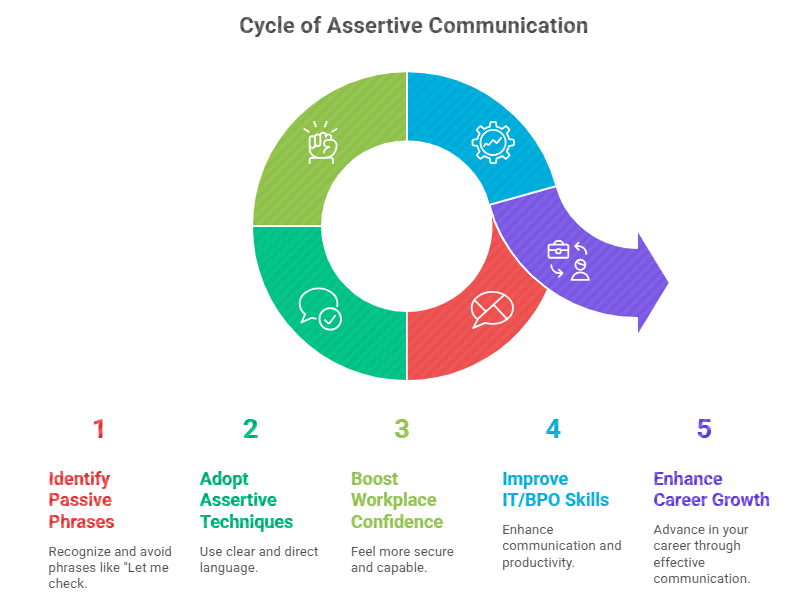
- Understand the impact of passive phrases on your professional image.
- Learn how to adopt assertive communication techniques.
- Discover strategies to boost your workplace confidence.
- Improve your IT/BPO soft skills with clear and direct updates.
- Enhance your career growth with effective assertive communication.
The Cost of Passive Communication at Work
The words we choose at work say a lot about our professional confidence. They can help or hurt our career. Using passive language can lead to problems.
What Your Words Reveal About Your Professional Confidence
Our words show how others see our professional confidence. Passive language can make us seem unsure. Saying “Let me check” instead of “I’ll confirm” shows less confidence.
For IT pros, improving personality development means better communication. This means being clear and direct, not aggressive.
The Psychological Impact of Passive Phrasing
Passive language affects both the speaker and listener. It can make us seem less confident or in charge. Studies show teams with clear language do better and are more trusted.
Knowing why passive language hurts teamwork is key. Passive language can cause confusion and hurt team performance.
How Small Language Choices Shape Career Trajectories
Small language choices greatly affect our career trajectories. Assertive language makes us seem more confident and capable. Saying “I’ll find out and get back to you” shows we’re proactive.
Looking into let me check alternatives helps us be more assertive. Being mindful of our words can make us seem more confident and improve our assertive vs passive communication skills.
Also read : 5 Ways To Develop Employees’ Communication Skills
How it affects Professional Relationships
Using passive language can hurt our work image and relationships. It makes others think we’re not sure or able. This can harm our bonds with coworkers, bosses, and clients.
How Passive Language Undermines Peer Relationships
Saying “Let me check” instead of answering directly makes others think we’re unsure. This can make them not want to work with us.
To fix this, we can use effective email phrases for work. Say “I’ll review this and update you by [date]”
Why Senior Leaders Value Decisiveness Over Deference
Leaders like clear decisions, not just yes-men. Passive responses make us look scared or unsure. But being direct shows we’re brave and ready to act.
In cross-cultural communication for Indian teams, we must be clear yet respectful. This way, we earn trust and show our skills.
The Business Cost of Passive Communication
Clients want clear answers, not vague promises. This can create problems in our business.
To avoid Indian BPO communication mistakes, speak clearly and directly. Be quick to answer their questions and keep them updated.
Being assertive helps us win client trust and improve our image. Pay attention to what you say and how you say it. Use best phrases for team updates to keep clients in the loop.
Assertive vs. Passive Communication
Being assertive means being heard and respected at work. It’s key for our careers and how we get along with others. We all have different ways of talking, and this can affect our jobs and friendships.
The Core Differences in Communication Styles
Assertive and passive talking are two big differences. Assertive people are clear and kind. They say what they need and feel without being shy.
Those who are assertive do well without hurting others. They listen well in meetings. This makes sure everyone gets their point across.
- Assertive communicators are confident and direct.
- They focus on clear talk to avoid mistakes.
- They solve problems fast, making work smoother.
Also read : Cross-Cultural Communication: Strategies for a Global Workplace
Psychological Benefits of Assertive Communication
Being assertive boosts our self-confidence and lowers stress. It helps us avoid being misunderstood. It also makes work better. We respect each other more and work together better.
Benefits of Being Assertive:
- We feel braver sharing our thoughts.
- Our relationships get stronger because we talk clearly.
- We solve problems better by talking straight.
Powerful Alternatives That Build Trust
Being proactive and committed changes how we’re seen at work. Here are some phrases to try:
- “I’ll investigate this and get back to you by [specific date].” This shows you’re taking charge and provides a clear timeline.
- “I’m on it; I’ll update you on my progress.” This conveys confidence and a commitment to keeping others informed.
- “Let me clarify this for you.” This demonstrates a willingness to help and provide clear information.
Balancing Confidence with Accuracy
Being confident is key, but accuracy is just as important. Here’s how to balance both:
- Be clear about what you know and what you need to verify. For example, “I can confirm that [fact], but I’ll need to check on [other fact].”
- Use phrases that indicate you’re verifying information. Saying “I’ll verify this information and get back to you” shows diligence.
- Provide alternatives or solutions while you’re checking. You might say, “While I check on this, I can offer [alternative solution].”
Situation-Specific Responses That Strengthen Your Image
Different situations need different answers. Here are some examples:
| Situation | Response |
| Client inquiry about project status | “Our current status is [status]. I’ll update you on any changes.” |
| Colleague asking for help | “I’d be happy to assist. Let me check my availability and get back to you.” |
| Senior asking for information | “I have the information you’re looking for. I’ll send it over immediately.” |
Using these powerful phrases can improve our work image. It builds trust and better relationships. By showing we’re in charge, being accurate, and answering well, we can grow our careers.
Also read : Communication Skills for Business Development Success
Conclusion
Assertive communication is key for career growth. It lets you share your thoughts and needs without stepping on others. This boosts your confidence in meetings and sharpens your IT skills.
Think about joining assertive communication training in India. It can help you get better at expressing yourself. Also, learning business English is great for those aiming high in global business.
Changing how you talk can lead to better discussions and solving problems. Keep practicing and growing. This will help you move up in your career.
Author’s Takeaway
Being direct and assertive isnt rude, it shows you care and are proactive.
Strong communication smooths teamwork, boosts your confidence, and opens doors for career growth. Start by replacing weak phrases with clear, powerful ones to see a real difference in how others see you.
Frequently Asked Questions

Makarand S is a content writer who focuses on importance of soft skills and job readiness. Through his articles, He identifies potential gap areas and demonstrates easy and practical ways to overome them. With a keen interest in Skill Development, Makarand explores the shift in job landscapes and strategies for continuous learning. His articles help readers in preparing for the rapidly evolving nature of work more
Submit the form we will reply within Next 24 hours


Develop Must-Have Skills To Navigate Workplace Challenges And Build Executive Presence
Explore Topics
- AI-Driven Skill Development (7)
- Communication Skills in Indian English (12)
- Confidence Building for Students (5)
- Entrance Test Updates (2)
- Government Job Mindset Training (4)
- Lifelong Learning for Indian Women (3)
- Personality Development for IT/BPO (7)
- Public Speaking in Hindi/Marathi (1)
- Soft Skills for Indian Careers (11)
- Strategic Thinking for Entrepreneurs (29)
- Uncategorized (2)