
Use 4 Communication Techniques to Practice Assertive Communication At Workplace
Lorem ipsum dolor sit amet, consectetur adipiscing elit. Ut elit tellus, luctus nec ullamcorper mattis, pulvinar dapibus leo.
Lorem ipsum dolor sit amet, consectetur adipiscing elit. Ut elit tellus, luctus nec ullamcorper mattis, pulvinar dapibus leo.

Key Takeaways
- Understand the importance of assertive communication in the workplace.
- Learn how to express thoughts clearly and respectfully.
- Discover techniques to build confidence in professional interactions.
- Recognise the benefits of assertiveness in conflict resolution.
- Apply practical strategies to improve workplace communication skills.
Introduction
Workplace conflicts often come from not being clear. Many people find it hard to say what they need and think. This can make work less productive and hurt relationships.
The Mayo Clinic says many work problems come from bad talking. This shows why we need to learn to talk clearly and kindly. This way, we avoid getting things wrong.
It’s key to be good at talking at work today. It helps us work better together and makes our workplace nicer. If you want to get better at talking, learning to be assertive is a big step.
To find out more about being clear at work, check out Coursera’s guide on assertive communication. It has tips on how to talk clearly at work. This can make your work life better.
Also Read: Communication Skills for Business Development Success.
What Is Assertive Communication?
Assertiveness communication is not about being mean. It’s about being clear, direct, and kind. Knowing how to be assertive is key for good work talks.
Definition and Importance
Assertive talking means you share your feelings and needs clearly. You do this while respecting others. It’s different from being too quiet or too loud.
It’s about speaking up without being too pushy. You want to be heard but also think about the other person. This way of talking is important at work. It helps avoid problems, solve issues, and makes a good work place.
Let’s look at the difference between assertive, passive, and aggressive talking. Passive talkers find it hard to say what they need. Aggressive talkers ignore others’ feelings. Assertive talkers find a middle ground. They are clear, direct, and kind, making it a better choice for work.
For more on assertive communication and why it’s good, check out Mapfre’s insights. They give a detailed look at the topic.
Also Read: 7 Steps to Improve Communication Skills in Customer Service.
Core Principles of Assertive Communication
Assertive communication means saying what you need and setting boundaries clearly. It’s important at work. It stops misunderstandings, builds strong relationships, and helps you reach your goals.
Be Clear and Specific
Being clear and specific is key. When you talk about your needs, make sure your message is clear. For example, say “I need help with the data analysis by Friday” instead of “I need help with this project.”
This makes it easy for others to know what you need and when. To be clear, plan your message ahead. Think about what you want and how to say it best.
Use “I” Statements
“I” statements are important in assertive communication. They let you share your thoughts and feelings without blaming. The Mayo Clinic says they make conversations better.
For example, saying “I feel overwhelmed” instead of “You’re giving me too much work” changes the conversation. It makes it more positive.
Maintain Respect and Courtesy
It’s important to be respectful and polite, even when you disagree or set boundaries. Being assertive doesn’t mean being confrontational. It’s about being clear and direct while being kind.
For example, if you can’t do something, say “I appreciate the offer, but I’m full. Let’s talk about other options?” This shows you value the request but also sets your limits.
Using these principles in your daily talks can make you better at assertive communication. This can improve your work life, make you more productive, and create a better work place.
Also Read: Communication Skills for IT in 2026.
Practical Assertive Techniques
Techniques like active listening and staying calm are key for assertive communication at work. They help you speak clearly and confidently. This makes your workplace better and more productive.
Active Listening Before Speaking
Active listening is very important. It means really listening to what someone says. You should look at them, not interrupt, and ask questions to get it right.
For more on assertive communication, check out this resource.
Listening well shows you respect the speaker. This builds trust and helps everyone communicate better.
Calm and Confident Tone
Speaking calmly and confidently is key. A calm voice gets your point across without making things worse. Confidence makes you sound more believable.
Don’t shout or use harsh words. They can hurt your message and make things tense. Instead, speak firmly but kindly.
Open Body Language
Open body language is important too. It shows you’re open and confident. Keep your arms and legs relaxed, and look at the person you’re talking to.
Don’t cross your arms or avoid eye contact. It makes you seem unsure. Open body language makes your communication better and more friendly.
Also Read: Communication Skills for IT in 2026.
Common Workplace Scenarios
Good communication at work means knowing how to stand up for yourself. This includes saying no or asking for help. Being assertive helps keep professional boundaries and makes sure your needs are met. It also keeps your work relationships strong.
Saying No Respectfully
Saying no in a kind way is key to keeping work boundaries healthy. The Mayo Clinic says it’s important for your emotional well-being. When you can’t or don’t want to do something, it’s important to say so nicely.
You could say, “Thank you for thinking of me for this task. But I’m really busy right now. Maybe we can find another way to do it?” This way, you say no but stay friendly and open to working together later.
Requesting Support or Resources
It’s also important to ask for help or resources clearly. Being specific about what you need helps avoid mistakes. When you ask for help, explain how it will help everyone.
You might say, “I’m working on a project with a tight deadline. I need more help to finish it on time. Could we talk about getting more resources or changing the deadline?” This shows you’re serious about doing a good job.
Handling Feedback or Criticism
Getting feedback or criticism is part of work. Handling it well means listening carefully, staying calm, and thinking before you speak. It’s important to see helpful feedback as a chance to get better.
When you get feedback, you could say, “Thanks for your thoughts. I’ll think about them and make changes if needed.” This shows you value the feedback and are serious about improving.
Overcoming Barriers to Assertiveness
To become more assertive, you need to find and fix what’s holding you back. Assertiveness grows with practice, knowing yourself, and changing how you talk. It’s a skill you can learn.
Some common things that stop people from being assertive are fear of conflict, low self-esteem, and not practicing being assertive. These things can make it hard to talk well at work. It affects team collaboration, leadership communication, and workplace relationships.
Fear of conflict is a big one. Many people don’t speak up because they’re scared of disagreements. But not being assertive can lead to problems not being solved. To get past this, remember that being assertive means being clear and kind. Try having feedback conversations to get better at sharing your thoughts and feelings.
Low self-esteem is another big barrier. If you don’t think you’re worth much, you won’t speak up. To build employee confidence, think about your good points, celebrate your wins, and get help from others. Remember, you add value to your team and company.
Not practicing enough is also a problem. Like any skill, assertiveness needs practice to get better. Start by being clear about what you need and setting limits. This will help you become more assertive over time.
To beat these barriers, you need to be open to learning and growing. Be brave, see challenges as chances to learn, and keep going even when it’s hard. This will make you more assertive and better at workplace behavior and leadership communication.
Also Read : Technical Communication as a Soft Skill
Benefits of Assertive Communication
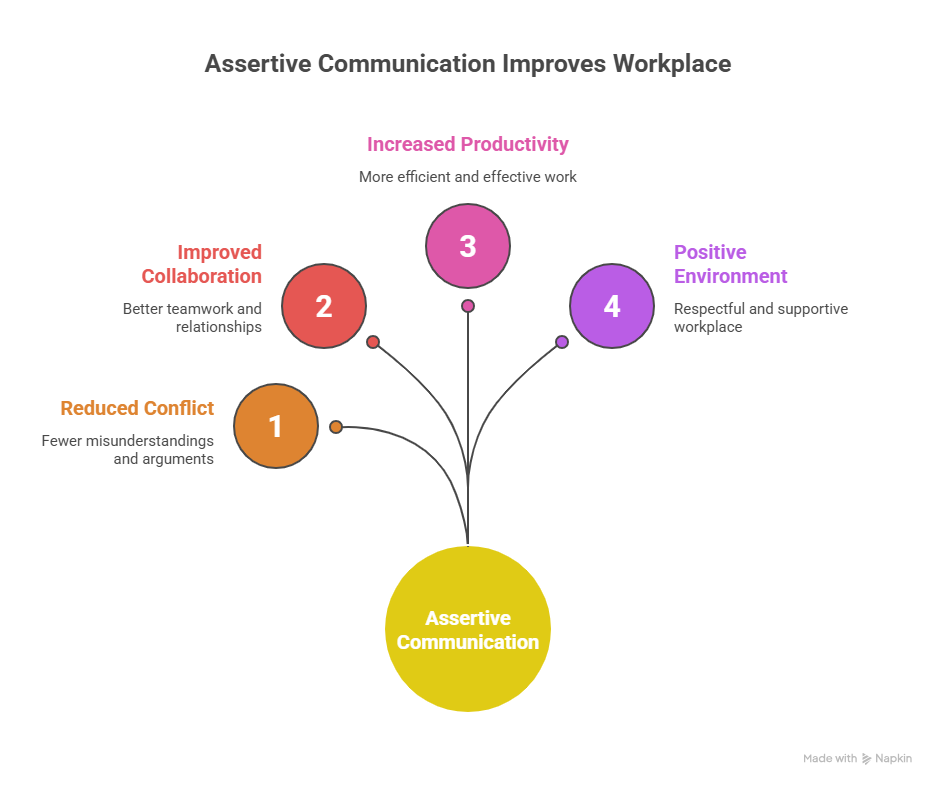
Assertive communication brings many benefits. It leads to improved collaboration and reduced conflict. It makes your work place better and more positive.
It also makes people feel safe to share their thoughts. This leads to better decision making.
Assertive communication is not the same as being aggressive. Knowing the difference is key for good work place relationships. For more, visit After Athena’s insights on assertive communication.
Using assertive communication makes work better. It creates a place where everyone is open, respected, and works together well.
In short, assertive communication has many benefits. It helps with teamwork, reduces fights, and makes everyone feel more confident. It makes work a better place for everyone.
Also Read : Hybrid Workplace Communication 2026: 5 Proven Strategies to Fix Communication Gaps & Boost Team Productivity
Conclusion
Assertive communication is key for professionals. It lets you share your needs and limits clearly. Knowing what is assertive communication in the workplace helps you get along better with colleagues.
Using “I” statements and staying calm are good assertive communication techniques. These can really change how you work with others. Getting assertive communication training can help you get even better at it.
Being assertive makes work better. You’ll work better with others and have less arguing. Start working on your communication skills today. You’ll be more confident and successful at work.
Keep getting better by looking into examples of assertive communication. Find out how can you improve assertive communication skills. This will make you more confident and effective at work.

Makarand S is a content writer who focuses on importance of soft skills and job readiness. Through his articles, He identifies potential gap areas and demonstrates easy and practical ways to overome them. With a keen interest in Skill Development, Makarand explores the shift in job landscapes and strategies for continuous learning. His articles help readers in preparing for the rapidly evolving nature of work more
Submit the form we will reply within Next 24 hours


Develop Must-Have Skills To Navigate Workplace Challenges And Build Executive Presence
Explore Topics
- AI-Driven Skill Development (7)
- Communication Skills in Indian English (12)
- Confidence Building for Students (5)
- Entrance Test Updates (2)
- Government Job Mindset Training (4)
- Lifelong Learning for Indian Women (3)
- Personality Development for IT/BPO (7)
- Public Speaking in Hindi/Marathi (1)
- Rural Empowerment via Soft Skills (0)
- Soft Skills for Indian Careers (11)
- Strategic Thinking for Entrepreneurs (29)
- text (0)
- Uncategorized (2)