
Interpersonal vs Intrapersonal Skills: A Complete Guide for Graduates and Professionals
Unlock your professional potential with this comprehensive guide on interpersonal skills, intrapersonal skills, and emotional intelligence at work.
Introduction
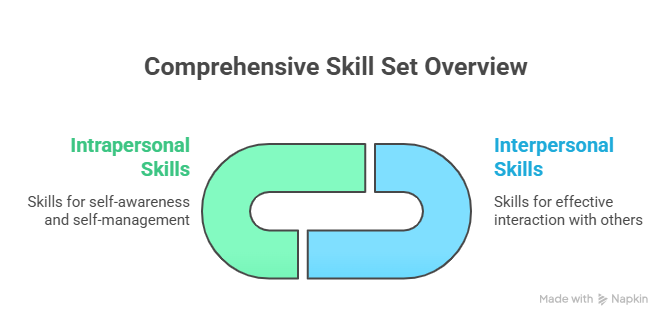
Getting a job after graduation in India is a big deal. But, mastering the right skills can really help. In 2025, employers want new graduates to have both interpersonal and intrapersonal skills to do well in their jobs.
The difference between “inter” and “intra”, shows how two skill sets help you succeed in different ways. Knowing yourself and working well with others are essential for being ready for a job.
Key Takeaways
- Understanding the difference between interpersonal and intrapersonal skills is vital for career success.
- Employers in India expect fresh graduates to master both skills in 2025.
- Developing effective communication tips can enhance campus placements.
- Intrapersonal skills help individuals manage themselves under pressure.
- Interpersonal skills enable individuals to work collaboratively with others.
What Are Interpersonal and Intrapersonal Skills?
It’s important for new graduates to know the difference between interpersonal and intrapersonal skills. Both are key to success in your career.
Also Read : Communication Skills for Business Development Success
Interpersonal Skills – Working with Others
Interpersonal skills help you connect with others. They are about communicating, collaborating, and building relationships at work. A study on edstellar.com says, “The art of communication is the language of leadership.”
Some important interpersonal skills are:
- Active listening: Listening fully to what others say.
- Empathy: Understanding and sharing the feelings of your colleagues.
- Teamwork: Working together with others to reach a goal.
Intrapersonal Skills – Working with Yourself
Intrapersonal skills are about self-management and growth. They help you understand yourself better.
“Self-awareness is the ability to see yourself clearly – to understand how your thoughts, emotions, and actions align (or don’t align) with your intentions.”
Working on intrapersonal skills can make you better at making decisions and handling stress. Key intrapersonal skills are:
- Self-awareness: Knowing your strengths, weaknesses, and feelings.
- Self-regulation: Controlling your emotions and actions in different situations.
- Self-motivation: Pushing yourself to reach your goals and face challenges.
By improving both interpersonal and intrapersonal skills, you’ll do better at work and become more effective.
Why Do These Skills Matter in the Workplace?
In today’s fast-paced work environment, it’s key to understand the importance of interpersonal and intrapersonal skills. These skills help employees work well in teams and adapt to changes. They are crucial for success and job satisfaction.
Also Read : 5 ways to develop communication skills for your employees
Interpersonal Skills in Team Collaboration
Good team collaboration needs strong interpersonal skills. This includes listening well, being empathetic, and communicating clearly. Employees with these skills work well together, creating a positive work place.
A study found that those who communicate well are nearly five times more productive. “The ability to communicate effectively is critical in team settings, as it enables individuals to share ideas, provide feedback, and resolve conflicts efficiently,” as highlighted in a blog post on interpersonal vs intrapersonal skills.
Intrapersonal Skills in Decision-Making & Stress Management
Intrapersonal skills are vital for making good decisions and managing stress. Self-awareness, reflection, and emotional control help individuals make informed choices. They can handle their workload and keep a healthy work-life balance.
By improving these skills, employees can deal with work pressures better. They can reach their goals more easily.
Combined Impact on Career Growth
The impact of both interpersonal and intrapersonal skills on career growth is huge. Developing these skills makes professionals better team players and decision-makers. They handle stress better too.
This leads to better job performance and more opportunities for advancement. By improving both sets of skills, individuals can reach their career goals.
Also Read : Soft Skills vs Hard Skills in Project Management
Practical Examples for Freshers and Early Professionals
Starting your career means facing many challenges. You’ll need to use your skills to do well and feel confident. Knowing how to apply these skills can really help you succeed.
Campus Placement Group Discussion Example
Group discussions are a big part of campus placements. You’ll need to listen well, speak clearly, and work well with others. For example, in a discussion about remote work, you’ll need to listen, share your thoughts, and respect others’ views. This shows you can work as a team and think critically.
First Job Stand-Up Meeting Example
In your first job, you’ll join stand-up meetings. Here, you share your progress, talk about challenges, and set daily goals. You’ll need to be confident, clear, and able to handle stress. For example, when it’s your turn, speak clearly about your tasks, any problems, and your confidence in solving them. This helps you make a good impression and fit in with the team.
Email Etiquette for Junior Engineers
Email etiquette is key for junior engineers. You need to be clear, concise, and professional. For example, when emailing about a technical issue, describe the problem, what you’ve done so far, and what you need help with. This shows you can communicate well and manage your work.
By getting good at these examples, you’ll be ready for many workplace situations. This will help you grow in your career.
Also Read : Improve Communication Skills for UPSC Interview Preparation
How to Improve Interpersonal and Intrapersonal Skills (Step-by-Step Framework)
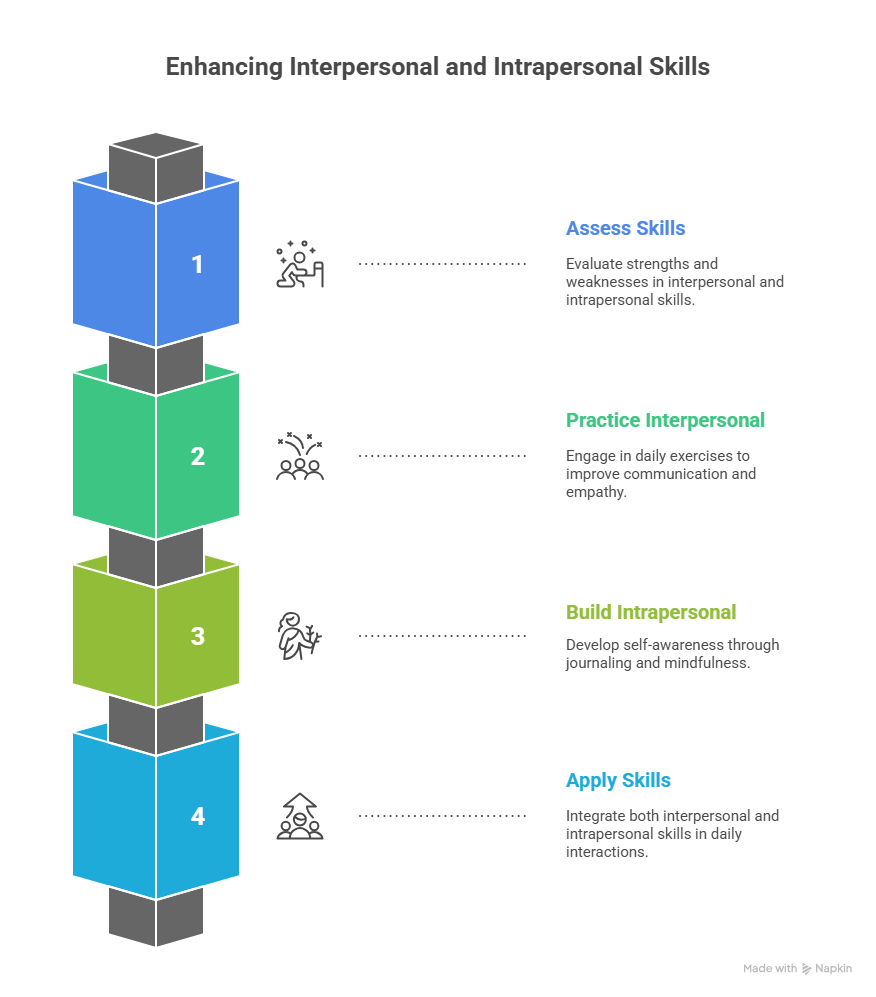
Boosting your confidence and performance at work is easier with better interpersonal and intrapersonal skills. We’ll show you a 4-week plan to improve these key skills.
Week 1 – Assess Your Skills
Start by checking your strengths and weaknesses. Think about how you interact with others and your self-awareness. Ask yourself:
- How well do I talk to my team?
- How do I deal with disagreements?
- What makes me emotional?
Also, ask for feedback from colleagues, friends, or family. This helps you see your skills from different angles.
Week 2 – Practice Interpersonal Skills Daily
Now that you know your skills, practice every day. Here are some tips:
- Listen actively in conversations.
- Try to see things from others’ perspectives.
- Speak up in group talks or presentations.
For more on these skills, check out this guide on interpersonal vs intrapersonal skills.
Week 3 – Build Intrapersonal Awareness
Understanding yourself better is key. Try these:
- Keep a journal of your thoughts and feelings.
- Use mindfulness through meditation or deep breathing.
- Reflect on your motivations and goals regularly.
As you grow in self-awareness, you’ll handle stress better.
Week 4 – Combine & Apply at Work/College
In the last week, mix both skills in your daily life. Here’s how:
- Use your people skills to work well with your team.
- Use your self-awareness to make smart choices and manage stress.
- Keep getting feedback and think about your progress.
By the end of this 4-week plan, you’ll see big improvements in your work and confidence.
Also Read : Use 4 Communication Techniques to Practice Assertive Communication At Workplace
Conclusion – Building a Job-Ready Skillset
It’s vital for new graduates and early professionals to work on their skills. Mastering both interpersonal and intrapersonal skills can boost your career. It helps you succeed in your chosen field.
To improve your skills, practice regularly. Start by downloading a free tracker/template to track your progress. This will show you where you need to get better and help you learn more effectively.
Practise with Purpose
Practising consistently is essential for a strong skillset. Try to use your skills in real-life situations. This could be in group talks, presentations, or team meetings.
Explore Further Learning Opportunities
For a more structured way to develop your personality, look into Arthsetu’s Communication Skills course. It’s made for fresh graduates. Their programs help bridge the gap between what you learn in school and what you need for work, making you job-ready.
Frequently Asked Questions

Makarand S is a content writer who focuses on importance of soft skills and job readiness. Through his articles, He identifies potential gap areas and demonstrates easy and practical ways to overome them. With a keen interest in Skill Development, Makarand explores the shift in job landscapes and strategies for continuous learning. His articles help readers in preparing for the rapidly evolving nature of work more
Submit the form we will reply within Next 24 hours


Develop Must-Have Skills To Navigate Workplace Challenges And Build Executive Presence
Explore Topics
- AI-Driven Skill Development (7)
- Communication Skills in Indian English (12)
- Confidence Building for Students (5)
- Entrance Test Updates (2)
- Government Job Mindset Training (4)
- Lifelong Learning for Indian Women (3)
- Personality Development for IT/BPO (7)
- Public Speaking in Hindi/Marathi (1)
- Soft Skills for Indian Careers (11)
- Strategic Thinking for Entrepreneurs (29)
- Uncategorized (2)