
5 Ways To Develop Employees’ Communication Skills
Lorem ipsum dolor sit amet, consectetur adipiscing elit. Ut elit tellus, luctus nec ullamcorper mattis, pulvinar dapibus leo.
Lorem ipsum dolor sit amet, consectetur adipiscing elit. Ut elit tellus, luctus nec ullamcorper mattis, pulvinar dapibus leo.

Introduction
Imagine a team where people connect easily and projects move faster. You want fewer misunderstandings and clearer handovers. This guide gives five practical ways to build that reality.
We use research and simple drills. Data shows almost 70% of staff would be more productive with better interpersonal approaches. One-third of projects fail because messages break down.
The methods work on-site and on Zoom. You’ll find short drills, feedback scripts and review templates that fit teams in Mumbai, Bengaluru and Hyderabad. Try one idea this week and measure meeting time saved.
Key Takeaways
- Five practical techniques to reduce rework and speed projects.
- Research-backed drills that lift productivity up to 25%.
- Templates and scripts you can use with hybrid teams.
- Ways HR and leaders can scale learning across locations.
- One clear action: pilot a method this week and measure impact.
How Communication and interpersonal skills drive workplace success
Evidence is clear. Teams that exchange context well can lift productivity by up to 25%. PMI reports one-third of projects fail because messages break down. Gallup shows supportive leaders raise engagement by about 70%.
Recruiters notice this too. About 81% prioritize interpersonal skills when hiring. Strong communication skills help people collaborate, give useful feedback and lead small teams early in their careers.
Also Read : Communication Skills for Business Development Success
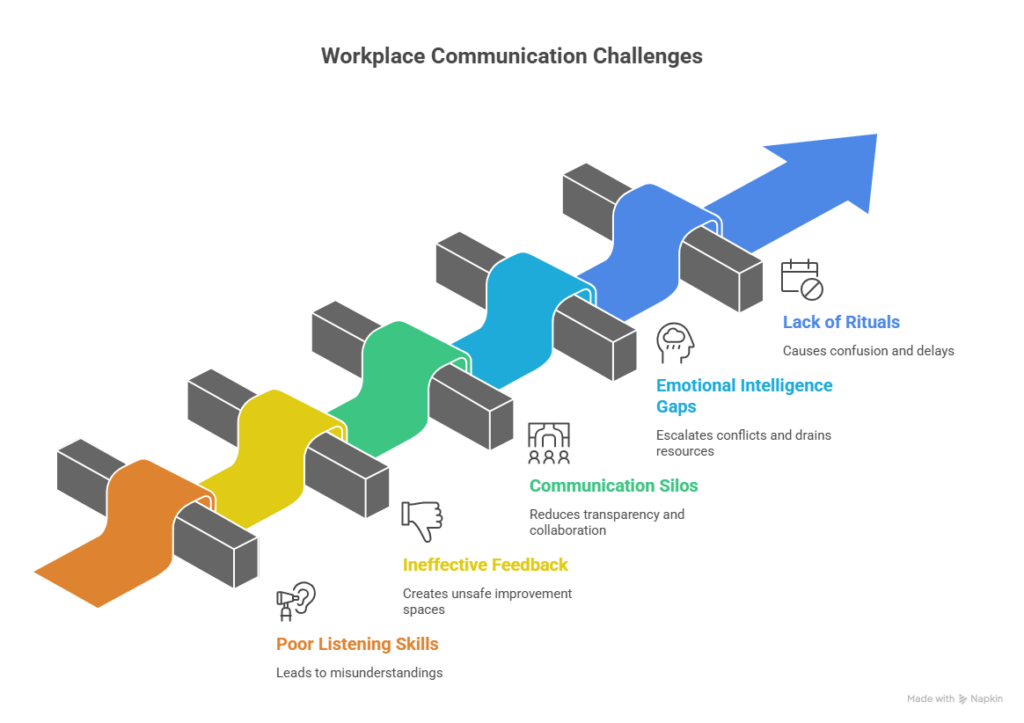
Build active listening as a daily habit
Make listening a habit. Start with small routines that change how people hear messages and act. These drills work in Mumbai offices and on Zoom. They focus on reflection, quick feedback and spotting nonverbal signals.
Teach reflection and clarification to reduce misunderstandings
Use the 3R loop: Receive. Reflect. Reconfirm. Ask the speaker to confirm the summary. This reduces rework and boosts understanding.
Run short listening drills and role-plays for in-person and remote teams
Try five-minute pair drills. One speaks for 90 seconds. The other paraphrases feelings and actions. Swap roles and repeat.
- Traffic-light coaching: Green reflect facts. Amber clarify assumptions. Red stop interruptions.
- Triads: speaker, listener, observer. Observer scores reflections and bias-free questions.
- Stand-ups: enforce no overlap. Listener summarises next steps.
Also Read : 7 Steps to Improve Communication Skills in Customer Service
Spot and interpret nonverbal cues alongside the spoken message
On video, switch cameras on. Watch facial tension, pauses and tone shifts. Add simple checks: eye contact, open posture and nods. These nonverbal cues build trust and show genuine attention.
“Active listening boosts problem-solving, faster decisions and measurable productivity.”
Action step: Schedule two ten-minute listening drills this week — one in-person, one on video. Track one KPI: fewer “Can you repeat?” moments week over week.
Turn feedback and performance reviews into communication accelerators
Feedback can turn routine reviews into fast learning loops that change how your team works. Make reviews short. Focus on actions, not character. This creates safe spaces to improve and keeps projects moving.
Adopt clear, concise language and behaviour-focused feedback
Use B.I.C.: Behaviour. Impact. Change request. State a fact. Explain its effect. Ask for one change. For example: “Missed handoff at 3 pm. Client response delayed. Can you confirm time and owner next sprint?”
Use two-way dialogues and coaching questions to raise engagement
Make it a conversation. Ask: “What felt hard?” and “What support helps next sprint?” Summarise the reply. Then ask one coaching question. This practice active listening step builds trust and keeps people involved.
Also Read : Communication Skills for IT in 2026
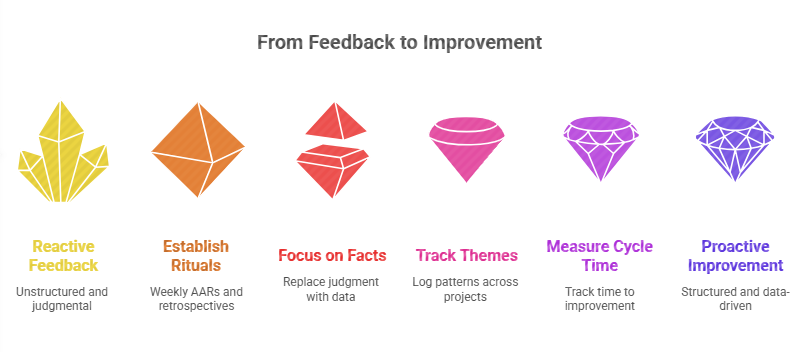
Create feedback rituals: after-action reviews and project retrospectives
Run weekly AARs with this simple checklist: What went well. What didn’t. What we’ll change now. Start facts first. Name emotions next. End with concrete actions and owners.
- Replace judgement with facts. Say time and outcome.
- Keep a shared log of themes. Spot patterns across colleagues and projects.
- Measure cycle time to improvement. Shorter loops mean better results.
“Supportive leadership links to 70% higher engagement. Teams that communicate well see up to 25% productivity gains.”
Action step: Add a 15-minute AAR after your next project milestone. Try one coaching question. Track one metric next week.
Learn practical templates and checklists in this short guide: interpersonal communication skills at workplace.
Also Read : 7 Non-Academic Skills Recruiters Look for: And How to Build Them Quickly
Train nonverbal, verbal, and written communication together
Make each update work three ways. Say it. Show it with posture and tone. Send a short note. This reduces back-and-forth in hybrid teams.
Nonverbal cues: posture, eye contact, tone and cultural sensitivity
Stand or sit upright. Keep steady eye contact on video. Use pauses to add weight. Slow your pace when groups mix across regions.
Verbal, written and visual checklists
- Verbal (PREP): Point. Reason. Example. Point. Keep pace steady.
- Written: Subject line. One clear ask. Bullets. Deadline. Owner.
- Visual: One-line takeaway. Simple chart. Highlight the key number.
Use tone mirrors. Match energy and tempo to context while staying respectful. Link talk tracks to a one-paragraph summary in your docs.
Measure results: fewer clarification emails and faster approvals on proposals. Action step: convert your next update into a 60-second talk, a one-page email and one-slide visual. This trains all modes together and boosts understanding across people and projects.
Strengthen emotional intelligence and empathy to resolve conflict
Strong emotional awareness helps teams stop small disagreements turning into big setbacks. Emotional intelligence accounts for about 58% of job performance (TalentSmart). CPP Global shows people spend nearly 2.8 hours weekly on conflicts. That time drains focus and costs money.
Recognise triggers and manage emotions under pressure. Map common triggers with an If‑Then plan. Example: If interrupted, then pause and restate calmly. Define a five‑minute cooling rule. This reduces heat and protects psychological safety.
Structured conflict pathway
Use a three‑step script to de‑escalate quickly.
- Surface needs — Ask, “What outcome matters most to you?”
- Explore options — Brainstorm two realistic paths.
- Agree actions — Assign owners and timelines.
Build rapport and trust
Teach simple empathy lines. Try: “I can see why this matters to you.” Name emotions without blame. Say, “I feel concerned about timelines.” That invites solutions.
Action step: Run a 20‑minute EI drill this Friday. Identify one trigger. Create an If‑Then response. Coach one manager to model calm and track resolution time next week. Need a short refresher on practical approaches? See this quick guide.
Embed collaboration rituals and project communication practices
Rituals and simple rules cut confusion and keep projects on track. Define who decides. Set where information lives. Agree when teams meet. These steps shrink delays and reduce rework across Mumbai, Bengaluru and Hyderabad teams.
Define roles, expectations, and channels
Use a RACI to name who is Responsible, Accountable, Consulted and Informed. This makes each role clear. It stops repeated questions and speeds approvals.
Use stand-ups, huddles, and agendas
Lock weekly stand-ups to 15 minutes. Ask three simple questions. Call out one risk. Make one clear ask.
Leverage project tools to improve transparency
Centralise updates in a shared tool. Keep entries one line. Make items searchable. Use dashboards for status and risks.
- Agendas: time boxes. End with actions, owners and due dates.
- Channel norms: what to send via chat, email or meeting.
- Review: check rituals monthly. Drop what adds no value.
Try a short read on team effectiveness here: tips to work effectively across teams.
focus areas that move the needle
Pick the handful of habits that actually change how your team works each day.
Prioritise active listening and empathy. These reduce errors and help you build strong relationships. Practice active listening in short daily drills. Track fewer clarification questions the next week.
Teach a clear conflict pathway. Keep conversations constructive and time‑boxed. Agree on outcomes. Assign an owner and a deadline. This keeps a project moving.
Strengthen collaboration and leadership communication. Define roles. Set shared goals. Coach young leads to brief, align and inspire. Use one‑line updates and one next step to reduce noise.
- Improve customer-facing clarity: short intro. One ask. One next step.
- Practice concise messages. Cut jargon. Use plain English in all channels.
- Use simple rubrics to assess listening, clarity and follow-through.
“Body language and tone often carry more meaning than the words we use.”
Action step: Choose one focus area and run a 30‑minute practice lab this week. Measure faster approvals and fewer escalations.
Want templates and quick labs? See a short guide on workplace skills.
Remote and hybrid adaptations for communication skills
When people are split across cities, tiny rules stop big misunderstandings. Hybrid work needs clear norms so messages travel cleanly between Mumbai, Bengaluru and Hyderabad teams.
Use video check-ins to humanise work. Read non‑verbal cues on screen. Keep agendas visible. Schedule short, regular syncs to share updates and spot issues early.
Video check-ins, inclusive facilitation, and clear digital etiquette
Rotate who leads. Invite quieter colleagues first. This brings balance and makes meetings more inclusive.
Practice active listening during calls. Pause after questions. Name feelings and constraints. That builds empathy and reduces friction.
Channels and norms: when to chat, email, call, or meet
- Chat: quick asks and links.
- Email: decisions, records and approvals.
- Meetings: collaboration, problem solving and demos.
- Async updates: one slide. three bullets. one date.
Keep tools light. Use clear names and archives. Share pre‑reads 24 hours before meetings. Respect focus time and reduce duplicate updates.
KPIs and signals that your training works
Start by defining which signals matter most to your team — and how you will measure them. Pick three metrics that link behaviour to business results. That makes it easy to show value.
Productivity, project outcomes and conflicts
Track productivity signals such as fewer rework loops and faster approvals. Measure milestone on‑time rate and reduced scope changes on active projects.
Monitor conflicts by measuring time to resolution and repeat incidents. Use CPP Global data to set targets — less time lost equals visible cost savings.
Employee sentiment, feedback quality and stakeholder trust
Capture sentiment with short pulse surveys on clarity and inclusion. Score feedback items by specificity and follow‑up actions.
Check stakeholder trust via fewer escalations and smoother sign‑offs. Observe meetings: shorter agendas and clearer decisions are a behavioural signal of success.
- Dashboard: update monthly and review with leaders.
- Tie to ROI: convert saved hours into revenue or cost avoided.
- Action step: launch a baseline survey this week and pick three KPIs to track for 90 days.
Conclusion
Close the loop: apply one drill. Measure one metric. Share a small win.
You now have five practical ways to raise team communication and build strong workplace habits. Each method is simple to start and easy to measure. Blend listening drills, short feedback rituals and tool‑based routines.
Start small. Run a two‑week pilot with one team. Track one clear KPI. Show faster approvals, fewer clarifications or shorter resolution time.
Keep practising weekly. Reinforce changes with managers and simple norms. Small steps add up fast. Commit to one action today. Put it on the calendar and invite people to join.

Makarand S is a content writer who focuses on importance of soft skills and job readiness. Through his articles, He identifies potential gap areas and demonstrates easy and practical ways to overome them. With a keen interest in Skill Development, Makarand explores the shift in job landscapes and strategies for continuous learning. His articles help readers in preparing for the rapidly evolving nature of work more
Submit the form we will reply within Next 24 hours


Develop Must-Have Skills To Navigate Workplace Challenges And Build Executive Presence
Explore Topics
- AI-Driven Skill Development (7)
- Communication Skills in Indian English (12)
- Confidence Building for Students (5)
- Entrance Test Updates (2)
- Government Job Mindset Training (4)
- Lifelong Learning for Indian Women (3)
- Personality Development for IT/BPO (7)
- Public Speaking in Hindi/Marathi (1)
- Rural Empowerment via Soft Skills (0)
- Soft Skills for Indian Careers (11)
- Strategic Thinking for Entrepreneurs (29)
- text (0)
- Uncategorized (2)