Soft Skills vs Hard Skills in Project Management
Lorem ipsum dolor sit amet, consectetur adipiscing elit. Ut elit tellus, luctus nec ullamcorper mattis, pulvinar dapibus leo.
Lorem ipsum dolor sit amet, consectetur adipiscing elit. Ut elit tellus, luctus nec ullamcorper mattis, pulvinar dapibus leo.

TL;DR
As we look ahead to 2025, a big question is: Is project management a soft skill or a set of hard skills? The truth is, great project management combines people skills like talking clearly and solving problems with technical skills like planning and managing risks.
If you’re a project manager, you need to mix the right skills to be a better and more effective manager. This means knowing what soft skills in project management are, like leading and talking well. And also knowing the hard skills needed for project planning and risk management.
Key Takeaways
- Understand the blend of soft and hard skills required for project management success.
- Learn how to balance people skills with technical skills.
- Discover beginner-friendly examples to practice both soft and hard skills.
- Develop a growth mindset to navigate the complexities of project management.
- Build trust, de-risk delivery, and lead with confidence.
Introduction
Project management is more than just deadlines and budgets. It’s about understanding people and teamwork. As a project manager, you must handle team dynamics, stakeholder needs, and communication issues.
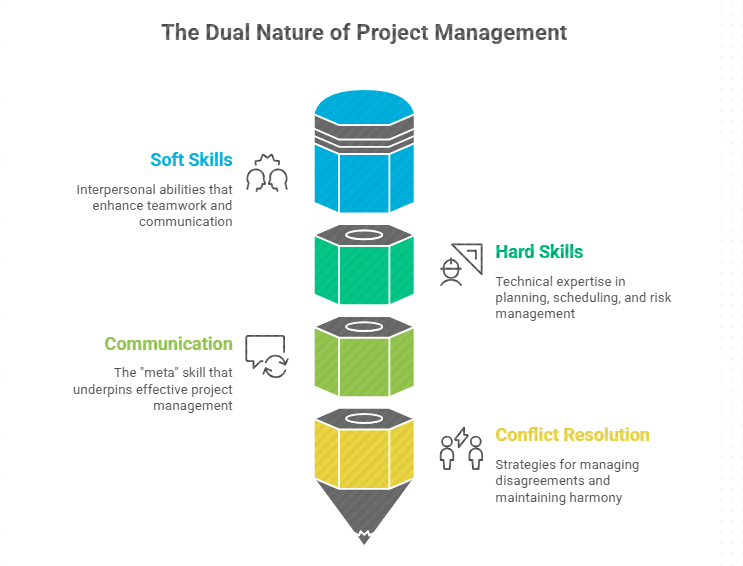
Soft skills are non-technical abilities that enhance work quality. In project management, they’re key for teamwork, conflict management, and keeping everyone on the same page.
Core PM Soft Skills
The main soft skills for project managers are communication, leadership, negotiation, conflict resolution, emotional intelligence (EQ), and stakeholder management. These skills help:
- Build trust with team members and stakeholders
- Ensure clear communication to avoid mistakes
- Guide the team towards shared goals
- Address conflicts fairly and quickly
- Understand and manage team emotions
- Manage stakeholder expectations and updates
By honing these skills, project managers can boost team results, increase project success, and improve overall performance. For more on these skills, check out Edstellar’s blog on behavioral skills.
As you grow as a project manager, focus on these vital soft skills. They are the key to achieving success in your projects.
Also Read : Technical Communication as a Soft Skill
What Are “Hard” Project Management Skills?
To manage projects well, you need hard skills like planning, scheduling, and budgeting. These skills help you finish projects on time and within budget. They also ensure the quality meets standards.
Define Hard Skills: Planning, Scheduling, Budgeting, Risk, Quality, EVM, Tools
Hard skills in project management are specific abilities that help project managers do their job well. These include:
- Planning: Setting project scope, timelines, and making a detailed plan.
- Scheduling: Creating a schedule with tasks, milestones, and deadlines.
- Budgeting: Managing a budget to keep project costs under control.
- Risk Management: Finding, checking, and reducing risks that could affect the project.
- Quality Management: Making sure the project meets quality standards through planning, assurance, and control.
- Earned Value Management (EVM): Checking project performance against the plan with EVM metrics.
- Tool Fluency: Being good at using project management tools and software.
For more on project management skills, check out Simplilearn’s article on project management skills.
Also Read : What are Project Management Skills: with Beginner‑Friendly Examples
PMBOK and Process Groups/Knowledge Areas
The Project Management Body of Knowledge (PMBOK) gives a detailed guide for project management hard skills. It covers process groups (initiating, planning, executing, monitoring and controlling, closing) and knowledge areas (integration management, scope management, time management, etc.).
Understanding and using PMBOK helps project managers develop needed hard skills. This includes knowing how to:
- Use process groups to manage the project lifecycle.
- Apply knowledge areas for full project management.
Getting good at these hard skills is key for project managers to succeed and grow in their careers. By focusing on planning, scheduling, budgeting, and more, you can become a skilled project manager.
So… Is Project Management a Soft Skill or a Hard Skill?
Project management combines soft and hard skills. It’s not just one or the other. It’s about using both in the right way. Let’s look at when soft skills are key and when hard skills are needed.
When Soft Skills Dominate Outcomes
Soft skills are vital for project success. They help with alignment, conflict resolution, and stakeholder trust. For example, active listening and clear communication are important. They help understand what stakeholders need and manage their expectations.
Project managers must bring teams together. They need strong leadership and people skills for this. A team working together helps everyone share the same goals.
When Hard Skills Dominate Outcomes
Hard skills are important for the technical side of projects. They cover scope, schedule, cost, and risk baselines. Project managers use these skills to plan, budget, and assess risks.
Knowing how to use project management tools is also key. It helps projects finish on time and within budget. Hard skills also help with audits and following project management rules.
In short, project management uses both soft and hard skills. Knowing when to use each helps project managers do their job well.
Also Read : Project Management Skills: Soft vs Hard, with Beginner‑Friendly Examples
Communication as the “Meta” Soft Skill
Communication is seen as the “meta” soft skill in project management. It’s the foundation for many other important skills. As a project manager, your ability to communicate well can greatly impact your project’s success.
Effective Communication Techniques
Effective communication requires several key techniques. Plain-language updates ensure everyone understands project progress clearly. Active listening helps you understand your team and stakeholders’ needs and concerns. Meeting facilitation skills keep meetings productive and on track. Lastly, written clarity in reports and emails prevents misunderstandings.
Conflict Resolution Micro-Playbook for PMs
Even in well-managed projects, conflicts can happen. A conflict resolution micro-playbook helps you handle these situations well. Start by finding the root cause of the conflict using RAID logs to track issues. Practice active listening to grasp everyone’s perspective. Use decision notes to document agreements and actions. Lastly, send status emails to keep everyone informed, reducing risks.
For more strategies on conflict resolution in project management, check out conflict resolution in project management. It offers more insights into managing conflicts.
By improving your communication skills and having a conflict resolution plan, you can boost your project outcomes. This will also enhance your role as a project manager.
Also Read : Use 4 Communication Techniques to Practice Assertive Communication At Workplace
Leadership, Stakeholders, and Negotiation
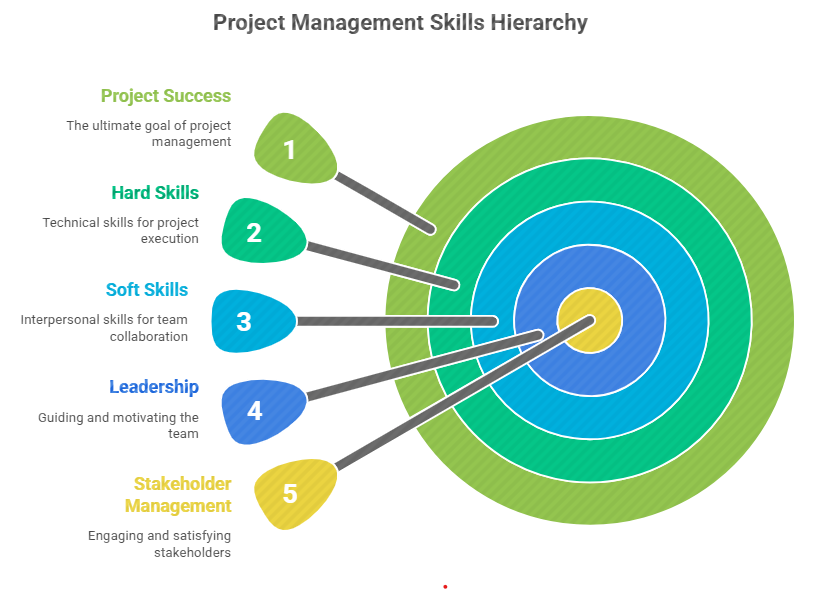
As a project manager, your job is more than just making sure the project succeeds. It’s about creating a team that works well together. Leadership means guiding everyone towards common goals, building trust, and giving everyone a sense of purpose.
Stakeholder Mapping and Trust Building
Managing stakeholders well is key. It involves mapping stakeholders to know what they want and expect. This way, you can build trust and make sure everyone knows what the project aims to achieve.
This approach helps you handle trade-offs across scope, time, and cost better.
To do this, follow these steps:
- Find out who the important stakeholders are and what they want
- Make a plan for how to engage with stakeholders
- Talk to stakeholders often to build trust
Evidence on Soft Skills and Knowledge Flow
Studies show that soft skills are linked to better knowledge flow and results. Skills like emotional intelligence and being adaptable are key for working well with stakeholders. These skills help you deal with the complex world of stakeholders.
To get better at managing stakeholders, work on your emotional intelligence and adaptability. This will help you understand what stakeholders need and handle project challenges better.
Also Read : 7 Steps to Improve Communication Skills in Customer Service
Hard‑Skill Anchors: Planning, Risk, and Reporting
To deliver projects well, you need to work on hard skills like planning, risk management, and reporting. These skills are the technical base for managing projects. They ensure projects are well-planned, run smoothly, and meet quality standards.
Tool-Agnostic Practices Across Methodologies
Mastering hard-skill anchors means learning practices that work with many project management methods. For example, making a Work Breakdown Structure (WBS) is key. It helps organize and manage project scope, no matter the method.
Keeping a risk register is also a vital skill. It involves spotting, checking, and reducing risks during the project. This skill is key for managing risks well, across all methods.
Earned Value Management (EVM) tracks project performance by comparing work done to planned work. A simple EVM snapshot can show how a project is doing. It helps in making smart decisions.
By focusing on these hard-skill anchors and using practices that work with any tool, you can improve your project management skills. Whether you’re using Agile, hybrid, or predictive methods, applying these hard skills is key to success.
As you work on your hard skills, keep your focus on what’s most important. This includes planning, risk management, and reporting. With these skills, you’ll be ready to manage projects well and reach your goals.
Quick Starter Kit (For Beginners)
Starting your project management journey can be daunting. But with the right starter kit, you’ll be on track in no time. As a beginner, developing the necessary soft and hard skills is key for success.
Building Soft Skills
To get started, focus on one soft skill habit per week. Here are a few habits to consider:
- Listening Loop: Practice active listening by repeating back what you’ve heard to ensure understanding.
- “BLUF” Writing: Use the “Bottom-Line Up Front” style to clearly and concisely communicate your message.
- Feedback Ask: Regularly ask for feedback to understand your strengths and areas for improvement.
Developing Hard Skills
Alongside soft skills, developing hard skills is essential for effective project management. Here are some hard skill habits to adopt:
- Simple WBS: Create a Work Breakdown Structure to organize and manage your project’s scope.
- Weekly Risk Review: Regularly review and develop strategies for risks.
- Velocity Chart: Track your project’s velocity to measure progress and adjust your plans.
By incorporating these soft and hard skill habits into your routine, you’ll be well on your way to becoming a proficient project manager. Start with one habit and build from there – consistency is key.
Remember, mastering project management is a gradual journey. Focus on building your skills week by week. You’ll see significant progress over time.
Also Read : What are Project Management Skills: with Beginner‑Friendly Examples
Conclusion
Project management is all about using both soft and hard skills. These skills help your team work better and get great results. By learning the 25+ essential PM skills for 2025, you’ll be ready for anything.
To do well, mix soft skills like talking, leading, and solving problems with hard skills like planning and managing risks. Check out the hard vs soft skills examples table to see how they work together.
When you’re ready for a new project or updating your resume with the latest project management skills for resume 2025, remember it’s all about balance. Mastering these skills will make you stand out. You’ll not only succeed in your projects but also move up in your career.
Frequently Asked Questions (FAQs)

Makarand S is a content writer who focuses on importance of soft skills and job readiness. Through his articles, He identifies potential gap areas and demonstrates easy and practical ways to overome them. With a keen interest in Skill Development, Makarand explores the shift in job landscapes and strategies for continuous learning. His articles help readers in preparing for the rapidly evolving nature of work more
Submit the form we will reply within Next 24 hours


Develop Must-Have Skills To Navigate Workplace Challenges And Build Executive Presence
Explore Topics
- AI-Driven Skill Development (7)
- Communication Skills in Indian English (12)
- Confidence Building for Students (5)
- Entrance Test Updates (2)
- Government Job Mindset Training (4)
- Lifelong Learning for Indian Women (3)
- Personality Development for IT/BPO (7)
- Public Speaking in Hindi/Marathi (1)
- Rural Empowerment via Soft Skills (0)
- Soft Skills for Indian Careers (11)
- Strategic Thinking for Entrepreneurs (29)
- text (0)
- Uncategorized (2)