Improve Communication Skills for UPSC Interview Preparation
Lorem ipsum dolor sit amet, consectetur adipiscing elit. Ut elit tellus, luctus nec ullamcorper mattis, pulvinar dapibus leo.
Lorem ipsum dolor sit amet, consectetur adipiscing elit. Ut elit tellus, luctus nec ullamcorper mattis, pulvinar dapibus leo.

TL;DR
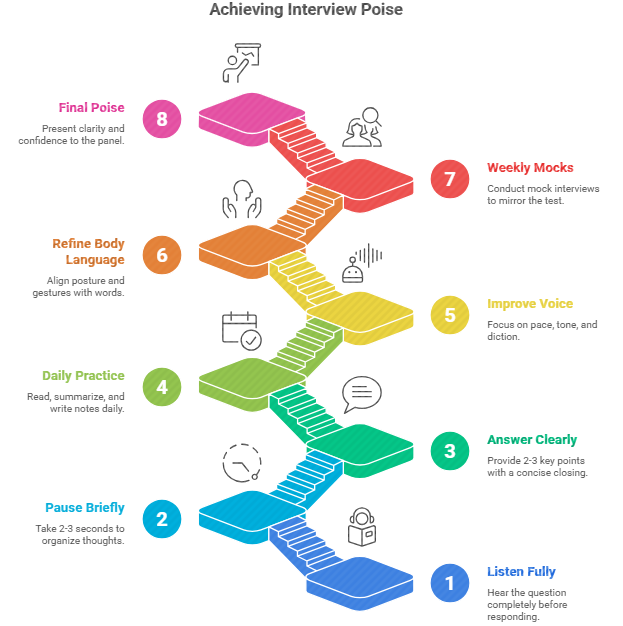
This concise guide shows you how to upgrade your delivery, structure and poise so you present clarity and confidence when facing the panel. Start by learning to listen: hear the question fully, pause 23 seconds, answer with two to three points and close in one crisp line.You will follow a daily practice loop: read one editorial, give a oneminute spoken summary and write a 120word note. Record yourself to spot fillers, pacing and pronunciation, then refine posture and gestures to align body language with your words.
Key Takeaways
- Listen fully, pause, then answer in 23 points with a oneline finish.Use a daily loop of reading, oneminute summaries and a 120word note; record and review.
- Align voice (pace, tone, diction) with open posture and balanced eye contact.
- Practice weekly mocks and DAF-based questions to mirror the Personality Test.
- Explain current affairs aloud using 3 points + 1 counterpoint to test balance.
- Stay polite and honest: if unsure, pause, breathe, think and then speak.
Importance of Listening
let the full question land before you shape a reply. A brief pause gives you time to order thoughts, choose evidence and avoid rushed responses.
- .Signal transitions: ‘First’, ‘Secondly’, ‘Finally’ to guide listeners.
- .Most answers should land in 60-90 seconds.
Also Read : 7 Steps to Improve Communication Skills in Customer Service
Practice Daily
Every day, pick one editorial from The Hindu, Indian Express, or a PIB release. Read it completely, then give a one-minute spoken summary to practice being brief and neutral. Speak calmly, focus on two or three main points, and time yourself.
Also Read : Unlock Confidence Through Body Language
Improve Your Voice
Your voice can shape how your ideas are received. Speak clearly, at a calm pace of about 120140 words per minute, so your points sound confident and easy to follow. Use pauses to separate ideas and let them sink in. Vary your tonerise for emphasis, drop to close and pronounce words carefully.
Record and practice any difficult terms from your subject area. Use simple, direct language instead of complex words; for example, say reduce instead of ameliorate. Explain jargon in plain English before using it. Always finish your sentences firmly, not trailing off. With daily short reading and speaking practice, you can build a steady voice, clear diction, and confident tone that carries your message effectively.
Work on your Body Language
Your body language often speaks before you do. Sit straight, stay calm, and keep your hands visible to show confidence and control. Enter the room with a steady pace, greet politely, and take an upright but relaxed seat. Use open hand gestures around your mid-torso they project honesty and help your voice sound stronger. Avoid fidgeting and keep your feet flat to stay steady. Make balanced eye contact with everyone on the panel: begin with the questioner, include others as you speak, and return to the questioner when finishing. Match your facial expression to what you’re saying neutral and warm for general points, serious for sensitive ones. These simple, practiced habits make you appear composed, attentive, and confident throughout the interview.
Also Read : 7 Body Language Secrets for Instant Confidence
Communication Skills for UPSC interview
Adjust your tone based on the topicbe calm and slow for sensitive issues, steady and clear for factual ones. Use small cues like In summary or Two points stand out to guide listeners. Keep your posture open and confident, and when offering critique, rely on facts and policy instead of personal opinion. Practice moving smoothly from context to examples to conclusions. Always finish by directly answering the question. Regular mock sessions help you master this balanced, composed delivery.
Weekly Mock Interviews
Record your session and review how you begin, structure your answers, and handle fillers. Practice decision-making cases like ethical dilemmas or crisis responses using public-interest reasoning. Develop a calm, steady opening line to set your tone. After each mock, identify one clear improvementsuch as pacing, eye contact, or closureand focus on it for the entire week. Use mentor feedback to refine your tone so it stays firm but polite, confident but not overbearing. Weekly practice builds rhythm, composure, and consistent performance under pressure.
Practice with Peers
Practising with peers helps you spot mistakes you cant see alone and speeds up improvement. Rotate roles dailyone speaks, one observes, and one gives feedback. This helps you understand both delivery and evaluation. Keep answers within two minutes to train clear, structured thinking. After each round, give feedback on listening, pauses, structure, voice, diction, eye contact, and gestures using a simple checklist. Use questions from DAF entries, current affairs, and situational cases for variety. Record one peer session each week to compare with your solo practice and track progress. Give short, specific feedbacklike fewer fillers or clearer closeto encourage growth. Make it routine: aim for three runs per session. Over time, youll notice stronger presence, smoother tone, and sharper structure.
Training Your Mindset
On the day of the interview, stay calm, respectful, and honest these matter more than perfectly rehearsed answers. Arrive early, keep your documents ready, and take a moment to steady yourself before entering. Greet the panel politely and sit only when invited. Speak in formal, clear language and avoid debate or slang. If you dont know an answer, admit it briefly and explain how you would find the information or approach the issue. Use short pauses and deep breaths to think before you speak; this helps maintain clarity and confidence. Handle follow-up questions as opportunities to show composure and willingness to learn. Remember, your calm and respectful attitude often makes a stronger impression than the content itself.
“Dreaming of UPSC” Read once : How to Prepare for UPSC Prelims in One Year?
Conclusion
End your preparation with a simple, disciplined routine that connects listening, structure, and honesty. Listen carefully, pause for two to three seconds, give two or three clear points, and end with one crisp closing line. This habit builds clarity and steady delivery.
Use your daily loopread an editorial, speak a summary, write a short note, and record yourselfto turn practice into real performance. Combine it with weekly mock interviews to refine timing and composure. The 2530 minute Personality Test rewards balance, calm thinking, and factual accuracy. Keep your current affairs notes, peer feedback, and energy management at the core of your plan.
Step by step, breath by breath, you build the confidence and poise of a future civil servant.
Frequently Asked Questions (FAQs)

Makarand S is a content writer who focuses on importance of soft skills and job readiness. Through his articles, He identifies potential gap areas and demonstrates easy and practical ways to overome them. With a keen interest in Skill Development, Makarand explores the shift in job landscapes and strategies for continuous learning. His articles help readers in preparing for the rapidly evolving nature of work more
Submit the form we will reply within Next 24 hours


Develop Must-Have Skills To Navigate Workplace Challenges And Build Executive Presence
Explore Topics
- AI-Driven Skill Development (7)
- Communication Skills in Indian English (12)
- Confidence Building for Students (5)
- Entrance Test Updates (2)
- Government Job Mindset Training (4)
- Lifelong Learning for Indian Women (3)
- Personality Development for IT/BPO (7)
- Public Speaking in Hindi/Marathi (1)
- Rural Empowerment via Soft Skills (0)
- Soft Skills for Indian Careers (11)
- Strategic Thinking for Entrepreneurs (29)
- text (0)
- Uncategorized (2)