
Strategic Thinking for Startup Success
In the fast-paced world of startups, strategic thinking helps founders predict changes, grab opportunities, and grow their businesses.
Lorem ipsum dolor sit amet, consectetur adipiscing elit. Ut elit tellus, luctus nec ullamcorper mattis, pulvinar dapibus leo.
TL;DR
Strategic thinking is essential for startups to predict market changes, seize opportunities, and grow sustainably. By combining vision, analysis, planning, and foresight, founders can adapt to uncertainty and innovate effectively. Case studies like Airbnb and Snapchat show how strategic pivots drive success. Mastering strategic thinking helps startups overcome challenges, align teams, and build scalable businesses.
Key Takeaways
- Strategic thinking is vital for startup success.
- It involves predicting changes and grabbing chances.
- Startups must adjust to changing market needs.
- Smart decision making is essential for dealing with uncertainty.
- Entrepreneurship needs a flexible business strategy.
Introduction

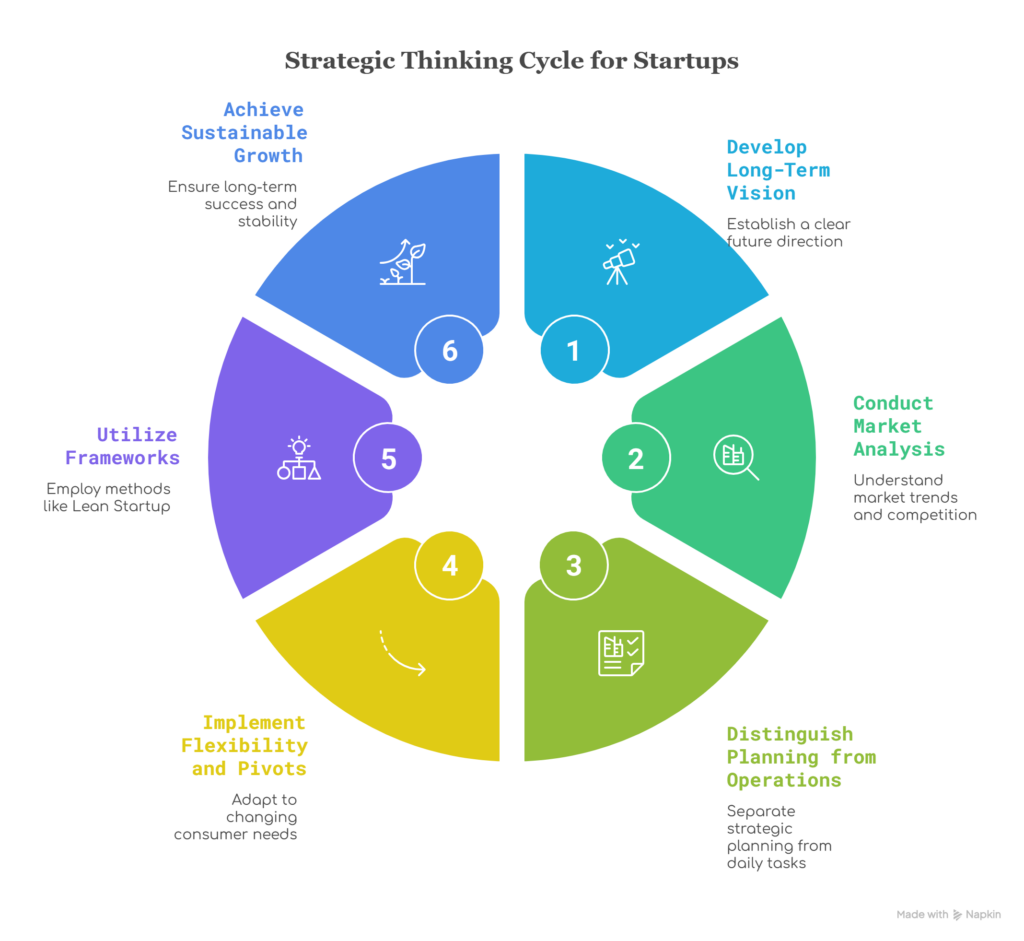
Strategic Thinking is more than just a buzzword. It’s a key skill for startups to manage risks, drive innovation, and grow sustainably. In the startup world, having a strong growth strategy is essential for success.
Key parts of strategic thinking are:
- Vision: Setting a clear direction and purpose.
- Analysis: Understanding the market, competitors, and internal strengths.
- Planning: Creating strategies to meet goals.
- Foresight: Predicting future challenges and opportunities.
Example: How Airbnb Founders Adapted Their Strategy
Airbnb’s story shows the power of strategic thinking. Starting as a platform for affordable stays, the founders changed their strategy as the market evolved. They added new features and focused on user experience, changing travel forever. This flexibility was their secret to success.
By adopting strategic thinking, startups like Airbnb can face uncertainty, innovate, and grow significantly. We’ll dive deeper into this in the next sections, showing how strategic thinking can change a startup’s game.
Also Read : 7 Powerful Strategic Thinking Exercises To Use in 2026
Understanding Strategic Thinking
To succeed in the business world, startups need to grasp strategic thinking. It helps them see beyond today’s tasks and aim for long-term goals.
Difference between Strategic and Operational Thinking
Many confuse strategic thinking with operational thinking. But they’re not the same. Operational thinking deals with daily tasks to keep a business alive. On the other hand, strategic thinking looks at risks, trends, resources, and chances that could shape plans and goals.
For example, operational thinking might tweak production methods. But strategic thinking asks if the product is market-ready and how it can evolve to meet future needs.
Apple’s Strategic Thinking in Shifting from Computers to Consumer Electronics
Apple’s move from computers to consumer electronics is a great example of strategic thinking. By studying market trends and what people want, Apple decided to expand its range. This led to the creation of groundbreaking products like the iPod, iPhone, and iPad.
This strategic move made Apple a major player in consumer electronics. It shows how strategic thinking can lead to success and lasting growth.
Also Read : Why Mastering Strategic Thinking Can IncreaseYour Exam Scores?
Strategic Challenges Unique to Startups
Starting a business is more than just a good idea. It’s about being quick to adapt in a fast-changing world. Startups face rapid change, uncertainty, and tough competition. We must learn to manage these challenges to grow and succeed.
Managing Uncertainty and Rapid Change
Handling uncertainty is key for startups. We must adjust our plans as the market, customer needs, and tech change. This means:
- Keeping up with market trends and what customers want.
- Being fast in making decisions.
- Creating a culture that values trying new things and learning.
Balancing Innovation with Viability
Startups must find a balance between being new and being practical. We need to innovate to stay ahead but also make sure our ideas work. This means:
- Doing deep market research to check our ideas
- Testing our products or services with a minimum viable product (MVP)
- Improving based on feedback to make our offerings better
By balancing new ideas with practicality, we lower the risk of launching something that doesn’t appeal to our target market.
Snapchat’s Pivot: A Case Study
Snapchat’s journey from a messy app to a big media platform shows the power of being agile. At first, Snapchat faced big issues like privacy concerns. But by listening to users and innovating, Snapchat turned things around and became a big name in social media.
We can learn a lot from Snapchat’s story:
- The importance of listening to user feedback and adapting
- The need to innovate and stay ahead
- The value of sticking with it through tough times
By following these lessons, startups can tackle the unique challenges they face.
Also Read : Strategic Thinking in Business: Harvard Teaches VS Real Life
Strategic Planning Tools and Frameworks
In the fast-paced world of startups, strategic planning is key to success. These tools help entrepreneurs create a clear plan, spot challenges, and make smart choices.
Business Model Canvas and Lean Startup Method
The Business Model Canvas and Lean Startup method are top tools for startups. The Business Model Canvas shows a startup’s business model in a simple way. It highlights important parts like who the customers are, what the value is, and how money is made
The Lean Startup method uses tests to improve products and models. It teaches startups to keep trying, based on what customers say, to find the right fit. Many startups have found success with this method.
Dropbox’s Use of Lean Startup Approach
Dropbox is a great example of using the Lean Startup method. At first, they made a simple video to explain their product. This video got a lot of interest and feedback.
This feedback helped Dropbox keep improving. They kept making changes until their product was widely used. By using tools like the Business Model Canvas and Lean Startup, startups can adapt, innovate, and succeed.
Implementing Strategy in Operations
To make strategic plans work, startups need to align their teams and use agile methods. This means not just planning but also executing the plan well. They must be ready to adapt to changes in the market.
Aligning Teams and Agile Execution
It’s key to get teams working together towards a shared goal. Every team member should know their part in reaching the startup’s objectives. They should also have the power to make decisions that help achieve those goals. Agile methods, like Scrum or Kanban, help startups adapt fast and deliver value quickly.
Spotify’s agile squads model shows how team alignment and agile methods lead to success. They split their teams into small, independent squads. Each focuses on a specific feature or component. This approach helps Spotify develop and coordinate quickly.
“Agile methodologies allow us to respond quickly to change and deliver value to our customers rapidly.”- Spotify Development Team
Startup Successes and Failure Lessons
Successful startups often change their plans to meet market needs. Instagram started as Burbn, a location app. But, the photo-sharing part was a hit. So, they pivoted to focus on minimalist design and user experience. This move helped Instagram grow fast and become a big name in social media.
Another important lesson is the need for product-market fit. It’s about knowing what customers want and making the product better. Dropbox, for example, used the Lean Startup method. They kept improving their product to match what the market wanted.
Also Read : Design Thinking as a Skill and How It Helps in Marketing
Conclusion
Strategic thinking is key for startups to succeed. It helps entrepreneurs tackle tough challenges and make smart choices. By improving their strategic thinking, they can lead their businesses forward. They adapt to new market trends and grab fresh opportunities.
To get better at strategic thinking, work on skills like analytical thinking and problem-solving. Also, focus on being an adaptive leader. Use decision heuristics to make your decisions quicker and more effective. This way, you’re always ready to grow.
Strategic thinking isn’t something you’re born with. It’s a skill you can learn and improve over time. Keep learning and growing as an entrepreneur. This will help you stay ahead in the competitive business world.
Frequently Asked Questions

Makarand S is a content writer who focuses on importance of soft skills and job readiness. Through his articles, He identifies potential gap areas and demonstrates easy and practical ways to overome them. With a keen interest in Skill Development, Makarand explores the shift in job landscapes and strategies for continuous learning. His articles help readers in preparing for the rapidly evolving nature of work more
Submit the form we will reply within Next 24 hours


Develop Must-Have Skills To Navigate Workplace Challenges And Build Executive Presence
Explore Topics
- AI-Driven Skill Development (7)
- Communication Skills in Indian English (12)
- Confidence Building for Students (5)
- Entrance Test Updates (2)
- Government Job Mindset Training (4)
- Lifelong Learning for Indian Women (3)
- Personality Development for IT/BPO (7)
- Public Speaking in Hindi/Marathi (1)
- Rural Empowerment via Soft Skills (0)
- Soft Skills for Indian Careers (11)
- Strategic Thinking for Entrepreneurs (29)
- text (0)
- Uncategorized (2)