Master Public Speaking with NLP

TL;DR
Neuro-Linguistic Programming (NLP) offers practical toolssensory stories, eye-contact drills, purposeful gestures, rhetorical questions, and confidence triggersto transform public speaking. This guide provides quick exercises (two-minute story, chunking, pausing) and real-world examples from TEDx and startup pitches, helping busy speakers engage audiences, boost clarity, and build lasting confidence.
Key Takeaways
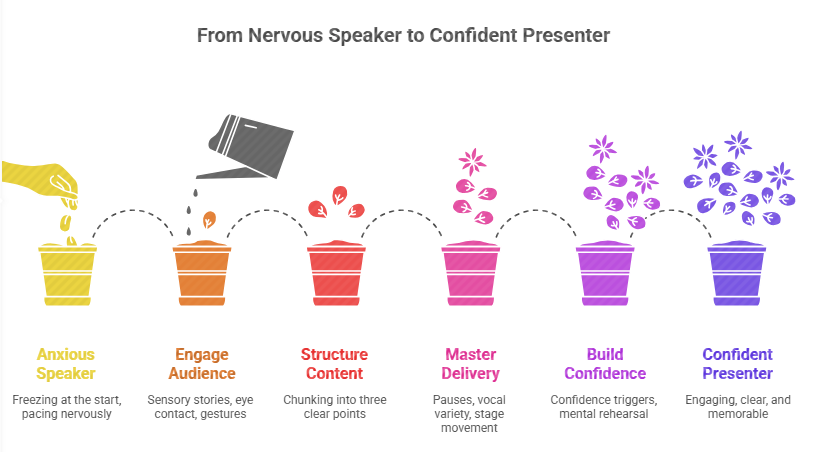
- Use a sensory two-minute story to hook and immerse listeners.
- Hold eye contact in thirds and mirror words with simple gestures.
- Chunk content into three clear points to aid audience recall.
- Insert deliberate pauses and vary vocal pitch for emphasis.
- Anchor confidence with physical cues practiced offstage for onstage calm.
Introduction
Have you ever frozen at the start of a meeting? Public speaking can feel like performing under a microscope but it doesn’t have to! Neuro-Linguistic Programming (NLP) is less a mysterious brain science and more a practical toolkit for communication: simple, repeatable ways to shape how people receive your message.
This guide is written for busy people who want immediate, usable improvements in public speaking. You’ll find quick drills (start with the 2-minute story exercise in the next section), modern examples from TEDx and startup pitches, and clear explanations of how to use NLP ideas like sensory language and confidence triggers without technical jargon.
Also Read : Public Speaking
Engaging the Audience: Tell, Show, and Invite
Start with a short, sensory story that pulls people into a moment — a two‑minute opening that feels like a scene from a TEDx talk or a startup pitch rather than a résumé read‑out. Use concrete details so listeners see, hear and feel the moment: what you saw, a sound that happened, a small physical sensation. In NLP terms this is association; in plain language it’s using sensory words to make your point stick.
Story Drill (3 steps):
1) Pick one idea you want to teach.
2) Write a 100‑word story that shows that idea in action.
3) Trim to two minutes when read aloud. Try this before your next talk — it’s a fast way to improve public speaking and build rapport.
Keep Their Attention
Once you’ve captured attention, hold it with simple, intentional signals: look people in the eye long enough to be noticed, use hand gestures that mirror your words, and move on stage with purpose rather than pacing nervously.
Positive, open body language signals confidence and helps people trust you which is the foundation of effective public speaking.
Quick Eye-Contact Drill: scan the room in thirds. At each stop, hold a friendly, steady look for 35 seconds so nearby listeners feel seen. Adjust for cultural context some audiences expect quicker glances; others welcome longer connection.
Gesture to Engage
Act out key phrases with your hands show size, direction, rhythm because visual movement helps the visual thinkers in the room follow your idea. Don’t overdo it: gestures should underline meaning, not distract from it. Practice in front of a phone camera: what looks natural on stage will look exaggerated on video.
Props: add interest, not clutter
A well-chosen prop can crystallize an idea a simple prototype in a startup pitch, a single printed stat on a card, or a physical metaphor that ties to your message. Make sure its relevant, easy to see, and rehearsed so the prop enhances rather than interrupts your flow.
Also Read : Mastering Public Speaking with NLP: Practical Techniques for Real Impact
Invite Thinking with Questions
Questions are one of the simplest tools to involve the audience. Use rhetorical questions to prompt imagination (What if you woke up tomorrow and your biggest problem was solved?) and leading questions to guide thinking toward your conclusion (Wouldn’t that free up time for more creative work?).
Strategic questions make your audience mentally participate even when they’re silent.
Practice Task (before your next talk): choose one short story, one gesture, one prop (optional) and one rhetorical question. Rehearse the sequence until it feels natural then test it in a small meeting or on video.
Using these nlp techniques regularly will make them second nature and give your public speaking results real lift.
Say Less, Remember More
Less really is more in public speaking. Being concise doesnt mean skimming the important stuff it means choosing the clearest words and delivering them with intention so your audience understands and remembers. Cut tangents, replace filler words like um and like with purposeful pauses, and favour plain language over unnecessary technical detail. Clear, economical speaking is one of the fastest ways to improve your results on stage or in a pitch meeting.
Concision Drill (5 minutes):
Pick a key point and explain it in one sentence. Now expand to three bullet points. Read aloud and remove any filler. Repeat until it’s crisp and natural — this simple nlp technique conditions your mind to prefer clarity.
Slow Down to Be Heard
Speaking too fast undermines comprehension. Use brief, deliberate pauses between ideas they give your audience time to process and make your statements land with more force. A helpful micro-exercise: record a short segment and deliberately insert a two-second pause after each main idea; listen back and note how meaning sharpens.
Also Read : Beat Public Speaking Anxiety in 10 steps!
Confidence Triggers
Rather than technical jargon, think “confidence triggers” or “mental shortcuts.” These are small, repeatable actions you practise offstage so they reliably bring calm or focus onstage. For example, a discreet hand pressure, a breath pattern, or a specific posture can become a cue that reminds your mind of a confident state. Use nlp techniques to set the trigger in rehearsal: pick the gesture, recall a confident memory, and repeat the gesture until the feeling links to the action. Tested in coaching contexts, these methods help many people feel steadier under pressure — though results vary and research on long‑term effects is mixed, so treat them as practical tools rather than guaranteed fixes.
Anchoring Practice (3 steps):
1) Choose a simple physical cue (e.g. squeeze thumb and forefinger).
2) In a quiet moment, vividly recall a past experience when you felt confident.
3) Perform the cue repeatedly while feeling that state (10–15 reps).
Test the cue before your next talk — if it helps steady your voice or posture, keep it. If not, adjust and retest.
Chunking: Organise to remember
Group your material into manageable chunks — three main points is a reliably memorable structure for many audiences. For a startup pitch, chunk into problem, solution, and traction; for a seminar lecture, chunk into context, example, and application. Chunking reduces cognitive load and makes recall easier under pressure.
Quick Chunking Exercise: outline your talk in three headings. Under each, write two supporting sentences. Practise the transitions between chunks aloud until they feel natural — transitions are the glue that holds concise speaking together.
Speak Like an Expert
Project calm authority: use clear statements, evidence where appropriate, and an organised structure. You don’t need to claim omniscience — framing insights as “In my experience” or “What we’ve tested” can communicate expertise while staying credible. Many people respond to confident delivery more than to length or technicality, so combine clear content with confident presence for the biggest impact.
Training note: integrate mental rehearsal and deliberate practice into your routine. Use short, focused rehearsals (10–20 minutes) where you practise concision, triggers, and chunk transitions. Over time, the combination of nlp training and deliberate rehearsal will make concise, confident speaking your default mode.
Emotional Impact

Facts and figures matter, but if you want your public speaking to change minds or behaviour you need to inspire a mindset. Thats where neuro-linguistic programming (NLP) shines as a practical set of communication techniques: sensory language, vivid metaphors and deliberately chosen tone and humour help audiences connect with your message, not just hear it.Use sensory words (not jargon).
Replace abstract phrases with concrete sensory language so listeners can picture and feel the idea. Instead of we improved engagement, try people stayed an extra ten minutes, smiling and leaning in. These small changes are core nlp techniques that help people form clearer memories of your point.
Sensory Rewrite Exercise (10 minutes): pick five neutral sentences from your draft and rewrite each with a visual, auditory or kinesthetic detail (sight, sound or sensation). Read them aloud you’ll notice how the content becomes more engaging for many audiences.
Also read : Why Indian Students Hesitate to Ask, Speak, or Take Risks
Metaphors: one-sentence stories that explain the complex
Metaphors are a fast route to understanding. Think Simon Sineks start with why idea short, memorable comparisons that map a complex system to a familiar image. Create one tight metaphor for each major point so listeners can recall the idea long after the talk. A fresh metaphor also helps you stand out from routine corporate language.Metaphor Drill: write a one-line metaphor for your main idea. If you cant, write a 50-word micro-story instead. Both techniques rely on the same nlp principle: give the brain a narrative anchor so it remembers better.
Practice Task: pick one point and create a small bundle a sensory sentence, a one-line metaphor and one short anecdote. Rehearse in front of a camera and watch the playback: does the story land? Do listeners faces (or your own expression) show the intended emotion? Iterate until it does.
Delivery Mastery: Move, Pause, and Own the Room
Gestures, stage movement and vocal variety are the visible signs of confidence. Use them deliberately to support meaning: point or open your palm toward something you want the audience to notice; close your hand or turn your palm away when you describe problems or risks. These simple body cues part of nlp techniques for body language help your audience map ideas to feeling without extra words.
Stage Movement: plan with purpose
Rather than pacing, use intentional shifts to signal new sections or timeframes — small moves that anchor ideas visually. Some speakers use a simple stage map (left = context/past, centre = now, right = future/solutions) as a rehearsal tool; this is an NLP heuristic rather than a universal law, but many people find it a helpful technique to structure a talk and guide audience attention.
The Power of Purposeful Pauses
Silence is an underused technique that gives your words weight. Pause after a key point to let the idea land; say someone’s name and pause to capture attention; breathe before a punchline or next section. How long to pause depends on the room and culture — three seconds can feel long in some settings, six seconds powerful in others — so practise with your audience in mind.
Pause Exercise: read a paragraph aloud and insert a silent beat after each sentence — then lengthen one pause and note how it changes emphasis. Record and compare the versions to find the rhythm that best supports your speaking voice.
Use voice as an instrument
Your voice conveys more than words: pitch, pace and volume can highlight meaning and draw listeners in. Practise emphasising the same sentence in three different ways (soft, medium, strong); note when the audience leans in. Work on breath control and posture a steady breath supports a steady voice and increases perceived confidence.
Also Read : How to Speak English Without Faking an Accent
Manage Anxiety with Short, Focused Rehearsals
Coaches often recommend brief, frequent practice sessions rather than marathon rehearsals. Ten-minute mental rehearsals (visualisation techniques) before a talk picturing the room, your calm breathing and key lines help many people reduce stage anxiety. Combine this with physical practice and your voice and body will follow.
Practice Recipe (daily):
1) 5 minutes sensory-word rewriting;
2) 510 minutes of chunked vocal runs;
3) 5 minutes of mental rehearsal imagining a calm, successful delivery.
Repeat over several days nlp training combined with deliberate practice reliably helps build confidence and improves speaking results for many people, according to coaching experience and applied research.
Conclusion
Every speech is an opportunity to move people, not just to inform them. Finish by summarising your key points in one crisp sentence, give a single, practical call to action, and close with a vivid final line that lingers. That structure helps your audience retain the message and increases the chance theyll act on it.
Frequently Asked Questions (FAQs)

Makarand S is a content writer who focuses on importance of soft skills and job readiness. Through his articles, He identifies potential gap areas and demonstrates easy and practical ways to overome them. With a keen interest in Skill Development, Makarand explores the shift in job landscapes and strategies for continuous learning. His articles help readers in preparing for the rapidly evolving nature of work more
Submit the form we will reply within Next 24 hours


Develop Must-Have Skills To Navigate Workplace Challenges And Build Executive Presence
Explore Topics
- AI-Driven Skill Development (7)
- Communication Skills in Indian English (12)
- Confidence Building for Students (5)
- Entrance Test Updates (2)
- Government Job Mindset Training (4)
- Lifelong Learning for Indian Women (3)
- Personality Development for IT/BPO (7)
- Public Speaking in Hindi/Marathi (1)
- Rural Empowerment via Soft Skills (0)
- Soft Skills for Indian Careers (11)
- Strategic Thinking for Entrepreneurs (29)
- text (0)
- Uncategorized (2)