
How to Stop Procrastinating: A Student’s Guide to Professional Success
By cultivating effective time management and productivity habits, you can beat procrastination.
Lorem ipsum dolor sit amet, consectetur adipiscing elit. Ut elit tellus, luctus nec ullamcorper mattis, pulvinar dapibus leo.
Table of Contents
TL;DR
You’re not lazy; procrastination is a skill gap driven by fear and discomfort.
This guide helps fresh graduates and students overcome it by building time management and productivity habits. Learn to reframe procrastination, embrace micro-learning, use technology tools, and navigate cultural challenges. With practical strategies and mentorship, transform delay into a career superpower and unlock your professional potential.
Key Takeaways
- Understand the root causes of your procrastination
- Develop effective time management skills
- Cultivate productivity habits to boost your efficiency
- Learn to overcome fear of failure and discomfort
- Transform procrastination into a professional superpower
Introduction

Modern leadership thrives on the ability to connect and inspire through emotional awareness. This skill, often referred to as emotional intelligence (EQ), is the cornerstone of effective management. It’s not just about understanding your own emotions but also navigating those of others to foster collaboration and success.
Also Read : Only 5% of Students Think Strategically : Global Guide for Study-Abroad Success
Procrastination Meaning
Procrastination simply means delaying tasks or decisions.
“The act of delaying something that must be done, often because it is unpleasant or boring”- The Cambridge Dictionary
Procrastination can be caused by fear, perfectionism, or lack of motivation. Knowing why you procrastinate is key to stopping it.
Procrastination and Mental Health
While Procrastination is not a mental health disorder, it can be a sign of depression or anxiety. Chronic procrastination can make stress worse, which can hurt your mental health.
The Merriam-Webster Dictionary says procrastination is intentionally delaying tasks. For some, it’s a way to cope with anxiety or fear of failure.
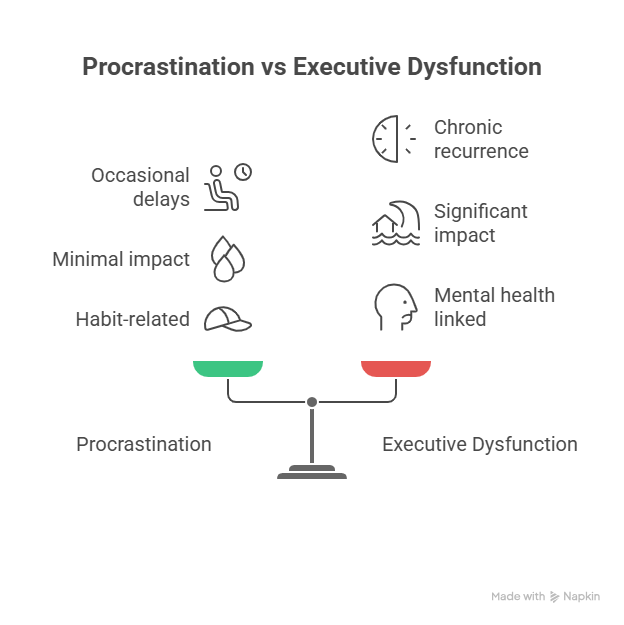
Why Do We Procrastinate?
Fresh graduates often struggle with procrastination. This is because they face a big change in their daily life and the pressure to do well. They go from a set college schedule to the real world, facing many challenges.
Lack of Structure Post-College
One big reason for procrastination is the lack of structure after college. In college, everything is set, like classes and homework. But after college, you have to plan your day yourself.
Ever wonder how to start your day without a college alarm? Having your own schedule can be both good and bad. Without a plan, it’s easy to put things off.
Also Read : Why Indian Students Hesitate to Ask, Speak, or Take Risks
Fear of Failure During Interviews
The fear of failure is another big reason for procrastination, mainly in interviews. The need to do well and get a job can be too much. This makes many delay or avoid applying.
Interviews can make you nervous, worrying about saying the wrong thing. This fear can stop you from preparing or even applying for jobs.
Overwhelm from Multiple Applications
Handling many job applications can be very hard, leading to decision fatigue and procrastination. It takes a lot of time to tailor resumes, write cover letters, and prepare for interviews.
With so much to do for each application, it can feel overwhelming. This can make fresh graduates delay or give up on their job search.
Perfectionism
Perfectionism also plays a part in procrastination. Wanting to do everything perfectly can stop you from starting tasks. You might feel you can’t do it perfectly.
This creates a cycle: fear of not being perfect leads to delay, which can miss chances. Realizing you don’t have to be perfect is key to breaking this cycle.
The Cost of Procrastination Is the Life You Could Have Lived
Due to Procrastination, Fresh graduates often face harsher consequences than they think.
Missed Deadlines and Lost Opportunities
Procrastination leads to missing deadlines. This can disappoint employers or clients, causing you to miss out on chances. A study shows 20% of procrastinators miss career chances because they can’t meet deadlines.
Case Study: Rohan, a new graduate, delayed his portfolio. By the time he was ready, the job market was too competitive. He missed out on jobs he was suited for.
Poor Interview Preparation and Underperformance
Procrastination hurts interview prep. Waiting until the last minute can make you perform poorly. Research shows those who prepare early do better and get hired more often.
Reflection: Ever rushed to get ready for an interview? How did it go?
Lack of Portfolio Updates and Being Overlooked
Not updating your portfolio is another problem. In a tough job market, a current portfolio is key. Employers want to see recent work.
- A 2025 survey found 60% of hiring managers look at portfolios when deciding.
- Keeping your portfolio fresh can help you stand out to employers.
Also Read : Mastering Public Speaking with NLP: Practical Techniques for Real Impact
How to Stop Procrastinating Today!
Procrastination can be tackled with quick wins. These help you build momentum and confidence. Simple strategies in your daily routine can help you make progress.
Environment Reset
Your environment affects your productivity. An environment reset can keep you focused. Clear your workspace and organize your digital files.
Make your work environment better. Remember, “A cluttered space leads to a cluttered mind.” Resetting your environment improves your mental clarity and reduces procrastination.
5-Minute Rule
The 5-minute rule is simple yet effective. Commit to working on a task for just 5 minutes. Often, starting is the hardest part.
You’ll find yourself working longer than 5 minutes. This rule builds momentum. It makes it easier to stay on track with various tasks.
Accountability Buddy
Having an accountability buddy or partner boosts your productivity. Share your goals and tasks with a friend or colleague. Schedule regular check-ins to discuss progress.
This mutual accountability motivates you. It gives you an extra push to complete tasks.
Time Blocking + Pomodoro
Time blocking means scheduling uninterrupted time for important tasks. Using the Pomodoro technique adds to this. Work in focused 25-minute increments, then take a 5-minute break.
This method keeps you focused and avoids burnout. It helps you work at a sustainable pace. By using time blocking and Pomodoro, you can increase your productivity and reduce procrastination.
Effective Psychology Tricks to Beat Procrastination
Understanding why we procrastinate is key to beating it. It’s not just laziness. It’s often due to deep psychological reasons.
Starting with Enjoyable Tasks
Start with tasks you like. This builds momentum. It makes tackling harder tasks easier later.
James Clear’s insights show starting small can boost productivity. It creates a cycle of success.
Reframing Obligations as Choices
Change “I have to” to “I choose to.” This mindset shift boosts motivation. It makes you more willing to act.
Tools and Resources to Overcome Procrastination
Beating procrastination needs the right tools and resources. They help you stay focused and reach your goals. With these tools, you can build better habits and manage your time well.
Free Tools to Boost Productivity
There are many free tools to fight procrastination. Here are a few:
- Pomofocus: A timer that helps you stay focused. It works in short bursts with breaks.
- Notion: A place for notes, databases, and tasks. It’s all in one.
- Google Calendar: A calendar for tasks, reminders, and sharing.
Recommended Reading
Atomic Habits by James Clear is a top pick for learning about procrastination. It offers ways to build good habits and break bad ones. Learn more on James Clear’s website, including how to stop procrastinating.
“You do not rise to the level of your goals. You fall to the level of your systems.” – James Clear, Atomic Habits
To sum up, good tricks include:
- Start with tasks you enjoy.
- See tasks as choices, not obligations.
- Be kind to yourself to avoid guilt.
Using these tricks daily can help you tackle tasks more effectively. It reduces procrastination.
Also Read : Only 5% of Students Think Strategically : Global Guide for Study-Abroad Success
Conclusion
As we end this guide, you now know you can beat procrastination. You’ve learned that procrastination isn’t laziness. It’s a skill gap that can be fixed with the right strategies and mindset.
A Solvable Skill Gap
Many fresh graduates struggle with procrastination. But, it’s not too hard to beat. By using the 5-minute rule, time blocking, and Pomodoro technique, you can get better at starting tasks.
Reinforcing Change
To really change, try a 30-day sprint with the scorecard method. This helps you keep track and stay excited. The secret is to be consistent and have the right attitude.
If you want to learn more, think about joining the Arthsetu course. It’s made to give you the skills and confidence for your career. By starting today, you’re not just beating procrastination. You’re setting yourself up for success.
So, take charge of your productivity and reach your goals. The fight against procrastination is a path to becoming more confident and capable.
Arthsetu’s Strategic Thinking Course
Arthsetu’s Strategic Thinking Course is is designed for todays ambitious students and professionals ready to transform challenges into opportunities. This comprehensive program helps you boost confidence, sharpen decision-making, and master strategic problem-solving skills essential for career growth.
Dont wait! book your FREE consultation now!
Key Features Include:
- The Power of Perspective
- Decision-Making in the Real World
- The Ripple Effect: Thinking Beyond Today
- Ethics and Innovation
- Breaking Down Complex Problems
Frequently Asked Questions

Makarand S is a content writer who focuses on importance of soft skills and job readiness. Through his articles, He identifies potential gap areas and demonstrates easy and practical ways to overome them. With a keen interest in Skill Development, Makarand explores the shift in job landscapes and strategies for continuous learning. His articles help readers in preparing for the rapidly evolving nature of work more
Submit the form we will reply within Next 24 hours


Develop Must-Have Skills To Navigate Workplace Challenges And Build Executive Presence
Explore Topics
- AI-Driven Skill Development (7)
- Communication Skills in Indian English (12)
- Confidence Building for Students (5)
- Entrance Test Updates (2)
- Government Job Mindset Training (4)
- Lifelong Learning for Indian Women (3)
- Personality Development for IT/BPO (7)
- Public Speaking in Hindi/Marathi (1)
- Rural Empowerment via Soft Skills (0)
- Soft Skills for Indian Careers (11)
- Strategic Thinking for Entrepreneurs (29)
- text (0)
- Uncategorized (2)