
How to crack NEET in one year? Use our smart study routine
Lorem ipsum dolor sit amet, consectetur adipiscing elit. Ut elit tellus, luctus nec ullamcorper mattis, pulvinar dapibus leo.
Lorem ipsum dolor sit amet, consectetur adipiscing elit. Ut elit tellus, luctus nec ullamcorper mattis, pulvinar dapibus leo.
TL;DR
Preparing for NEET 2026 seems tough because of its big syllabus and lots of competition. But, using the 80/20 rule can help you get a lot of marks. This is by focusing on the most important topics.
By focusing on key chapters in Physics, Chemistry, and Biology, you can get high scores with less effort. This smart way of studying helps you prepare well and get better results.
Key Takeaways
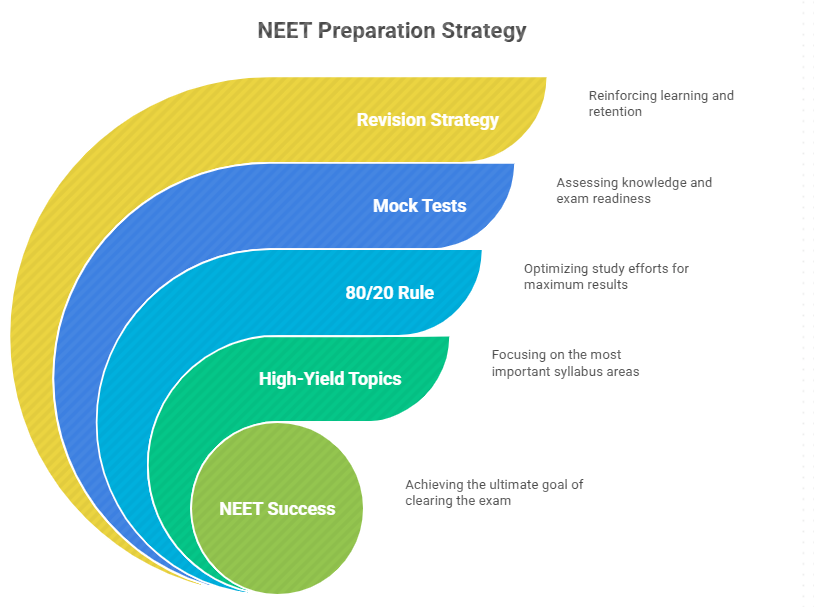
- Focus on high-yield topics to maximise your NEET scores.
- Apply the 80/20 rule to optimise your study routine.
- Regularly take mock tests to assess your knowledge.
- Develop a revision strategy to reinforce your learning.
- Concentrate on key areas in Physics, Chemistry, and Biology.
Introduction

Photo by Ben Mullins on Unsplash
Starting your journey to clear the NEET exam means understanding its tough competition. It’s a national exam that opens doors to medical and dental colleges in India. Every year, many students aim to get into these colleges.
NEET is a challenging exam that needs careful planning. Thousands of students compete for a few spots in top medical and dental schools. Knowing the exam’s pattern, syllabus, and how marks are given is key to doing well.
The 80/20 rule says 80% of results come from 20% of efforts. For NEET, this means focusing on the most important topics for high marks. Smart study planning is about finding these key topics and studying them well to get the best scores.
This article will help NEET aspirants prepare better with practical tips and answers to common questions. We’ll talk about the 80/20 rule and its use in NEET, the value of mock tests, and how to revise effectively. By the end, you’ll know how to prepare for NEET well.
80/20 and 75% Rule Explained

To do well in NEET, it’s key to grasp the 80/20 rule and focus on high-yield topics. This rule means 20% of the syllabus covers 80% of the marks. By focusing on these key areas, you can boost your score a lot.
Also read : Economics for SSC Exams Explained
Explaining the 80/20 Rule
The 80/20 rule, or Pareto principle, is a smart way to prepare for NEET. It shows that a small part of the syllabus gets a big chunk of the questions. For NEET, Human Physiology, Genetics, and some Physics and Chemistry chapters are often key.
Introducing the 75% Rule
The 75% rule is about passing NEET. Knowing this rule helps you see the minimum marks needed to pass. The passing marks change each year, based on the exam’s difficulty and the number of students. Knowing these marks helps you set goals and plan your study.
Importance of Focusing on High-Yield Topics
Studying high-yield topics is a smart way to improve your NEET score. By focusing on these topics, you use your study time wisely. This boosts your confidence and helps manage exam stress by knowing the most important areas.
To get the best NEET scores, use the 80/20 rule in your study plan. First, find the high-yield topics and then plan your study time. Regular practice and review of these topics will give you an edge.
Also Read :
High-Yield Topics
To get the best NEET scores, it’s important to pick and focus on key topics. The NEET syllabus is big, but some areas in Biology, Physics, and Chemistry give more marks.
Key Subjects to Focus On
Biology is a big part of the NEET exam. Topics like Human Physiology and Genetics are very important. In Physics, Mechanics and Electrostatics are key and often tested.
Chemistry needs a good understanding of Chemical Bonding and Organic Chemistry. Pay special attention to Aldehydes and Ketones and Alcohols.
Tips for Concentrating on High-Yield Topics
To use your study time well, follow these tips:
- Find and list the most important topics from past papers and the syllabus.
- Give more time to these areas to understand them well.
- Practice with old questions and mock tests to check your knowledge and find what you need to work on.
- Keep reviewing and revising these topics often to keep the information in your mind.
For more tips on using the 80/20 rule for NEET prep, check out this resource.
Also Read : Entrance Test- NEET
Prepping for NEET from Scratch
Cracking NEET in a short time is tough but doable with the right prep and resources. Many students struggle to prepare for NEET quickly. They wonder if it’s possible to pass this tough exam in a short time.
Is self-study enough?
Self-study can work for NEET prep if you’re disciplined and have the right tools. Many have passed NEET through self-study, using books, online resources, and mock tests. It’s important to have a study plan, keep up with the syllabus, and check your progress with mock tests.
Self-study needs commitment, but with the right strategy, it can lead to success.
Importance of mock tests and revision during NEET
Mock tests and revision are vital for NEET prep, more so when time is short. Mock tests help you get used to the exam format, identify your strengths and weaknesses, and practice under exam conditions.
Revision helps solidify your knowledge, ensuring you remember important details. Mock tests and revision together can greatly boost your score.
In conclusion, while preparing for NEET quickly is tough, it’s achievable. With a strategic study plan, dedicated self-study, and a focus on mock tests and revision, you can get a good score. Stay focused and make the most of your time..
Also visit : Class 11 & 12 Medical / Non-Medical Mastery Pack
Daily Study Hours and Routine Tips
NEET toppers follow a strict study plan. They mix theory, revision, and practice tests. A good daily routine helps you use your study time wisely.
Effective Study Duration
Studying 8–10 hours a day can be effective. But, it’s important to manage your time well. It’s not just about how long you study, but how well you do it.
Balancing Study Components
A good study plan should mix theory, revision, and practice tests. Set aside specific times for each to cover the syllabus well.
- Morning is best for theory, when you’re most alert.
- Afternoon is good for revision, after a short break.
- Evening is for practice tests, to check your knowledge.
Importance of Breaks
Regular breaks are key to staying productive and avoiding burnout. Short breaks between study sessions help you refresh.
A healthy routine is not just about studying; it’s also about keeping your body and mind healthy.
Also visit : Class 11 & 12 Chemistry Mastery Pack
Insights from NEET Toppers
Many NEET toppers stress the need for a consistent sleep schedule and enough rest. They advise against studying late and getting enough sleep to keep your brain sharp for the exam.
By balancing study hours with breaks and keeping a healthy lifestyle, you can improve your NEET prep.
Common Challenges & How to Overcome Them
NEET aspirants often face many hurdles, from managing exam anxiety to staying motivated. Knowing these challenges is the first step to success in NEET.
Easiest & Hardest NEET Papers Examined
NEET papers can vary greatly in difficulty. Some years, the paper is easier, while others are tougher. For example, the NEET 2023 paper was seen as very challenging by many.
Understanding past paper patterns and difficulties helps in better preparation.
Skills Required to Crack NEET in First Attempt
To pass NEET in the first try, you need strategic preparation, time management, and conceptual clarity. Focus on key topics, practice often, and take mock tests. A good study plan that covers all topics is key.
- Know the exam pattern and syllabus well.
- Practice with past papers and mock tests.
- Work on your time management to finish the exam on time.
Dealing with Exam Anxiety, Low Confidence, and Motivation Issues
Exam anxiety and low confidence are common. To beat these, stay positive and focus on your strengths. Regular revision and practice boost confidence. Stress management through meditation or deep breathing exercises helps with anxiety.
Keeping motivated is also key. Achievable goals and rewards help. Positive influences and support from family and friends also help a lot.
- Set realistic goals and celebrate your wins.
- Use relaxation techniques to handle stress.
- Stay connected with supportive peers and mentors.
By understanding challenges and using these strategies, you can overcome them and pass NEET.
Conclusion
Getting ready for NEET is all about planning smartly and staying consistent. Focus on the most important topics and use the 80/20 rule. This will really boost your chances of doing well.
The 80/20 rule is a game-changer for NEET prep. It helps you get the most marks by focusing on just 20% of the topics. Stick to a regular study plan and you’ll see results faster.
Having the right tools is vital. Look for online resources, coaching services, and study guides that fit your needs. Stay consistent and you’ll reach your goals with the right strategy.
Keep your motivation up and stay focused. With the right approach, you’ll ace the NEET exam. For extra help, check out reliable resources and coaching sites that offer support and study materials.

Makarand S is a content writer who focuses on importance of soft skills and job readiness. Through his articles, He identifies potential gap areas and demonstrates easy and practical ways to overome them. With a keen interest in Skill Development, Makarand explores the shift in job landscapes and strategies for continuous learning. His articles help readers in preparing for the rapidly evolving nature of work more
Submit the form we will reply within Next 24 hours


Develop Must-Have Skills To Navigate Workplace Challenges And Build Executive Presence
Explore Topics
- AI-Driven Skill Development (7)
- Communication Skills in Indian English (12)
- Confidence Building for Students (5)
- Entrance Test Updates (2)
- Government Job Mindset Training (4)
- Lifelong Learning for Indian Women (3)
- Personality Development for IT/BPO (7)
- Public Speaking in Hindi/Marathi (1)
- Rural Empowerment via Soft Skills (0)
- Soft Skills for Indian Careers (11)
- Strategic Thinking for Entrepreneurs (29)
- text (0)
- Uncategorized (2)