Technical Communication as a Soft Skill
Lorem ipsum dolor sit amet, consectetur adipiscing elit. Ut elit tellus, luctus nec ullamcorper mattis, pulvinar dapibus leo.
Lorem ipsum dolor sit amet, consectetur adipiscing elit. Ut elit tellus, luctus nec ullamcorper mattis, pulvinar dapibus leo.

Key Takeaways
- Technical communication is a vital soft skill in the workplace.
- Effective communication drives real-world impact.
- Mastering technical communication can improve trust and reduce rework.
- Clear communication is key to career growth and success.
- Employers value soft skills, including technical communication.
Introduction
In today’s fast world, sharing complex ideas clearly is key. You might have exceptional technical skills, but if you can’t share them well, your message gets lost. Employers see soft skills, like technical communication, as essential for success and doing well at work.
Good technical communication is more than just sharing info. It’s about making complex ideas easy for people to use. It’s about turning technical talk into clear actions that get things done. By getting better at this, you can build trust, cut down on mistakes, and move your career forward.
Read More: Soft Skills vs Technical Skills: What Wins?
What Technical Communication Actually Is
Technical communication makes hard technical info easy for different people to get. It’s not just about sharing info. It’s about knowing who you’re talking to and making complex data easy to use.
The importance of technical communication skills is huge. They help people share complex ideas simply. This is key in today’s fast tech world. It helps projects succeed and teams work better together.
Translating Complexity Into Action
Turning hard info into something useful is key in tech communication. For example, explaining a new software feature to a team member. You should focus on how it helps their work, not the tech details. This skill makes sure people understand and use the info.
To do this, know who you’re talking to and adjust your message. Use simple words and examples. Like comparing a complex algorithm to a recipe. This makes the info easy to get and use.
Read More: Communication Skills for IT in 2026.
Communication Beyond Documentation
Technical communication isn’t just about writing. It’s also about talking and body language. When you present, your confidence and clearness matter a lot. It affects how your message is seen.
Also, knowing about usability heuristics helps a lot. It’s great for making things easier to use. By understanding how people use your content, you can make it better.
Why Technical Communication Is a Soft Skill
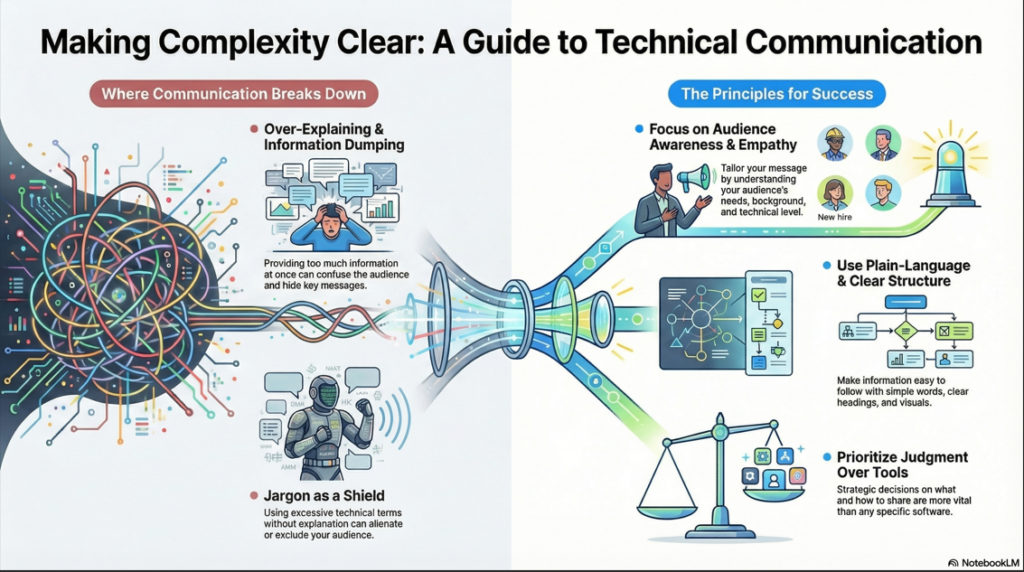
Being able to share technical info well is a soft skill. It needs empathy and knowing your audience. While knowing the tech is key, soft skills help you connect with your audience.
Technical communication is more than just sharing data. It’s about making sure the info is understood and used by the right people. You must know who you’re talking to, their tech level, and what they need.
Empathy and Audience-Centered Thinking
Empathy is vital in technical communication. By seeing things from your audience’s view, you can make your message clear and relevant. This means focusing on what matters most to them.
For example, when talking tech to non-tech people, skip the jargon. Use simple words and examples that everyone can get. This makes the info easy to grasp.
Read More: 5 ways to develop communication skills for your employees.
Judgment Over Tools
In technical communication, what you know and how you use it matters more than the tools. Tools like software help, but it’s your judgment that counts. Knowing what to share, how to share it, and when is key.
Effective technical communicators pick the right tool for the job. They consider who they’re talking to, why, and where. The tool is just a tool; it’s the person using it that makes the difference.
Core Components of Technical Communication
Technical communication works best when it follows key principles. Knowing these helps share complex info clearly and usefully.
Audience Awareness
Knowing your audience is key. You must understand their needs, how much they know, and what they expect. Think about their background and how they’ll use the info.
Being aware of your audience makes your content hit home. It makes the info easier to grasp and more helpful.
Read More: What are Project Management Skills: with Beginner‑Friendly Examples.
Information Structuring
How you arrange info affects its clarity. Use clear headings, short paragraphs, and visuals. This makes it easy for people to follow and get the main points.
Good info structuring breaks down big topics into smaller bits. Use transitional words to guide the reader. Make sure key info stands out.
Plain-Language Translation
Plain language is vital for reaching many people. Avoid jargon unless it’s common in your field. If you must use technical terms, explain them clearly.
Using plain language makes your content open to more people. This boosts its clarity and effectiveness.
Context and Purpose Framing
Context and purpose are important. Explain why the info matters and how it helps your audience. Tell them what to do next.
Clear context and purpose help your audience see the bigger picture. This makes them understand the info’s value. It also motivates them to take action.
Where Technical Communication Breaks Down
Technical communication often faces big challenges. These obstacles make it hard to share and understand information well.
Over-Explaining and Information Dumping
One big problem is when we explain too much or dump lots of info at once. This can confuse and turn people off.
Over-explaining happens when we try to cover everything. But it makes the main point hard to see. Stick to what’s really important for your audience.
Information dumping can be fixed by making your content easy to follow. This way, people can understand your point without getting lost.
Jargon as a Shield
Using too much jargon is another big issue. While it’s needed, too much of it can confuse or push people away.
Jargon can make you seem smart but keep others out. To get your message across, use technical terms wisely and explain them clearly.
Think about who you’re talking to and use language they can understand. This way, your message will get through well.
Real-World Applications of Technical Communication
Technical communication is a key skill in many careers. It helps share complex ideas simply. This skill is vital for success in different fields.
Engineering and Business Alignment
In engineering, technical communication links teams with business goals. Good communication means projects are done right the first time. This saves time and money.
It also helps teams work better together. Engineers share technical details clearly. This makes projects run smoothly and builds trust.
In business, technical communication is key. It turns complex info into useful insights. Clear talk builds trust with investors, customers, and partners. This is important for growing a business.
Freshers and Early-Career Professionals
For new workers, good technical communication skills are essential. Being able to explain complex ideas simply makes you stand out. This shows your worth to your employer.
It also opens doors to new projects and roles. Those who share their ideas well get more chances to lead. This helps them grow faster in their careers.
Conclusion
Technical communication is a key skill that helps us share complex ideas clearly. It’s vital for success at work. It lets us explain things well to different people.
Knowing how to talk to your audience is key. You need to structure information well and use simple language. You also have to think about the context and purpose of what you’re saying. Getting better at this makes you more effective at work.
Technical communication is very important. It helps engineers and business teams work together better. It makes projects more likely to succeed. Improving your skills in this area can make you more valuable at work.
Think about how you can use what you’ve learned to get better at technical communication. This will help you succeed professionally and make a big difference at work.

Makarand S is a content writer who focuses on importance of soft skills and job readiness. Through his articles, He identifies potential gap areas and demonstrates easy and practical ways to overome them. With a keen interest in Skill Development, Makarand explores the shift in job landscapes and strategies for continuous learning. His articles help readers in preparing for the rapidly evolving nature of work more
Submit the form we will reply within Next 24 hours


Develop Must-Have Skills To Navigate Workplace Challenges And Build Executive Presence
Explore Topics
- AI-Driven Skill Development (7)
- Communication Skills in Indian English (12)
- Confidence Building for Students (5)
- Entrance Test Updates (2)
- Government Job Mindset Training (4)
- Lifelong Learning for Indian Women (3)
- Personality Development for IT/BPO (7)
- Public Speaking in Hindi/Marathi (1)
- Rural Empowerment via Soft Skills (0)
- Soft Skills for Indian Careers (11)
- Strategic Thinking for Entrepreneurs (29)
- text (0)
- Uncategorized (2)