
How to Prepare for Nabard exam
Master NABARD Grade A2025, NABARD Grade A preparation tips, NABARD Grade A syllabus with our Ultimate Guide.
Introduction

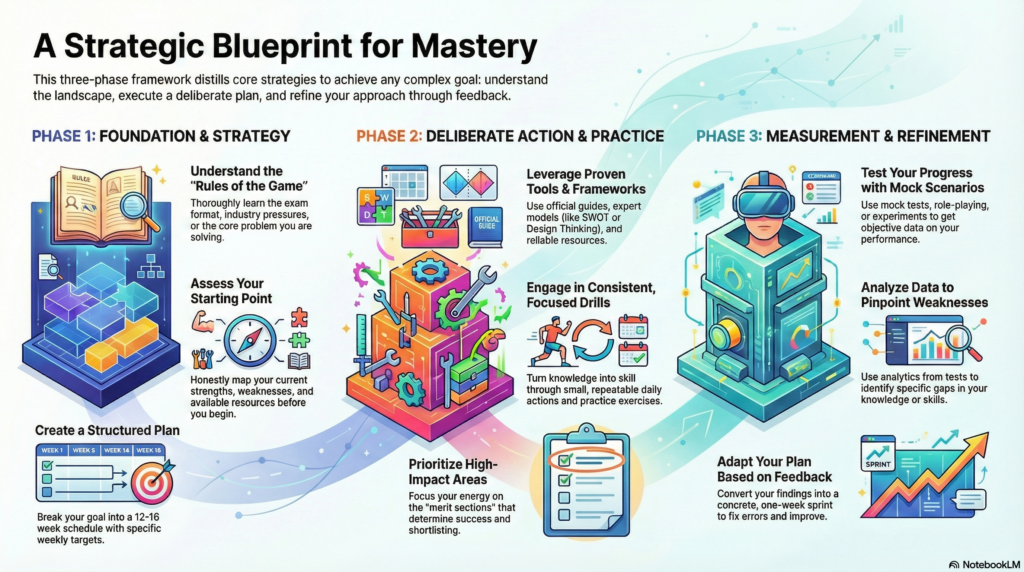
Looking to crack a competitive public sector exam? You need a clear map, steady practice and a focused routine. Start by understanding the three-stage selection — Phase 1, Phase 2 and Phase 3 — and the split of merit and qualifying sections.
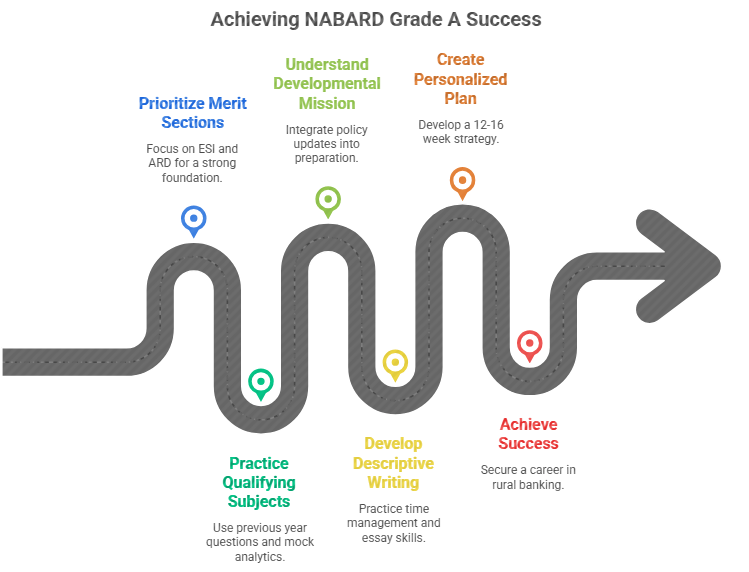
Begin with the core merit areas. Give priority to ESI and ARD in Phase 1. They carry the bulk of marks and shape shortlisting. Qualifying sections such as Reasoning and English must stay consistent. Small daily study blocks beat long, unfocused sessions.
Also Read: Economics for SSC Exams Explained!
Key Takeaways
- Prioritise merit sections first; they decide shortlisting.
- Follow a 12–16 week plan with learning, practice and revision.
- Use past papers to learn depth and the examiner’s style.
- Keep current affairs linked to policies and agriculture topics.
- Use mock analytics to measure weak spots and improve speed.
Understand the NABARD exam at a glance
Know the organisation’s mission first — it shapes what the exam rewards. Start by seeing the bank as a development engine. It supports rural development and supervises regional rural banks and cooperatives. That context explains why questions mix policy, agriculture and economics.
What makes this body unique among financial institutions
The institution blends banking with public policy. It partners with the World Bank, UNDP and other agencies on large programmes. That partnership scale pushes questions towards implementation and impact. Use the official nabard portal for reliable updates.
Roles, stakes and why the grade exam is competitive
Assistant managers join as project leads, handling refinancing, stakeholder work and field schemes. The selection runs across multiple phase tests. Vacancies are limited. Applicants come from top cities and colleges. Simple facts here: clarity in writing and sector knowledge win.
Role mix: finance, agriculture and analytics.
Real impact: policy to field.
High competition: few vacancies; national reach.
NABARD Grade A 2025, NABARD Grade A preparation tips, NABARD Grade A syllabus
Layer the official syllabus with past-year questions. That shows where the exam goes beyond the notification. The notice gives the framework. PYQs show which parts examiners test again and again.
Also Read: How to crack CDS exam in first attempt.
Where the official syllabus ends and PYQ-backed coverage begins
The official list is your baseline. Use it to build a study map. Then add PYQ topics to fill gaps. This reveals deeper themes in ESI and ARD. It also uncovers recurring data, schemes and methods.
How to prioritise topics by weightage and difficulty
Tag each topic as High, Medium or Low. Prioritise High first. Use PYQ counts to rank them.
- Focus more study time on GA, ESI and ARD for Prelims shortlisting.
- Double down on frequently asked areas such as DI and RC.
- Keep one core source and one supplement per topic to avoid clutter.
- Schedule weekly revision blocks. Space repetition beats cramming.
Action step: Create a two-column sheet — “Official” vs “PYQ-Driven”. Mark high-priority topics. Use the sheet and a resource map to guide weekly sprints. For a full guide, see this full guide.
Cracking the qualifying sections: Reasoning, Quant, English, Computer, Decision Making
Pattern-focused practice converts slow areas into scoring strengths. The qualifying papers are about clear-cut modules. You must reach the cut-off fast and with a buffer. That needs a plan and repeated exposure to previous year questions.
Reasoning and quantitative aptitude: what PYQs teach you
Recent papers favour puzzles, seating, syllogism, inequalities and data sufficiency in reasoning. In quantitative aptitude, DI, series, approximation, time-work and profit-loss recur.
Rule: Attempt high-yield sets first. Skip time traps. Build a fixed DI template for quick reads.
English scoring areas: RC, vocabulary and grammar efficiency
Focus on a reading template for RC. Note key ideas and tone in two lines before answering.
Keep a short grammar checklist: subject-verb, modifiers and connectors. This saves minutes in error detection and cloze tests.
Computer knowledge and decision making essentials
For computer knowledge learn MS Office shortcuts, basic networking, OS concepts and security terms. These are factual questions. Memorise key terms.
Decision making tests models, biases and scenario logic. Learn a few frameworks and apply them to short cases.
- Daily drills: 20 Reasoning. 20 Quant. 10 English. 10 Computer. 5 Decision Making.
- Practice: Use previous year questions for pattern work. Time yourself strictly.
- Strategy: Build a “Do First / Skip First” list from your last three mocks.
“Hit the cut-off plus a safe buffer in mocks. Then return to merit sections with calm.”
Action step: Create one-page templates: a DI read-sheet, an RC note format and a grammar checklist. Use them in your next three timed mocks and refine by error pattern.
Mock tests: benchmarking, analytics and time management
Mocks reveal true readiness faster than hours of solo study. Treat each practice as a measurement. Use realistic tests to see how many marks you gain and where you lose time.
Remember: Prelims gives 120 minutes of composite time across sections. Mains mixes short objective windows with longer descriptive slots. The interview carries 50 marks. Use these facts to design your mock strategy.
Also Read : Economics for SSC Exams Explained
Building speed and accuracy under composite time
- Take one full-length mock weekly at first. Move to two as the exam nears.
- Fix a section order. Practise it until it is automatic under pressure.
- Track time per question. Cut waste. Build a firm skip discipline.
Translating mock insights into weekly study sprints
Use analytics to pinpoint weak topics. Break errors into concept, calculation or misread. Let that drive a seven-day sprint. Close gaps. Then retest.
- Analyse accuracy per section. Aim for steady gains, not spikes.
- Keep an error log. Categorise and review wrong questions.
- After each mock, write three specific fixes and schedule them for the week.
Action step: Try a guided mock from a trusted source like free mock tests. Record time, marks and question-wise errors. Use that report to build your next seven-day plan.
“Mocks show where you stand. Analytics show what to fix.”
Answer writing for Mains: Descriptive English, ESI and ARD
A neat structure and relevant data make 10‑ and 15‑marker answers stand out. You must write with clarity. Keep your sentences short. Use a clear plan before you start typing.
Structuring short and long answers
Use a simple format. Start with a one‑line introduction. Add two to three body points. End with a focused conclusion.
For 10‑mark answers aim for 150–200 words. For 15‑mark answers target 220–250 words.
Data, policy and templates
Quote one report or scheme. Add one statistic. That lifts the answer from generic to specific.
- Create templates for definitions, pros‑cons, challenges and the way forward.
- Keep a one‑page data dock with key economy and agriculture stats.
- Practice questions by writing to the word limits and the given marks.
Typing practice and revision notes
Type weekly to build speed and reduce typos. Learn clean formatting. That saves time in the final phase of the exam.
Action step: Write one ESI and one ARD answer today. Time‑box them. Review with a five‑point checklist: intro, data, policy, challenges, conclusion.
Also Read : How to crack NEET in one year? Use our smart study routine
Create a personalised 12-16 week study plan
Plan the next 12–16 weeks like a mini-project. Set weekly deliverables. Track what you learn and what you must practise.
Phase-wise sequencing and daily-weekly targets
Front-load ESI, ARD and GA for Prelims shortlisting. Keep a steady Mains writing slot each week. Sequence the phases so Prelims comes first, then Mains and the interview phase.
Daily targets: one chapter, 30 MCQs and one short descriptive. Weekends host mocks and deep review.
Balancing content learning, practice and revision cycles
Break each week into learn, practise and revise blocks. Protect revision time. Consistency beats intensity.
- Use weekends for two full mocks and a detailed error review.
- Keep a buffer day every two weeks. Life happens. Plans should bend, not break.
- Adjust the next week using mock data and weak-topic drills.
“Your plan must fit your life. Small wins add up.”
Action step: Draft your 7‑day plan now. Include two GA sessions, two mocks, one typing drill and a note for nabard grade 2025 targets. This keeps your grade trackable and aligned to the syllabus and phase goals of the 2025 exam.
Best sources and a weekly curation routine
Use official sources first. Read RBI releases, NITI Aayog notes and ministry updates. Then check World Bank, IMF and ADB reports for context.
Each week, collect three items: one scheme update, one key data point and one agricultural development. Tag each note to either economic social issues or ARD static topics. Keep notes short. One fact. One implication. One link to the source.
Conclusion
End every week with a short review and one measurable fix for the next. Keep your three‑phase map in view. Focus first on merit papers. Train Mains writing from day one. Use mock tests to measure progress and adjust fast.
Master the syllabus. Track current affairs with official sources. Build a simple weekly loop — learn, practise, revise. Prioritise GA, ESI and ARD for Prelims shortlisting. Then secure high marks in Mains and finish with a strong interview after the psychometric test.
Action step: Write a four‑week roadmap now. Set daily targets. Start today and treat each small win as progress toward nabard grade 2025 success.
Frequently Asked Questions

Makarand S is a content writer who focuses on importance of soft skills and job readiness. Through his articles, He identifies potential gap areas and demonstrates easy and practical ways to overome them. With a keen interest in Skill Development, Makarand explores the shift in job landscapes and strategies for continuous learning. His articles help readers in preparing for the rapidly evolving nature of work more
Submit the form we will reply within Next 24 hours


Develop Must-Have Skills To Navigate Workplace Challenges And Build Executive Presence
Explore Topics
- AI-Driven Skill Development (7)
- Communication Skills in Indian English (12)
- Confidence Building for Students (5)
- Entrance Test Updates (2)
- Government Job Mindset Training (4)
- Lifelong Learning for Indian Women (3)
- Personality Development for IT/BPO (7)
- Public Speaking in Hindi/Marathi (1)
- Soft Skills for Indian Careers (11)
- Strategic Thinking for Entrepreneurs (29)
- Uncategorized (2)