Why Indian Students Hesitate to Ask, Speak, or Take Risks
Discover how “learned invisibility” holds back many Indian students – and actionable steps to build confidence and unlock your potential!

Many Indian students from humble backgrounds often hesitate to ask questions or share ideas. This is called “learned invisibility”. It happens because of financial constraints, feeling less than peers, and fear of being judged.
Studies show this is common in Indian schools. It affects self-esteem and confidence a lot. Knowing why students hide can help them feel more confident and ready to shine.
Key Takeaways
- Recognizing the signs of “learned invisibility” is the first step towards change.
- Financial constraints can significantly impact a student’s willingness to participate.
- Peer comparison and fear of judgment are major contributors to student invisibility.
- Building confidence is key to overcoming shyness in class.
- Empowering students involves addressing the socio-economic factors affecting their self-esteem.
The Phenomenon of Learned Invisibility
Indian students often stay quiet, a behavior called learned invisibility. They don’t want to speak up in class or ask questions. This is because of many reasons, like fear and pressure.
Learned invisibility is more than just being shy. It’s about fear of failure and wanting to fit in. Studies show that fear makes it hard for students to take risks in class.
In Indian classrooms, many students stay quiet. They’re afraid to ask questions or seek help. They fear being laughed at or judged.
Also Read: Fall vs Spring: Best Intake for Study Abroad?
How Learned Invisibility Differs from General Shyness
Shyness makes people less likely to speak up. But learned invisibility is different. It’s about feeling invisible because of past negative experiences.
Indian students often feel invisible due to many reasons. These include money, friends, and culture. We need to know why this happens to help them.
Also Read: How Do Most Indian Students Fund Their Study Abroad Dream?
Socioeconomic Factors and Financial Constraints
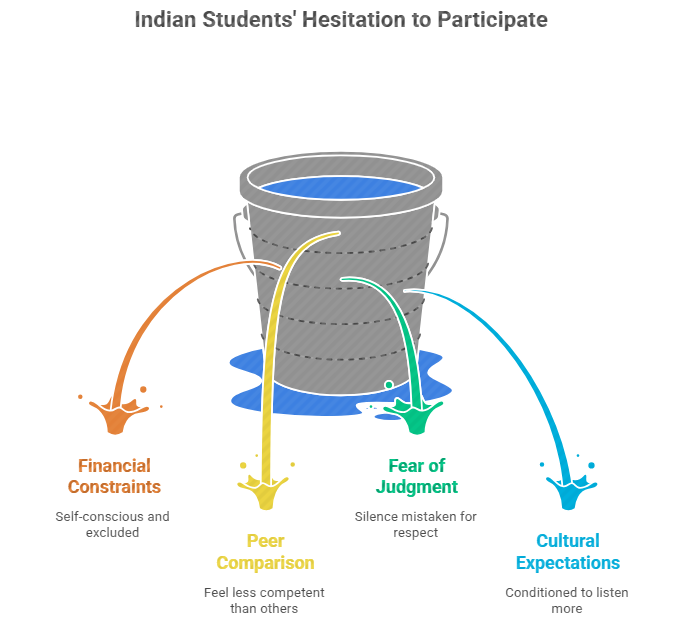
- Financial constraints lead to silent exclusions:
Students unable to afford adequate school materials often feel self-conscious and excluded from peer groups. - Extra classes and skill training:
Paid coaching for English, public speaking, or personality development is a luxury many cant afford, widening the soft skills gap. - Digital divide:
In the post-COVID world, access to laptops, mobile devices, and stable internet is essential. Students without these tools fall behind both academically and socially.
The Burden of Peer Comparison
Students evaluate their worth through the perceived competence of others. When they see a peer answering confidently in English, giving a fluent presentation, or even dressing sharply, they might internalize a belief that they are somehow less than. This phenomenon aligns with Festingers Social Comparison Theory, which suggests individuals determine their own social and personal worth based on how they stack up against others.
Also Read: Economics for SSC Exams Explained!
Fear of Judgment and Cultural Expectations
In many Indian households and classrooms, silence is often mistaken for respect. From a young age, students are conditioned to listen more, speak lessespecially in front of elders, teachers, or authority figures. This deeply rooted cultural expectation shapes how Indian students interact in academic settings. Respect is equated with obedience and compliance, not with curiosity or questioning.
As a result, students often hesitate to speak up, ask questions, or express opinionseven when they genuinely need help.Fear of judgment becomes internalized early.A student who raises their hand to ask something basic may be met with laughter, dismissiveness, or comments like You should know this already. Over time, this trains students to avoid risks, silence their doubts, and keep their thoughts to themselves.
The Long-Term Impact of Classroom Participation Barriers
Being quiet in class can hurt students’ future a lot. It affects their grades and job chances. Students who don’t speak up miss out on learning and growing.
Academic Consequences of Remaining Invisible
Being invisible in class can really hurt. Students who don’t talk may:
- Miss chances to think deeply and solve problems.
- Have trouble sharing their thoughts, which can hurt their grades.
- Feel less confident, making it harder to speak up in class.
This can make their grades drop and make it tough to do well in school and work later.
Also Read: Use 4 Communication Techniques to Practice Assertive Communication At Workplace
Career Limitations in a Global Workplace
In today’s world, talking well and working with others is key. Students who don’t speak up may face:
- Career stagnation: They might not get ahead because they can’t share ideas.
- Reduced employability: Jobs want people who can talk well and work together.
- Difficulty adapting to new work environments: Not speaking up can make it hard to fit in at a new job.
Knowing these problems helps us see why we must help students. We need to support them to do well in school and work.
Breaking Free from Learned Invisibility: Assessment and Action
Helping students overcome learned invisibility is a two-step process. First, they need to see their invisibility patterns. Then, they must build confidence through action. By changing their behaviors and strategies, Indian students can break free from learned invisibility.
Self-Assessment: Recognizing Your Patterns
The first step is to do a self-assessment. Think about your classroom behavior and how you handle challenges or failures. Use this self-assessment tool to spot your patterns:
| Type of Behavior | Always | Often | Sometimes | Rarely | Never |
| I participate actively in class discussions. | |||||
I ask questions when I’m unsure. | |||||
| I take risks and try new approaches. |
Practical Steps to Build Confidence
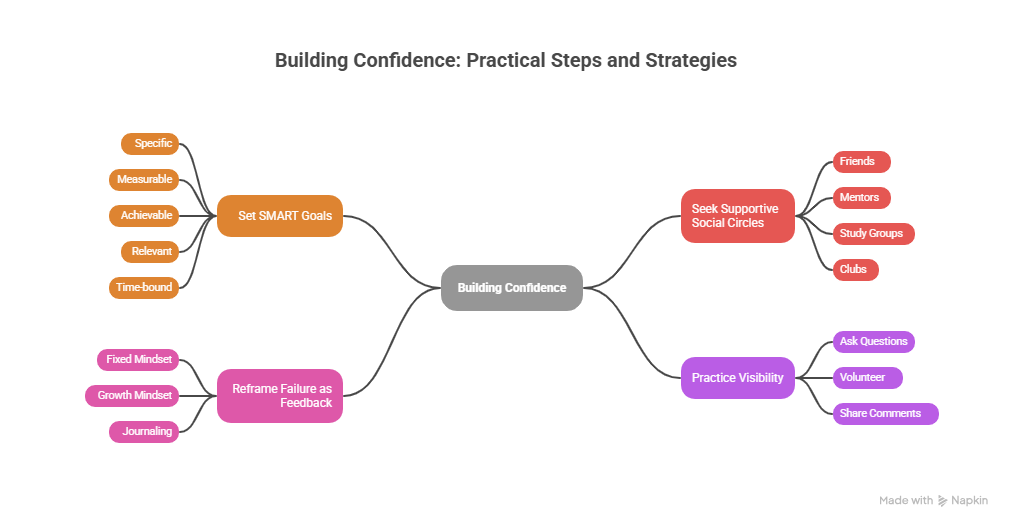
After spotting your patterns, it’s time to act. Here are some steps to build confidence and fight learned invisibility:
- Set SMART Goals to Track Real Progress
Confidence often comes from evidence from seeing yourself achieve something meaningful.
Specific: I will speak up at least once in every group discussion this semester.
Measurable: I will record myself speaking in English for 3 minutes every day.
Achievable: I will present in front of a small peer group before I do it in class.
Relevant: This will help me prepare for placement interviews.
Time-bound: I will track my progress weekly for the next 4 weeks.
These goals give you a roadmapand every win, however small, builds your self-trust. - Seek Supportive Social Circles
Confidence isnt built in isolation.
If youre surrounded by people who constantly interrupt, mock, or dismiss your thoughts, youll start believing you dont matter. On the other hand, supportive environments friends, mentors, study groups, or clubsencourage you to express yourself without fear.Join speaking clubs, debate societies, or campus communities that promote expression. - Reframe Failure as Feedback
One major blocker of confidence is the fear of failure or embarrassment. But in reality, failure is neutral datait tells you what didnt work and shows where to improve.Instead of saying I failed to answer the question, reframe it as Now I know which type of question I need to prepare better for.Shift from a fixed mindset (Im just not good at this) to a growth mindset (Im not good at this yet).Journal your small missteps and what they taught youthats how growth becomes visible over time.Learning to fail safely is key to developing risk-taking behavioran essential component of confidence. - Practice Visibility,
One Step at a TimeIf youve spent years being invisible, visibility will feel uncomfortable at first. So start small:Ask one question in a lecture or webinar. Volunteer to introduce your team in a class presentation.Share one thoughtful comment in a WhatsApp group or LinkedIn post.
Conclusion: Transforming Invisibility into Opportunity
Turning invisibility into growth is a journey. It needs student empowerment and the right support. By knowing the signs of learned helplessness, as talked about in the English Plus Podcast, we start changing.
We think every student can grow and do well in school and work. Holding confidence workshops helps a lot. It makes students feel included and want to join in class.
When we make classrooms more inclusive, students feel important. They want to help out more. This makes students more involved and ready to face challenges.
We want to help students grow through education. We focus on making things accessible and giving them chances to improve. With the right help, students can turn invisibility into success!

Makarand S is a content writer who focuses on importance of soft skills and job readiness. Through his articles, He identifies potential gap areas and demonstrates easy and practical ways to overome them. With a keen interest in Skill Development, Makarand explores the shift in job landscapes and strategies for continuous learning. His articles help readers in preparing for the rapidly evolving nature of work more
Submit the form we will reply within Next 24 hours


Develop Must-Have Skills To Navigate Workplace Challenges And Build Executive Presence
Explore Topics
- AI-Driven Skill Development (7)
- Communication Skills in Indian English (12)
- Confidence Building for Students (5)
- Entrance Test Updates (2)
- Government Job Mindset Training (4)
- Lifelong Learning for Indian Women (3)
- Personality Development for IT/BPO (7)
- Public Speaking in Hindi/Marathi (1)
- Soft Skills for Indian Careers (11)
- Strategic Thinking for Entrepreneurs (29)
- Uncategorized (2)