
Personality Development on a Budget
These practical personality development tips show how small, consistent habits unlock real change, ideal for students and young professionals on a budget.
Lorem ipsum dolor sit amet, consectetur adipiscing elit. Ut elit tellus, luctus nec ullamcorper mattis, pulvinar dapibus leo.
TL;DR
To grow your personality, small daily habits such as, 10 minutes of journaling, practicing communication skills, or joining a weekly group chat can make a huge difference.
Free resources like YouTube, online MOOCs, give you enough structure without spending a rupee. Do these simple things every day and you’ll slowly notice your confidence rising, your communication sharpening, and your emotions becoming steadier.
With time, these small but consistent steps add up, creating big wins for your career, studies, and overall life.
Key Takeaways
- Affordable, proven strategies to develop your personality without straining your budget.
- The central role of self‑awareness in personal growth and lasting change.
- Practical ways to improve your communication skills and body language.
- Confidence‑building techniques you can practise daily (10–20 minutes).
- How to recognise the core factors that shape your personality and turn them into growth opportunities.
Introduction

It is not just about appearance; it is about building inner strengths that improve confidence, resilience and everyday interactions.
Understanding Personality Development
What is personality development? At its core, it is a process of deliberate growth: improving how you think, feel and relate to others so you can succeed in school, work and life. This includes practical work on communication, self-awareness and emotional regulation — the foundations of soft skills personality development.
Definition: “Personality development means improving your behaviour, communication, confidence, and emotional intelligence to interact better with others and succeed in life.”
Evidence shows that improving emotional intelligence and communication positively affects career and relationships. Simple, tested habits move the needle more reliably than one-off expensive courses.
Also Read : Communication Skills for Business Development Success
Factors Influencing Personality Development
Personality development is shaped by a mix of biology, experience and the choices you make. Understanding these drivers helps you apply practical personal growth strategies rather than chasing one‑off fixes.
Prominent Theories in Personality Development
Psychology offers several frameworks that explain how personality forms. Key ideas to know:
- Erikson’s psychosocial stages — growth occurs across life stages through social challenges and resolutions (useful for framing long‑term goals).
- Classical psychodynamic views (Freud) — emphasise early experiences; historical and influential but best read as context rather than prescription.
- Trait and learning approaches — show how stable tendencies and repeated behaviours combine to form habits and strengths.
Core Factors Influencing Personality Development
Several concrete factors matter for real change:
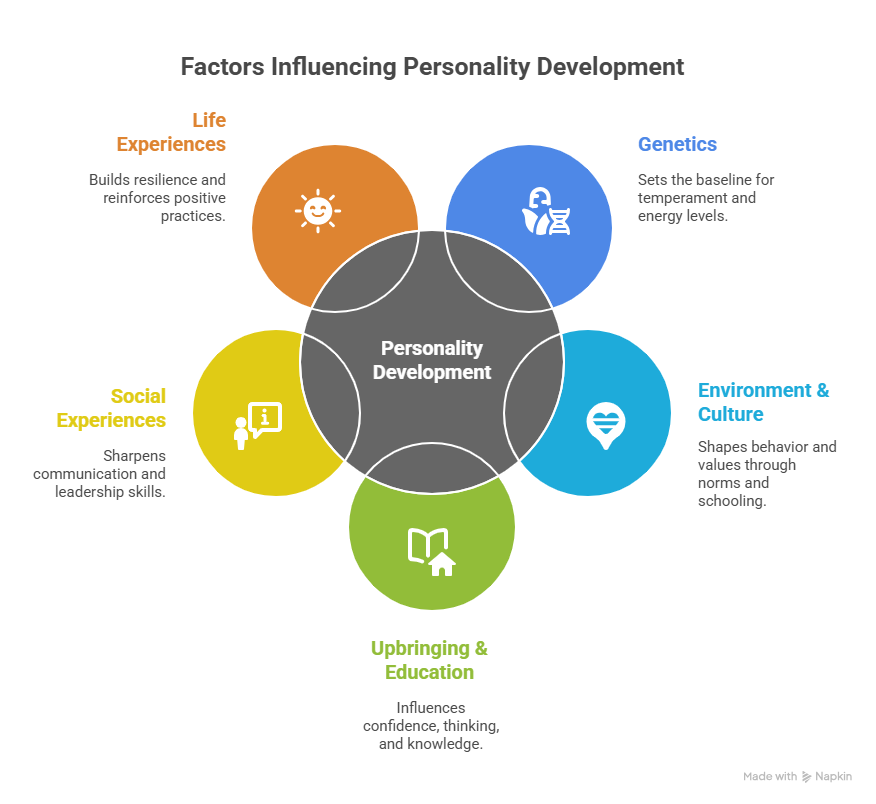
- Genetics — sets a baseline for temperament and energy.
- Environment & culture — norms, schooling and community shape behaviour and values.
- Upbringing & education — parental support and schooling influence confidence, thinking and knowledge.
- Social experiences — peer groups, mentors and feedback sharpen communication and leadership skills.
- Life experiences — challenges build resilience; successes reinforce positive practices.
Also read : Entrepreneurship’s Impact on Skill Development and Innovation
How do these factors affect you?
As a student or young professional, awareness lets you choose one targeted habit to improve a trait. For example, if feedback shows you need stronger communication, try 15‑minute speaking drills three times a week — practical, tested and measurable.
For example, managers in Bangalore’s tech hubs use EQ to enhance collaboration and innovation. By understanding their team’s emotions, they create a supportive atmosphere that drives success. This approach is not just beneficial but essential in today’s fast-paced workplaces.
Personality Development Activities for Students
Students can begin practical, budget-friendly personality development today with short, targeted activities that build confidence and employable skills. These student-friendly exercises are the backbone of effective soft skills personality development and help you stand out in interviews and college placements.
Daily Rituals for Personality Development
Try these low-cost, high-impact activities (activity → primary skill gained):
- Journaling (10 min/day) — increases self‑awareness and clearer thinking.
- Public speaking drills (10–15 min, 3×/week) — boosts communication skills and stage confidence.
- Group discussions / debate club (weekly) — sharpens teamwork, reasoning and leadership.
- Mindfulness exercises (5–10 min/day) — reduces stress and improves focus and emotional regulation.
Affordable Personality Development Tips
Building a strong personality need not be expensive. By tuning daily habits and using free or low‑cost resources, you can apply budget‑friendly self‑improvement methods that steadily boost your confidence and presence.
Also Read : The Complete Guide to Intrapersonal Communication
Enhance Your Body Language Awareness
Your body language speaks volumes about confidence and competence. Small, repeatable changes in posture, facial expression and gestures make a measurable difference in how people perceive you.
- Practice in front of a mirror — 5 minutes daily to fix posture and facial expressions.
- Record short videos of mock presentations to review gestures and tone.
- Relaxation routines (breathing or brief mindfulness) to reduce nervousness before speaking.
Quick wins: Stand tall, maintain gentle eye contact, and use open hand gestures — practise these for 2 minutes before any meeting or class.
Improve Communication Skills
Strong communication is a cornerstone of personality development. For focused communication skills development, choose one area (listening, clarity, or articulation) and practise it deliberately.
“The art of conversation is the art of hearing as well as being heard.” – William Hazlitt
Where to practise: join Toastmasters or a college debate society, participate in conversation clubs (online or local), or use Reddit and specialised forums to get low‑cost feedback. For students in India, college NSS, Rotaract and drama clubs are excellent practical spaces.
Next steps:
- Set a 15‑minute daily speaking drill (topic + 2‑minute recording).
- Ask one peer for quick feedback after each practice.
- Track one metric (number of practices per week) to stay consistent.
Leverage Free Resources
There are many reliable, free channels to learn and practise: YouTube playlists, public libraries, free MOOCs (Coursera, edX, SWAYAM) and podcasts. Look for channels that focus on practical drills and confidence‑building techniques.
- Explore YouTube channels and playlists on communication and confidence (search for guided drills and critique sessions).
- Use public libraries for books on body language, leadership and emotional intelligence.
- Enroll in free MOOCs or short courses to structure learning and earn credentials.
- Listen to podcasts that offer weekly practice prompts for personal growth.
7‑day starter plan (budget‑friendly):
- Day 1: 10 min journaling — note one communication goal.
- Day 2: 5 min mirror posture practice + breathing exercises.
- Day 3: 10 min speaking drill — record 2 mins on a chosen topic.
- Day 4: Join an online forum or local club and post/participate.
- Day 5: Watch a 15‑minute tutorial on body language; practise one tip.
- Day 6: Peer feedback session (15–30 mins) or self‑review video.
- Day 7: Reflect (10 mins) and set next week’s micro‑goals.
These budget‑friendly self‑improvement tips are practical to fit into busy schedules — small, consistent practice trumps occasional, expensive courses. For related step‑by‑step articles, see our posts on communication skills and soft skills to continue your learning journey.
Tracking Progress
Tracking lets small wins compound into meaningful change. Common, low‑cost tracking methods include:
- Journaling — record one learning, one action and one feedback item each day.
- Video logs — record short practice sessions (2–3 minutes) weekly to spot improvements in tone and body language.
- Peer feedback & micro‑goals — set one micro‑goal (for example: speak up once in every tutorial) and request a short peer review.
These simple methods make progress visible. Celebrate micro‑wins — they build momentum and confidence
Also Read : Cross-Cultural Communication: Strategies for a Global Workplace
The Advantage of Budget Constraints
Having a tight budget often forces creativity: you pick the most practical, evidence‑based exercises and stick to them. Rather than expensive one‑time programmes, repeated low‑cost practice (10–15 minutes daily) produces steady, lasting gains in skills and behaviour.
Compare options before you decide:
- Offline classes (local) — structured guidance, immediate feedback, networking; typically higher cost and fixed schedules.
- Online courses (MOOCs, live workshops) — flexible, often low‑cost or free, can offer certifications; good for self‑paced learning.
- Peer groups & clubs — free or low‑fee, practical rehearsal environments (Toastmasters, college societies).
Classes and Training across India
While Mumbai offers many options, personality development is widely available across India. Cities with active scenes include Mumbai, Delhi, Pune and Bangalore. You can also access pan‑India online programmes and national platforms.
- Personality development course in Mumbai — local institutes and workshops offer focused short courses on communication, body language and leadership.
- Soft skills training in India — available via colleges, private trainers and online aggregators; look for programmes that emphasise practice and feedback.
- Free personality development classes for students in India — many NGOs, college clubs and government platforms (SWAYAM) run free workshops and MOOCs suitable for students.
Is personality development available in Hindi? Yes — many free YouTube tutorials, MOOCs and workshop series are offered in Hindi and regional languages across Mumbai, Pune, Delhi and beyond. Search for Hindi playlists or college channels for accessible, language‑friendly resources.
Conclusion
Anyone can build a strong and confident personality with persistence and the right mindset. Real self‑improvement is rarely dramatic — it comes from daily micro‑actions such as a 10‑minute reflection each morning and a 30‑minute practice session once a week that compound over time.
Empowering Yourself through Intentional Effort
Improving your personality takes dedication and practice. Add simple, practical habits to your routine and measure tiny wins. Try:
- Daily journaling (10 minutes) to reflect on thoughts and progress
- Short public‑speaking drills (10–15 minutes, 3×/week) to build confidence
- Weekly group discussions to practise and improve communication skills
For more actionable tips, see resources like personality development tips for students, or explore our guides on communication skills and soft skills to continue learning.
Arthsetu’s Personality Development Course
Arthsetu’s Personality Development Course offers practical, real‑world strategies designed for students and young professionals. Join now to unlock your confidence and career potential — without burning a hole in your pocket. Limited seats and student discounts may be available; check the course page for current offers.
Dont wait! book your FREE consultation now!
Key Features Include:
- Setting Meaningful Goals
- Cultivating a Positive Mindset
- Mastering Time Management
- Developing Self-Discipline and Willpower
- Building Resilience and Dealing with Failure
Frequently Asked Questions

Makarand S is a content writer who focuses on importance of soft skills and job readiness. Through his articles, He identifies potential gap areas and demonstrates easy and practical ways to overome them. With a keen interest in Skill Development, Makarand explores the shift in job landscapes and strategies for continuous learning. His articles help readers in preparing for the rapidly evolving nature of work more
Submit the form we will reply within Next 24 hours


Develop Must-Have Skills To Navigate Workplace Challenges And Build Executive Presence
Explore Topics
- AI-Driven Skill Development (7)
- Communication Skills in Indian English (12)
- Confidence Building for Students (5)
- Entrance Test Updates (2)
- Government Job Mindset Training (4)
- Lifelong Learning for Indian Women (3)
- Personality Development for IT/BPO (7)
- Public Speaking in Hindi/Marathi (1)
- Rural Empowerment via Soft Skills (0)
- Soft Skills for Indian Careers (11)
- Strategic Thinking for Entrepreneurs (29)
- text (0)
- Uncategorized (2)