4 Effective Ways to Practice Mindful Living in 2026

TL;DR
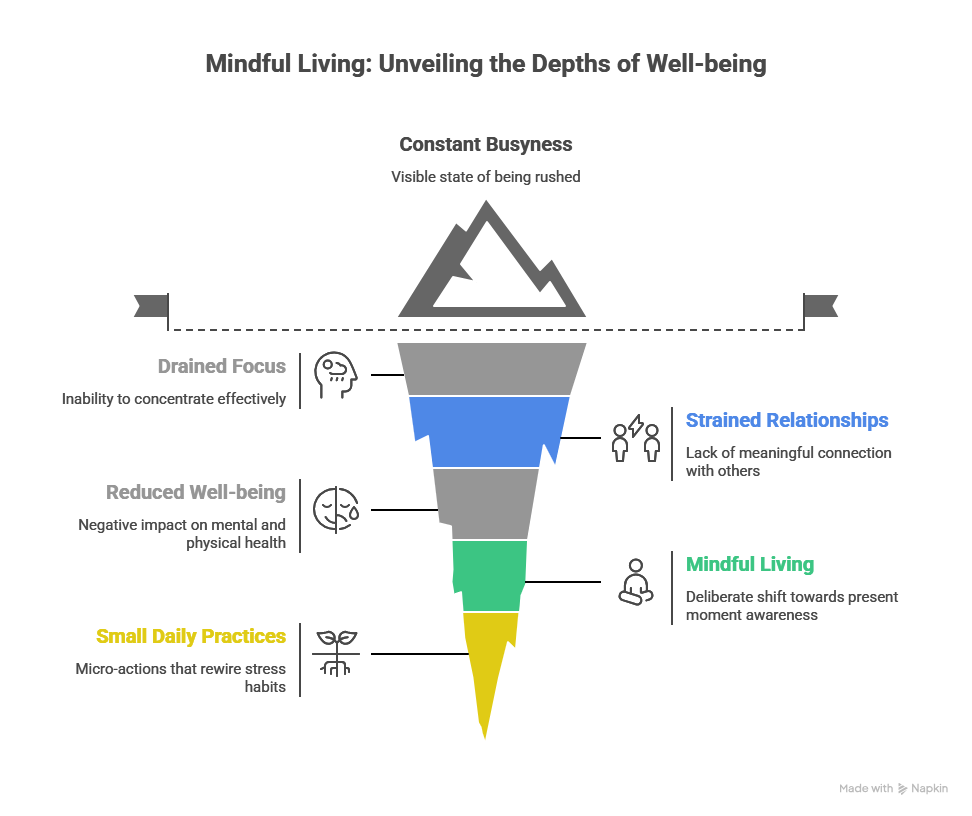
Constant busyness drains focus, relationships, and well-being. Mindful living helps you slow down, breathe, and realign attention with intention. Through small daily practiceslike short pauses, device-free meals, and gratitude momentsyou rewire stress habits, sharpen awareness, and rediscover meaning in ordinary moments.
Key Takeways
- Busyness isnt productivity: Chronic speed leads to burnout and detachment, not real success.
- Slowing down sharpens focus: Short breaks and micro-practices improve clarity, creativity, and decisions.
- Mindfulness changes brain patterns: Consistent attention to the present reduces stress and anxiety, improving mood and energy.
- Presence strengthens bonds: Being fully attentive deepens relationships and communication.
- Tiny habits = lasting change: Simple daily actsbreathing, buffers, gratitudebuild emotional balance and mental resilience.
Introduction
You wake up already behind: the alarm went off five minutes ago, your inbox is blinking, and your mind is sprinting through the list of things you must do before the end of the day. For many people that morning rush is the default setting an endless treadmill that runs through our every day. Try this now: inhale slowly for 10 seconds, exhale for 10 seconds. Notice one change. Hold that pause as you read on.
Research shows our constant hurry comes with a cost chronic busyness is linked to higher stress and a greater risk of burnout yet most of us still equate speed with success. What I discovered over the past nine months is that decelerating isnt about stopping; its a deliberate shift in how you use your time and attention.
This shift transforms ordinary moments into the present moment they deserve to be, and its central to mindful living.In this post Ill blend a few personal reflections with practical, evidence-informed ways to practise mindful living every day. Youll get simple micro-practices to reclaim a little time, change your thoughts about productivity, and begin to savour life more one small moment at a time.
Also Read : Top 10 Communication Skills Books That Will Change Your Life in 2026
Decoding the Fast Life
In corporate world , success often means more hours, more notifications, more visible achievements. This culture praises hustle and productivity, and many people measure worth by how packed their calendars are. That pressure nudges us into a default mode of constant doing an invisible treadmill that keeps us sprinting from one task to the next.
When your day is tuned to speed, your ability to notice the present moment diminishes: focus slips, conversations become shallow, and small joys pass by unnoticed.As a result, people substitute quantity for quality. We log more time but often get less meaning.
For a long time your diary reads like a contest: double booked meetings, thirty minute turnarounds that leave no space to eat, and back to back calls that swallow whole afternoons. You respond to Slack at midnight, squeeze in a rushed workout between meetings, and try to fit family time into whatever fragments remain.
The cost is plain you miss your daughters school assembly because you forget the time, you snap at your partner, and laughter feels like a rare, distant thing. Sound familiar?
Also Read : Microlearning: The Future of Lifelong Learning
Art of Living Mindfully
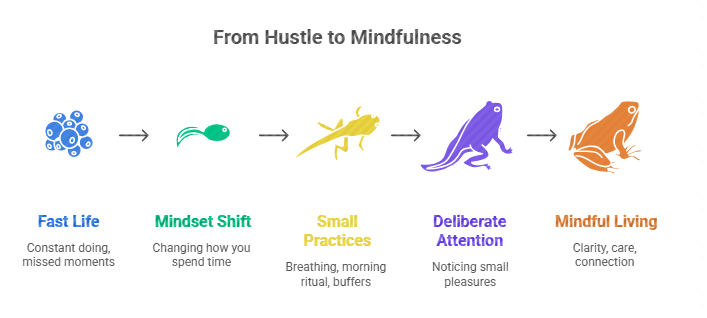
According to Coach & Author Lisa Hopper, ‘slowing down is not about doing less; its about changing your mindset’. Shift how you spend your time and where you focus your attention. Color-coding your diary or cutting commitments, are just surface level changes. The deeper work is changing the story in your mind that says busyness equals value. Slowing down lets you focus on what truly matters, connect with yourself, and find peace.Research supports this too: small intentional breaks and undirected time boost creativity and decision making.
Try this one week experiment: schedule a 10-minute buffer between meetings and notice if your thoughts feel calmer and your responses clearer. Small changes create mental space where new ideas can flow, often leading to better results, not fewer.
This mindset shift is key to mindful living and improved well-being.
Benefits of Slowing Down
- Being Present> Being Busy
A rushed dinner turns into a real conversation; a quick commute became a chance to breathe.
Practice this: put your phone in another room for one meal today and notice how the experience changes ; you may find the moment stretches and feels richer. - Everyday Practice That Changes Everything
Mindfulness is simply paying attention to your thoughts, emotions and sensations without judgment. Try a two‑minute “grounding” each morning: notice three things you can see, two you can hear, one you can feel. Over time, those tiny acts rewire habitual reactivity and help you carry awareness into your day. - Small Pleasures, Big Returns
When you deliberately notice a cup of tea, the colours of the sky, or a child’s laugh, you accumulate moments that add up to a happier life. Neuroscience shows that repeated attention to positive experiences helps strengthen the neural pathways associated with well‑being ; small habits change the brain’s state over years. - Clear Thinking = Better Choices
Decisions improve when you give yourself space. I found that when I paused between an instinct and an action, my choices better reflected my values. Practical test: before saying yes to a new task, wait ten minutes and briefly list the pros and cons. That pause creates a little breathing room for intuition and clearer priorities. - Presence Strengthens Bonds
When you listen fully, without planning your reply, you communicate care. A client reported that simply turning off notifications during family time reduced arguments and helped them feel closer; small changes in attention had outsized effects on their lives.
Also Read : The Art of Slowing Down
According to the Research…
- Mindfulness practices show consistent benefits for attention and emotional regulation (see meta‑analyses in psychology and medicine journals).
- Short breaks and undirected time improve creative problem solving and decision making.
- Gratitude routines are linked to higher reported well‑being in longitudinal studies.
Practical Tips for Slowing Down
Now that you understand the importance of a slow mindset, here are clear, evidence informed micro-practices you can try. Each one takes minutes but shifts how you use your time and attention.
60 second breathing reset
- How: Sit or stand comfortably. Inhale for 5 counts, pause 1, exhale for 5 counts. Repeat for 60 seconds.
- When: At the start of your work session, before a meeting, or anytime you feel reactive.
- Why: Short breathing practices reduce stress and centre attention, helping you return to the present moment quickly (try it now).
No rush morning ritual (3 steps)
- Before checking devices, drink a glass of water.
- Spend two minutes noticing three things you can see, two you can hear, one you can feel.
- Set one clear intention for the day (one sentence).
This simple sequence reframes your time from the first waking minute and anchors your thoughts away from reactivity a practical way to practice mindful living every day.
10 minute buffer between meetings
- How: Protect ten minutes between calendar events. Use it to stand up, breathe, glance out of the window, or take notes.
- Why: Research shows short breaks improve decision making and creativity; a buffer prevents the habit of sprinting from meeting to meeting and gives time to integrate thoughts.
No Devices for One Hour
Choose a consistent hour each day (after dinner, during commute, or the first hour after waking) and put your phone in another room or on Do Not Disturb. Tell close family or colleagues if needed.
Disconnecting lowers cognitive load and protects the space for deeper attention and richer social interaction a small boundary that changes how you spend time.
Conclusion
These are practical ways to practice mindful living and build a habit of stepping back. Each tiny act reclaims a little more time and attention for what matters and over weeks, those minutes add up to real change.Slowing down is a deliberate choice, not a retreat from ambition or a sign of laziness.
Its a small everyday practice that changes how your life feels: when you choose to pause, you invite clarity, care and connection into the moments that make up your days.
Frequently Asked Questions (FAQs)

Makarand S is a content writer who focuses on importance of soft skills and job readiness. Through his articles, He identifies potential gap areas and demonstrates easy and practical ways to overome them. With a keen interest in Skill Development, Makarand explores the shift in job landscapes and strategies for continuous learning. His articles help readers in preparing for the rapidly evolving nature of work more
Submit the form we will reply within Next 24 hours


Develop Must-Have Skills To Navigate Workplace Challenges And Build Executive Presence
Explore Topics
- AI-Driven Skill Development (7)
- Communication Skills in Indian English (12)
- Confidence Building for Students (5)
- Entrance Test Updates (2)
- Government Job Mindset Training (4)
- Lifelong Learning for Indian Women (3)
- Personality Development for IT/BPO (7)
- Public Speaking in Hindi/Marathi (1)
- Rural Empowerment via Soft Skills (0)
- Soft Skills for Indian Careers (11)
- Strategic Thinking for Entrepreneurs (29)
- text (0)
- Uncategorized (2)