
Master Workplace Stress & Conflict with Emotional Intelligence: Strategies, & Real Examples
Develop emotional intelligence skills & master conflict resolution techniques for 2025’s dynamic workplaces.

We live in a fast-paced work environment. Managing stress and resolving conflicts is key to success. Emotional intelligence (EI) is now a vital skill for professionals to handle these challenges.
Did you know 82% of HR leaders now value emotional intelligence more than technical skills for success? Yet, nearly half of professionals find it hard to manage stress and conflicts. Simple EI techniques like the PAUSE method and breathwork can turn tense situations into teamwork opportunities and boost your career.
In this article, we dive into how emotional intelligence improves communication, teamwork, and leadership in diverse teams. By mastering EI, professionals can manage stress and conflicts better. This leads to a more harmonious and productive work environment.
Key Takeaways
- Emotional intelligence is key for managing workplace stress and conflicts.
- EI boosts communication, teamwork, and leadership in diverse teams.
- Simple EI techniques like the PAUSE method and breathwork can change tense situations.
- Mastering EI can boost your career and lead to a more productive work environment.
- 82% of HR leaders now prioritize emotional intelligence over technical skills.
The Evolution of Emotional Intelligence in Modern Workplaces
Modern workplaces are complex, and emotional intelligence (EI) is key to success. It’s not just a trend; it’s essential for leadership, conflict resolution, and teamwork. It helps us handle stress, communicate better, and understand others.
Leadership Agility and Conflict Resolution
Leaders with high EI manage workplace challenges well. They’re good at conflict resolution and can see different views. This skill is vital in today’s fast-paced world.
Good leaders solve conflicts by understanding emotions. This makes teams stronger and work cultures better. For more on EI and conflict resolution,
Also Read emotional intelligence and conflict resolution.
Why Indian Professionals Need EI
In India, EI is vital for bridging cultural gaps and giving feedback well. Indian workplaces have strict hierarchies, and EI helps navigate these with confidence and care.
Indian professionals with EI do better in teamwork and communication. This is critical in today’s global business, where understanding cultures and communicating well are essential.
How to Develop Emotional Intelligence Skills for Workplace Success
Emotional intelligence is key to success at work. It helps us grow professionally and work well together. We’ll look at ways to improve emotional intelligence, like self-awareness and using tools.
Also Read: Emotional Intelligence in Leadership.
Self-Awareness: Understanding Strengths, Blind Spots, and Triggers
Self-awareness is the base of emotional intelligence. It means knowing our feelings, how they shape our actions, and our good and bad points. To get better at self-awareness, we can:
- Practice mindfulness and meditation to tune into our emotions.
- Ask for feedback from people we trust to spot our blind spots.
- Think about our successes and failures to understand what triggers us.
Experts say self-awareness is key for leading and working well with others. Knowing our emotions helps us handle work challenges better.
Practical EI Assessment Tools
To grow our emotional intelligence, we need to know where we stand. Tools like Bar-On EQ-i2.0 and Daniel Goleman’s Emotional Intelligence Appraisal Tool give us insights. These tools help us:
- See our emotional strengths and what we need to work on.
- Make a plan to improve and track our progress.
A study with the Bar-On EQ-i2.0 showed that EI training boosts our skills and work performance. The guide to emotional intelligence says using these tools is a great way to improve.
Cultural Nuances in Emotional Intelligence Development
Culture affects how we develop emotional intelligence. In some cultures, being assertive is seen differently than in others. It’s important to understand these differences. We need to know:
- How culture shapes how we show and understand emotions.
- The role of hierarchy and authority in different cultures.
- The need to tailor EI strategies to our workplace culture.
As we work on our emotional intelligence, we must consider these cultural aspects. This ensures our approach is both effective and respectful. “Emotional intelligence is not just about being nice; it’s about being smart about emotions and using that intelligence to guide thought and behavior,” experts say.
Mastering Workplace Stress Management Through Emotional Intelligence
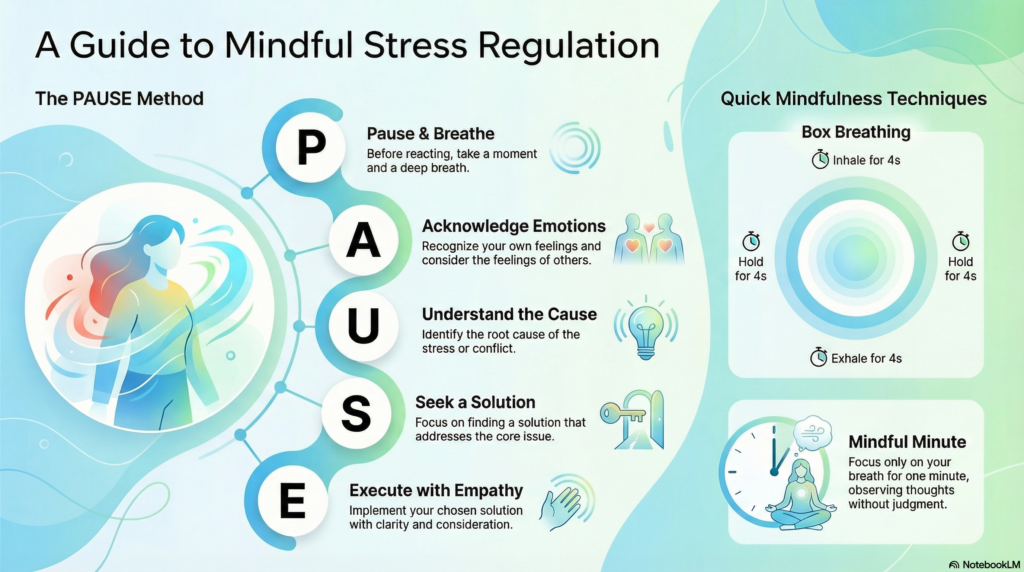
In today’s fast-paced work environment, mastering stress management through emotional intelligence is more important than ever. Emotionally intelligent people are masters of stress management. They know how to stay composed under pressure and use stress as a motivator.
We will explore techniques for managing workplace stress using emotional intelligence. This includes the PAUSE method, breathwork, and mindfulness. By understanding and applying these strategies, professionals can better navigate the challenges of their work environment.
Click Here to learn Best Practices for Team Management.
The PAUSE Method for Emotional Regulation
The PAUSE method is a powerful tool for emotional regulation, even in tough situations like negative feedback in team meetings. PAUSE stands for:
- P: Pause and take a deep breath before reacting.
- A: Acknowledge your emotions and the emotions of others.
- U: Understand the underlying causes of the stress or conflict.
- S: Seek a solution that addresses the root cause.
- E: Execute the solution with empathy and clarity.
By pausing and reflecting, we can respond more thoughtfully. This reduces the impact of stress on our well-being.
Breathwork and Mindfulness Techniques
Breathwork and mindfulness are key components of emotional intelligence for managing stress. Techniques like Box Breathing and Mindful Minute are highly effective:
- Box Breathing: Breathe in for 4 seconds, hold for 4 seconds, breathe out for 4 seconds, and hold again for 4 seconds. This calms the mind and reduces stress.
- Mindful Minute: Take a minute to focus on your breath, observing your thoughts without judgment. This practice enhances mindfulness and reduces anxiety.
Case Study: Airbnb’s Crisis Response During COVID-19 Layoffs
Airbnb’s response to the COVID-19 pandemic is a notable example of emotional intelligence in action. During the layoffs, the company showed empathy and transparency. They provided support to affected employees.
This approach not only helped in managing the immediate crisis but also maintained the trust and loyalty of their remaining workforce.
By studying such real-world examples, we can gain insights into how emotional intelligence strategies can be effectively implemented in times of crisis.
Do you admire how Airbnb adapted under pressure?
That kind of decision-making doesnt happen by chanceits built through formal training in tourism and hospitality.
At Study Hospitality, we help you turn interest into expertise. Learn how global hospitality brands think, adapt, and growby studying at universities that align with your career goals, not just your budget.
Effective Conflict Resolution Techniques Using Emotional Intelligence
In today’s fast-paced work environments, mastering conflict resolution through emotional intelligence is key. It helps keep the workplace harmonious. Understanding how emotional intelligence can help solve conflicts is vital.
The Empathy-First Approach to Workplace Disagreements
Empathy is at the heart of emotional intelligence. It lets us understand and share others’ feelings. By focusing on empathy first, we can tackle workplace disagreements better.
For example, when the engineering and customer success teams disagree on bug fix priorities, empathy helps. We can listen to both sides, understand their views, and find a solution that works for everyone.
Read More: Use 4 Communication Techniques to Practice Assertive Communication At Workplace.
Remote and Hybrid Work Conflict Resolution
The shift to remote and hybrid work has brought new challenges. We can’t just rely on text messages or emails, as they can lead to misunderstandings. Instead, we should aim for face-to-face or voice-to-voice talks to solve conflicts.
Being open about delays in responses and proactive in communication can also help. This way, we build a culture of openness and empathy, even when we’re not in the same room.
For more insights on emotional intelligence and conflict resolution, check out Conflict Resolution with Emotional Intelligence. It offers valuable strategies for managing workplace conflicts.
Learn 8 ChatGPT Prompts for Solving Complex Business Problems.
Conclusion
Mastering emotional intelligence (EI) is key in today’s workplaces. It helps us be resilient, adaptable, and successful in our careers. EI training boosts productivity, engagement, and performance for both individuals and teams.
This article demonstrated how emotional intelligence is essential in managing conflicts in global teams. By using emotional intelligence in our conflict resolution strategies, we can make our workplaces more harmonious and productive.
Frequently Asked Questions (FAQs)

Makarand S is a content writer who focuses on importance of soft skills and job readiness. Through his articles, He identifies potential gap areas and demonstrates easy and practical ways to overome them. With a keen interest in Skill Development, Makarand explores the shift in job landscapes and strategies for continuous learning. His articles help readers in preparing for the rapidly evolving nature of work more
Submit the form we will reply within Next 24 hours


Develop Must-Have Skills To Navigate Workplace Challenges And Build Executive Presence
Explore Topics
- AI-Driven Skill Development (7)
- Communication Skills in Indian English (12)
- Confidence Building for Students (5)
- Entrance Test Updates (2)
- Government Job Mindset Training (4)
- Lifelong Learning for Indian Women (3)
- Personality Development for IT/BPO (7)
- Public Speaking in Hindi/Marathi (1)
- Soft Skills for Indian Careers (11)
- Strategic Thinking for Entrepreneurs (29)
- Uncategorized (2)