
How to Manage a Team: Best Practices for Team Management
With more people working from home or in hybrid setups, leaders need to change their ways.
Lorem ipsum dolor sit amet, consectetur adipiscing elit. Ut elit tellus, luctus nec ullamcorper mattis, pulvinar dapibus leo.
TL;DR
Effective team management is crucial in todays evolving workplace landscape, especially in cities like Bangalore and Mumbai. Leaders need to adapt to hybrid models, foster inclusive cultures, and leverage smart collaboration tools. Key practices include clear communication, conflict resolution, role clarity, and cultural intelligence. Embracing these strategies drives productivity, innovation, and employee engagement, building resilient, high-performing teams.
Key Takeaways
- Understand the importance of adapting leadership skills for hybrid and remote work environments.
- Learn strategies to boost team productivity and motivation.
- Discover the role of cultural intelligence in effective team management.
- Explore tools and training programs for improving collaboration and conflict resolution.
- Gain insights into future trends like AI-driven tools and virtual reality for team building.
Introduction

Remote and hybrid work bring new challenges. With teams worldwide, cultural intelligence is vital for a united and welcoming space. A study by The Myers-Briggs Company shows a rise in workplace conflicts, showing the need for better conflict skills.
In India, IT and corporate sectors lead this change. They operate globally, needing cultural intelligence and team collaboration more than ever. It’s vital to focus on team management that builds a positive work culture.
By getting these trends and adjusting our management, we can create a better work place. This boosts productivity and makes team members happier and more engaged.
Also Read : Hybrid Workplace Communication 2026: 5 Proven Strategies to Fix Communication Gaps & Boost Team Productivity
Defining Team Management
Unlike managing individuals, team management focuses on building a collaborative environment. We need to ensure that every team member is aligned with the overall vision. They must work together to achieve it.
Experts say, “Effective leaders develop a vision of where they want to take their organization strategically.” They advocate for their vision while giving the top team influence and a voice if they disagree. Developing team management skills is key for this.
Example: Transitioning from Solo Work to Team Leadership
“The art of team management lies in empowering individuals to work together towards a common vision.” – John C. Maxwell
Consider a startup founder who begins by handling ad-hoc tasks alone. As the business grows, they must transition to leading a structured team with delegated roles. This shift requires a change in management style.
From focusing on individual tasks to fostering a collaborative team environment. By understanding the principles of team management, leaders can make this transition smoothly. This enhances their team’s productivity and morale.
Why Team Management is Critical
Team management is about creating a collaborative and productive work environment. In today’s complex business world, effective team management is key to success.
Productivity and Innovation
McKinsey found that data-driven decisions help adapt to changes. A collaborative team can improve productivity and innovation, making employees happier.
A well-run team can make processes smoother, cut out unnecessary tasks, and use resources better. This leads to better productivity and the ability to innovate and adapt to market changes.
Also Read : 5 Easy Ways to Say NO and Boost Productivity
Emotional Benefits
Effective team management also has emotional benefits. It raises morale, builds trust, and creates a safe and positive work culture. When team members feel valued, they are more engaged and committed to the organization’s goals.
A positive work culture not only makes employees happier but also attracts the best talent. Companies with strong team management cultures keep their employees longer, saving on recruitment costs.
Essential Skills for Team Management
These skills help teams work together and do their best. We’ll look at key skills like communication, solving conflicts, motivating, delegating, and understanding different cultures.
Effective Communication and Constructive Feedback
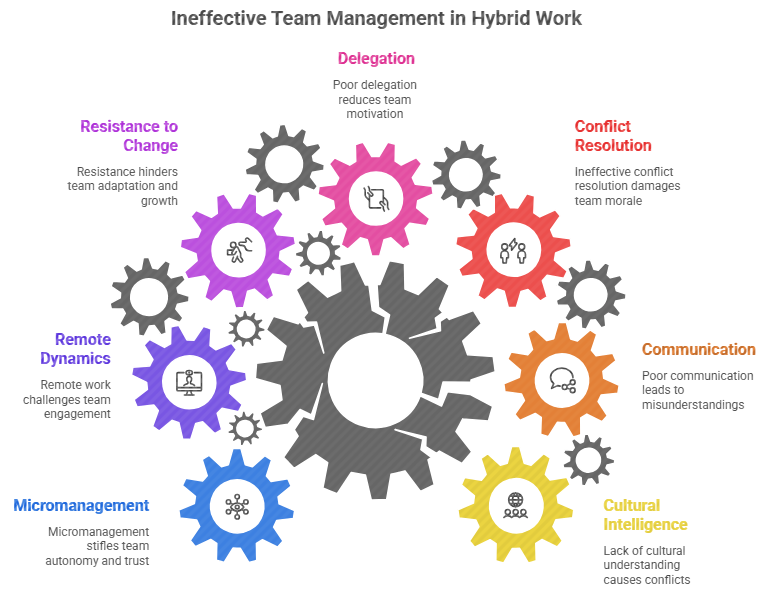
Communication skills are key for team leaders. It’s not just about talking but also listening and giving constructive feedback. We should make sure everyone feels heard and valued. Regular feedback helps improve performance.
To improve communication, we can use:
- Regular team meetings
- One-on-one check-ins
- Collaboration tools
Also Read : How to Manage a Team: Best Practices for Team Management
Conflict Resolution Strategies
Conflict resolution is very important for team managers. Conflicts happen, but how we solve them matters. We should quickly and effectively find a solution that works for everyone.
Good conflict resolution strategies include:
- Staying impartial
- Encouraging open discussion
- Focusing on the issue, not the person
Delegation of Responsibilities
Team motivation and delegation go hand in hand. Delegating tasks makes team members feel responsible and motivated. It’s important to know each team member’s strengths and weaknesses.
Good delegation means:
- Clearly explaining tasks and expectations
- Providing the right resources and support
- Checking progress without controlling too much
Overcoming Common Challenges
Managing a team comes with its own set of challenges. Let’s look at some common challenges and how to overcome them.
Managing Resistance
Change can be hard for teams to accept. When we introduce new processes or tech, we often face pushback. To tackle this, we should involve our team in the change. This way, they see the benefits and feel part of the change.
Gallup found that teams do better when everyone is involved and excited. So, it’s important to get our team involved in decisions. For more tips on managing big teams, check out this article on effective team management strategies.
Remote Team Dynamics
To keep remote teams engaged and accountable, we need to use technology for communication. Regular virtual meetings and team activities help build trust and ensure everyone is working towards the same goals.
Avoiding Micromanagement
Micromanagement hurts team morale and productivity. To avoid it, we should build trust by empowering our team. Giving them the freedom to make decisions and own their work creates a better work environment.
A Mumbai service firm saw less turnover by giving more autonomy and flexible hours. This boosted both employee happiness and team performance. Trust and empowerment lead to long-term success and better team performance.
Also Read : What Is Teamwork and Why Does It Matter?
Conclusion
Effective team management is key to any successful business. By learning the skills we’ve discussed, leaders can create a team that works well together. This teamwork drives both business and personal growth.
Leaders should always be learning new things. They should focus on leadership, communication, solving conflicts, and understanding different cultures. This helps them succeed in the long run and reach their goals.
Good leaders have a clear vision and let their team contribute. This approach makes the workplace better, increasing happiness, trust, and safety. Let’s keep learning and growing to thrive in today’s fast world.
Arthsetu’s Strategic Thinking Course
Arthsetu’s Strategic Thinking Course is designed for todays ambitious students and professionals ready to transform challenges into opportunities. This comprehensive program helps you boost confidence, sharpen decision-making, and master strategic problem-solving skills essential for career growth.
Dont wait! book your FREE consultation now!
Key Features Include:
- The Power of Perspective
- Decision-Making in the Real World
- The Ripple Effect: Thinking Beyond Today
- Ethics and Innovation
- Breaking Down Complex Problems
Frequently Asked Questions

Makarand S is a content writer who focuses on importance of soft skills and job readiness. Through his articles, He identifies potential gap areas and demonstrates easy and practical ways to overome them. With a keen interest in Skill Development, Makarand explores the shift in job landscapes and strategies for continuous learning. His articles help readers in preparing for the rapidly evolving nature of work more
Submit the form we will reply within Next 24 hours


Develop Must-Have Skills To Navigate Workplace Challenges And Build Executive Presence
Explore Topics
- AI-Driven Skill Development (7)
- Communication Skills in Indian English (12)
- Confidence Building for Students (5)
- Entrance Test Updates (2)
- Government Job Mindset Training (4)
- Lifelong Learning for Indian Women (3)
- Personality Development for IT/BPO (7)
- Public Speaking in Hindi/Marathi (1)
- Rural Empowerment via Soft Skills (0)
- Soft Skills for Indian Careers (11)
- Strategic Thinking for Entrepreneurs (29)
- text (0)
- Uncategorized (2)